

Hot Pulse

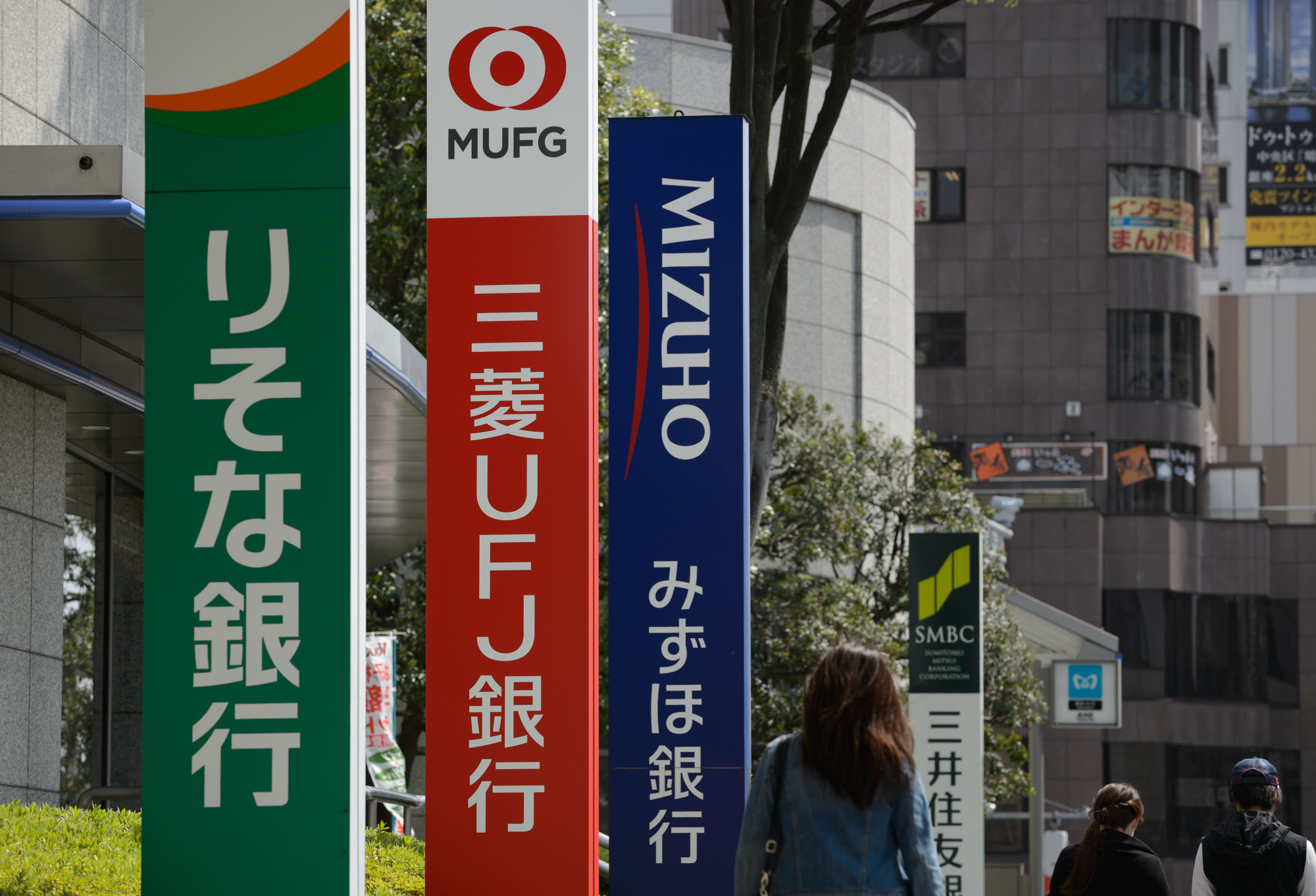
Employment counselors forced to sit on the other side of the window

April 10th, 2013 by

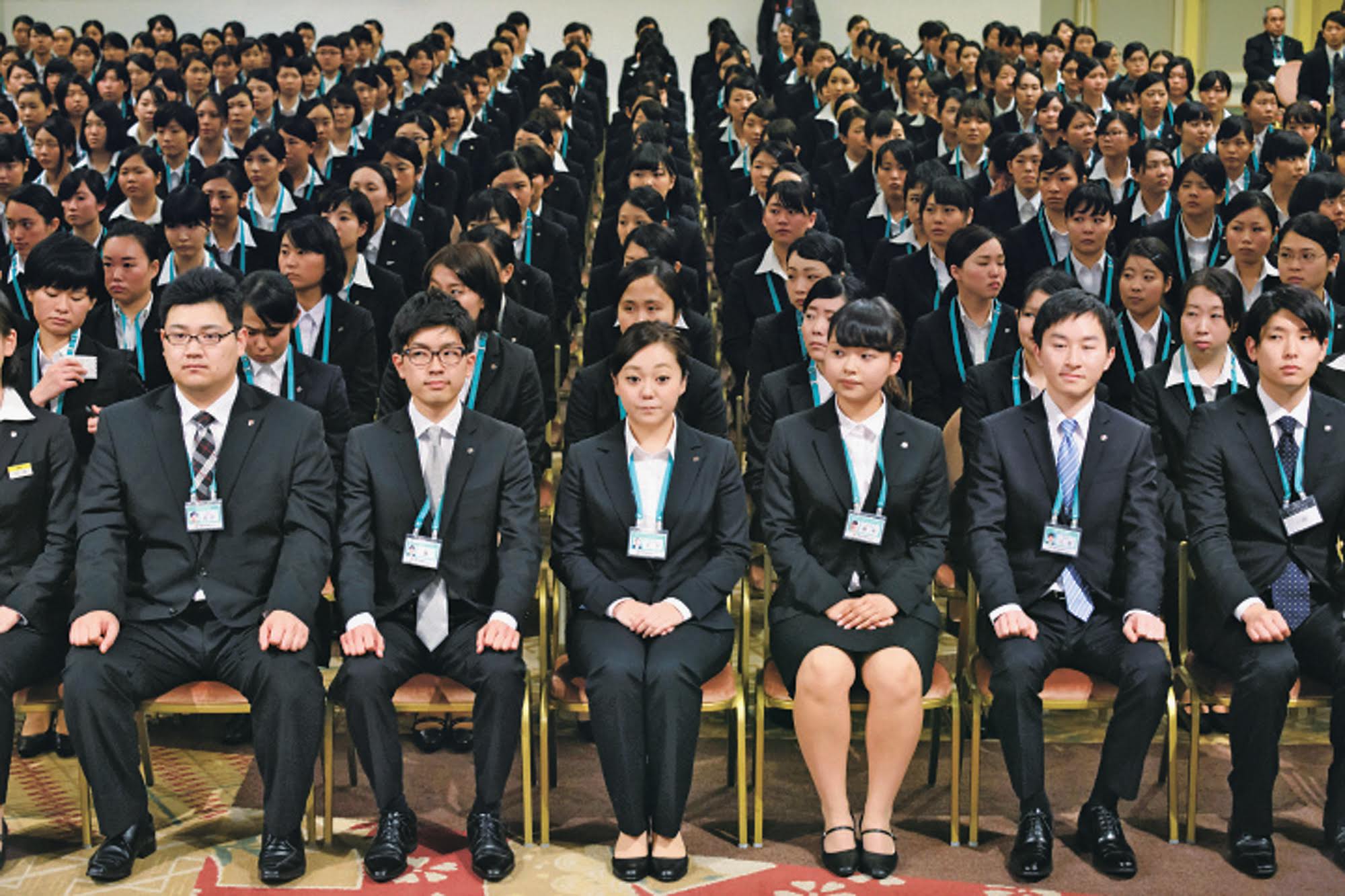
The rise of non-regular employment has received a lot of coverage because of its effect on job security in the general work force. A seldom discussed side effect is the acute anxiety experienced by non-regulars as their contracts approach their expiration dates. Will mine be picked up for another year? Will I have to go out and look for a new job next month?

Hello Work website

Hello Work website

For public non-regular employees this emotional roller coaster starts right after Jan. 1, since most contracts end with the fiscal year in March. And for those who have been working in the same position for an extended length of time, there is no solace in the new law that goes into effect this year and which says an employer must hire a contract worker as a regular full-time employee, complete with benefits, if the worker has been in the same position for five years.

Though it’s assumed that many employers will work the loophole by not renewing a contract just before the five-year period is reached and then hiring the person back after a six month “cooling off” period with an open-ended contract, non-regulars who work in the public sector aren’t covered by the new law in the first place. They can be retained as non-regulars indefinitely.

This exception was highlighted when the labor ministry announced that 2,200 non-regular members of its unemployment advisory staff had not had their contracts renewed for fiscal 2013. That represents 10 percent of all the non-regulars employed at Hello Work counseling centers nationwide, and presents an interesting scenario: Former employment counselors who themselves must seek employment advice.

In fact, a Tokyo Shimbun article described one woman in her 50s who received her notice in early March while she still had several weeks on her contract. Though she knew there was always the possibility her yearly contract would not be renewed the lateness of the notice (the media reported the announcement as being “sudden”) caught her off-guard.

In the last weeks of March she was looking for a new job at Hello Work on Saturdays while still working Monday through Friday at the same facility counseling people who themselves were looking for jobs.

One part of the new law that was already in effect before April 1 is to make the practice called yatoidome illegal. “Yatoidome” means nonrenewal of an employment contract for “no good reason,” but, of course, “good reason” constitutes a gray area that the Japanese legal system isn’t equipped to address. It is this part of the law that doesn’t apply to public workers, supposedly because non-regular government employees are only hired as stopgap workers, meaning people employed to fill certain positions on a temporary basis. They do not have to pass a test the way full-time regular civil servants do. However, in many cases, these workers become as indispensable as regular employees. In 2012, 63 percent of all Hello Work employees were non-regulars.

As for why the labor ministry decided to effectively lay off so many employment center staff at one time, a representative told the media that the ministry hired extra contract workers when the recession worsened in 2008 and again after the disaster of 2011, but now the job situation “is stabilizing” so the ministry doesn’t need as many counselors. Some laid-off employees counter this explanation by claiming that their workloads have been heavier in recent months, not lighter, especially in areas most affected by the disaster. What may have sparked the layoffs was the finance ministry, which has been auditing budgets across all government agencies and ministries and demanding cuts.

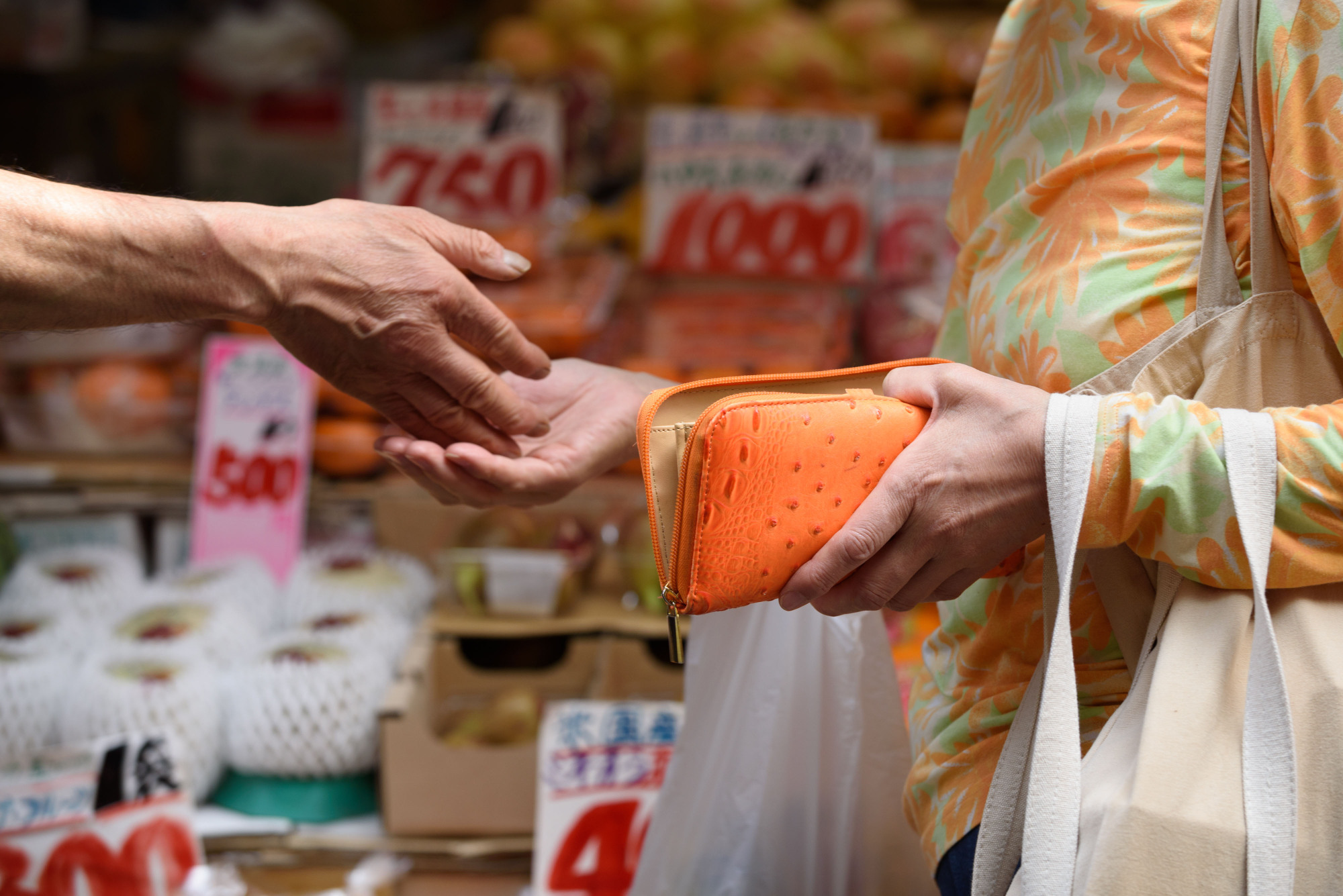
The yatoidome exception doesn’t just apply to national public workers. One-third of all local government employees, or about 700,000 people, are also non-regulars. That’s an increase of about 100,000 since 2008, according to a labor ministry survey. Of these, 60 percent work more hours than regular employees. More than half of these non-regulars make less than ¥160,000 a month or ¥2 million a year. And because they are technically part-timers, they are not up for promotions or salary increases. The most prevalent jobs in this category of public worker is day care attendant and librarian, but it also includes policemen, firemen and school teachers.

Local government attempts to make citizens rat on welfare recipients

April 3rd, 2013 by

A goal of the resurgent Liberal Democratic Party is to reduce public welfare expenditures over the next three years by cutting handouts to the tune of ¥67 billion, or about 10 percent. The targets of these cuts are households who receive more money in welfare than do “lower income” households who don’t, the purpose being to bring the monthly payments made to non-working poor families down to or below the monthly earnings of working poor families. Thus the public assistance payment for a family of four would drop from an average of ¥220,000 to ¥200,000.

They call it gambling: Pachinko enthusiasts waiting for their loot

They call it gambling: Pachinko enthusiasts waiting for their loot

As to what this family would have to give up, one category ripe for reduction is “recreation” (goraku), which includes everything from TV sets and PCs to books and magazines. However, according to a 2010 government survey, welfare recipients only spent 6.4 percent of their money on recreation, and due to the LDP’s prime bugbear, deflation, they are spending less in this area all the time, so the keepers of the treasury will have to find other places to cut.

One public figure, however, feels that the goraku category hasn’t been scrutinized enough. The city assembly of Ono, Hyogo Prefecture, passed a law that went into effect April 1 prohibiting people who receive public assistance from the city to use that money for gambling. The law also compels city residents to report any instance of gambling by welfare recipients to the police. Given the timing of the implementation and the nature of the law, some people may wonder if it’s a joke, but Mayor Tsutomu Horai, who wrote it, is quite passionate about the matter, which is why the media have covered it so closely.

Ono currently pays out ¥290 million in welfare annually to 120 households. The population of the city is 50,000. The new law states that anyone who observes a welfare recipient spending “too much money” on gambling has a responsibility to report it to the authorities. The model seems to be local versions of child abuse prevention laws, which state that anyone who believes a child is the victim of violence or neglect must report the abuse to police.

The bill first became publicly known in February, before it was approved, and the city received some 7,000 “opinions” from all over Japan, 70 percent of which were positive. As Horai told the weekly magazine Aera at the time, “Let’s say your friend asks to borrow money because of some trouble, and then later you see him playing pachinko. Naturally, you’re going to be annoyed.”

The problem, as he saw it, was that most people don’t care about public money, and so he wants to change that perception. There is no penalty if a person sees a welfare recipient gambling and does not report it, probably because that would be impossible to prove. Horai certainly understands this, but claims that 90 percent of the city’s residents, including welfare recipients themselves, support the law and so most of his job is already done.

The Hyogo Prefecture Bar Association has come out against the law, saying that its purpose of involving average citizens in the monitoring of welfare recipients’ behavior will result in greater “discrimination of and bias toward” the latter. In fact, Ono’s finances are healthier than most local government’s. Its treasury actually reports a surplus balance of ¥8.5 billion, and the mayor himself has said that the aim of the law is not to reduce the welfare budget. If anything, he hopes the law will also alert people who may qualify for assistance to apply for it.

As it stands, the central government provides three-fourths of a typical handout with the remainder handled by municipalities. About 1.7 percent of the national population receives welfare, while the portion in Ono is only 0.3 percent. However, both statistics are on the rise — the number of recipients in Ono increased by 64 percent over the last five years — and is certainly a reflection of the economic situation in general, but Horai thinks that it has to do with a more relaxed attitude toward government handouts. He told Aera that he first thought of devising the bill when he was at city hall and overheard several people who were waiting on line for their welfare packets. One asked another, “Where are you going to play pachinko later?”

Horai focuses on pachinko, which, legally speaking, isn’t gambling. Players can only earn money by trading the excess balls they win for premiums in the pachinko parlors and then “selling” those premiums at specially established booths outside the premises. Though no one is fooled that this isn’t betting in practice, it’s gambling by legal loophole. What’s more, the off-site payment booths are regulated by the National Police Agency, so why doesn’t pachinko qualify as legal recreation, which is considered acceptable for welfare recipients? And why doesn’t Horai induce citizens to narc on welfare recipients who, say, buy lottery tickets?

Actually, he has an answer to those questions. “People say pachinko is merely entertainment,” he told Aera. “But they don’t understand reality. People who spend too much on pachinko are addicts.” In truth, he wants welfare recipients who play “too much” pachinko to seek medical help, which they can do easily since, as welfare recipients, their medical insurance is free. Horai’s system may not make much sense, but he wants you to know his heart is in the right place.

Court says railway can make patrons pay through the nose

March 29th, 2013 by

Inzai Makinohara Station

Inzai Makinohara Station

We live on the Hokuso Line, which connects Takasago in eastern Tokyo to the Nihon University Medical Center in northern Chiba, a distance of 32.3 kilometers. The Hokuso Line has been called the most expensive train line in Japan. From one end to the other it costs ¥780, and for us to get from our station, Inzai Makinohara, to its neighbor to the west, Chiba New Town Chuo, it costs ¥290. Many people who live on the line and use it have complained to the relevant authorities and demanded that fares be reduced. In fact, five local residents sued the central government, demanding that the court rescind the state’s approval of the Hokuso Railway’s plan to lease its tracks to another railway company and claiming that the plan did not benefit users. On Mar. 26 the Tokyo District Court rejected the suit, saying that the government authorization did not damage the welfare of the railway’s users in any way.

The plaintiffs said they didn’t understand the judge’s reasoning. One, a 19-year-old man, told an Asahi Shimbun reporter that when he was a high school student he spent ¥90,000 on a six-month pass, which, on average, is about four times what it costs for a comparable student pass on any other line. Now that he’s graduated and going to a prep school he no longer qualifies for the student discount, and has to pay ¥170,000 for half-a-year. Single-station fares on the Hokuso are about twice as much as they are on other lines. The Hokuso Line is part of the Keisei Dentetsu Group, whose average fare for 32 kilometers is about ¥470, so the Hokuso fares are 70 percent higher than fares on other lines even within the same railway group. The reason for the high fares has been explained in this blog before, but in a nutshell, the line was designed to serve the Chiba New Town development project, which began in 1969. Planners envisioned 340,000 people eventually moving into the New Town area, which encompasses portions of three cities, but in the end only about 93,000 actually did. The main problem for the Hokuso Railway Co. was the cost of construction, in particular the cost of land. Purchases were made at the height of the bubble era, when land prices were sky high and so were interest rates. The debt currently stands at ¥90 billion, and the railway pays ¥5 billion on the note every year. But the Chiba New Town authority, which the railway belongs to, also has to pay shareholders, many of whom are farmers who sold it the land in the first place. You can see their huge houses, built with the money they made and are still making, all over the region that lies alongside the Hokuso Line. Since opening for business in 1991, the railway has raised its fares nine times, though it also cut a few, but only by ¥10.

The kernel of the court case is a leasing deal that the Hokuso Line made with Keisei Dentetsu, which wanted to use the Hokuso tracks for its Skyliner and Sky Access express trains to Narita Airport. Regular users of the Hokuso Line were under the impression that Read the rest of this entry »

Auto sales driven by gas mileage

March 21st, 2013 by

Fit to be drived

Fit to be drived

Last week Prime Minister Shinzo Abe announced that Japan would participate in the Trans-Pacific Partnership (TPP) talks, a prospect that worries American car makers since the trade agreement could remove any remaining tariffs from Japanese cars sold in the U.S., thus making them cheaper and even more attractive to American consumers. Apparently, carmakers in the U.S. don’t think the agreement will sufficiently remove what they deem barriers to American car sales in Japan. The fact that these barriers, which include, in the words of Reuters, “discriminatory taxes, onerous and costly certification procedures for foreign cars and [an] unwillingness by Japanese auto dealers to sell foreign cars,” have not prevented certain European automakers from doing well in Japan may, in fact, indicate that the problem is American products rather than Japanese protectionism. For instance, the U.S. claims that Japan’s preferential tax treatment for kei (light) cars — smaller automobiles whose engine displacement is 660cc — is a trade barrier, but since America doesn’t make kei cars it’s difficult to understand what it’s a barrier to. Kei cars account for about 30 percent of the Japanese car market, which means people like them, and the main reason they like them is their superior gas mileage.

It’s also the main reason for the popularity of hybrids. On March 3, the land ministry announced its most recent findings for the best gas mileage among cars sold in Japan. Toyota’s hybrid Aqua came out in first place with 35.4 km per liter (in JC08 mode). In second place was the first hybrid car sold in Japan, Toyota’s Prius with 32.6km/l. In third place was Toyota’s high-end hybrid Lexus at 30.4km/l, and fourth was Honda’s hybrid Insight. The highest non-hybrid on the list was the Mitsubishi Mirage, which gets 27.2km/l.

Aqua is also the best-selling model in Japan right now. In February, 24,526 Aquas were sold nationwide, with Prius in second place with 23,473. After that, it was Nissan’s Note with 16,497 followed by Honda’s Fit. However, overall kei cars still outsell regular cars and hybrids in terms of units, probably because in addition to good gas mileage they cost less to purchase. Suzuki’s Alto and Mazda’s Carol tied for first among kei cars in terms of fuel efficiency with 30.2km/l. American carmakers will probably not be happy to learn that the government has required all cars sold in Japan to meet stricter efficiency standards by 2015 in accordance with the revised Energy Conservation Law. As it stands, however, a fair number of domestic models already meet these standards.

Of course, the gas mileage figures offered by the government and the automakers themselves should be used purely for comparative purposes. One would probably have to drive straight on an expressway on perfectly balanced tires going downhill with the wind at one’s back to achieve 35km/l in an Aqua, but last week we decided to try one out for a day trip to Gunma. We picked up the car in Iwatsuki, Saitama Prefecture, at a branch of Toyota Rental & Leasing. The fee was ¥7,000 for the day, including the use of a car navigation system, plus ¥1,000 for insurance.

We drove about 250 km and ended up spending ¥1,372 for gasoline, which worked out to about 9 liters or a little less than 25km/l. That’s much less than the advertised rate, but better than we expected considering that more than a third of the drive was spent on surface roads rather than expressways. But we didn’t use the air conditioner, either. And when we checked several websites dedicated to jissai nenpi, or fuel efficiency under real driving conditions, the average gas mileage for the Aqua is around 21.5km/l.

For comparison’s sake, in January we rented Nissan’s compact (but not kei) March from Nikoniko rentals for ¥4,000 a day with insurance included but no car navigation system. We drove 140 km, none on expressways, and ended up using 8.37 liters, which means gas mileage was 17.9km/l (advertised: 24; real: 20). The advantage of the hybrid is obvious, and will likely become more so when Honda comes out with a new version of its hybrid Fit in August. The company is already boasting that gas mileage will exceed 36, thus topping Aqua. And it will be cheaper, too.

Convenience store companies boost employee income, engage in one-upmanship

March 14th, 2013 by

No raises here: Recently shuttered convenience store

No raises here: Recently shuttered convenience store

If Prime Minister Shinzo Abe’s plan to boost inflation and the economy along with it is to succeed, companies will have to raise employee salaries and wages, otherwise there will be no increase in consumer spending. Earlier this week, a number of automotive companies and electronics makers said they would go along with this plan and announced bigger bonuses, seemingly as a gesture of support for Abe’s scheme. However, one company got the jump on all of them, the #2 convenience store chain Lawson. The company’s president, Takeshi Ninami, who happens to also serve on the government’s Advisory Panel on Industrial Competitiveness, said earlier this month that employees “in their 20s to their 40s” would be eligible for a pay hike of 3 percent, or one percentage point higher than Abe’s inflation target.

Ninami told Nihon Keizai Shimbun that Lawson employees in this age group account for 70 percent of the company’s workforce. It should be noted that the vast majority of Lawson employees who interface with the public, meaning clerks at Lawson’s stores, are not eligible, since they are either hired by the franchise owners or, if the store is company-owned, employed as part-time help (arubaito). Ninami admitted this to Nikkei, but said that Lawson would try to “secure higher incomes” for these workers by implementing “activities to increase profits for our franchisees, starting in March.”

In response, Seven and i Holdings, which runs the No. 1 convenience store chain 7-11, and Family Mart, which operates the No. 3 chain, will also boost pay to stay competitive, since there’s a danger some of their regular employees might bolt to Lawson if they don’t. Ostensibly, however, or at least according to Tokyo Shimbun, the convenience store industry believes it needs to support the Abe plan because retail “is very close to the consumer” and thus must provide an example that could help open tightly closed wallets. Because convenience stores have continued to do well even during the recession, and retail workers tend to be paid less per hour than workers in other industries, CS companies need to take the lead in the hope that other distribution-related firms will also increase wages and, as a result, boost consumption in general.

Domestic consumption accounts for 60 percent of Japan’s GDP. That’s why Abe stood in front of the Japan Business Federation (Keidanren) and two other business associations in February and bowed deeply, asking them to increase salaries. They reacted “cautiously,” saying that the business situation is “still difficult,” but Abe probably expected that. He made sure cameras were there to record it so that the public would know that he was trying and other business leaders might be shamed into going along. Then Ninami, who is basically part of the Abe team, announced Lawson’s wage plan. In addition, Family Mart announced its wage hike right after economic reconstruction minister, Akira Amari, told reporters that he hoped the company would do exactly that.

Specifically, Lawson will increase bonuses for 3,300 of its 3,500 regular employees for an overall 3 percent boost in employee income. The 54 group companies of Seven & i Holdings comprise 53,500 regular employees, who will receive a “base up“ — meaning all affected receive a uniform raise — in addition to regularly scheduled individual salary increases (teikishoku) based on position, age and number of years at the company. Family Mart will give 2,700 of its 3,100 regular employees a 1.5 percent raise in teikishoku and a 0.7 percent bonus increase.

As Tokyo Shimbun points out these measures are mostly cosmetic. Since more and more workers are non-regular employees of the people they work for, there is no chance for a boost in inflation unless they get wage increases as well, and except for Ninami’s vague promise to “increase profits for franchises,” no one has said anything about non-regular and part-time workers, including major media. To give some idea of the scale involved, there are more than 13,000 7-11 franchises and 400 company-owned stores; the respective breakdown for Lawson is about 9,300 to 1,000; and for Family Mart its 7,500 to 450. Franchise employees are paid by the franchise owner, not the company whose name is on the store.

Uniqlo not as different as its workers thought it would be

March 7th, 2013 by

Stock til you drop: Uniqlo branch in northern Chiba

Stock til you drop: Uniqlo branch in northern Chiba

The highest ranking Japanese person on Forbes’ most recent Billionaires List is Tadashi Yanai, the president of Fast Retailing Co., which operates the huge discount clothing chain Uniqlo. Yanai placed 66th on the list with $13.3 billion. His inclusion in the world’s most prestigious business magazine’s prestigious list is appropriate in that Fast Retailing has promoted an image of being more internationally oriented than other major Japanese companies, with its insistence that management be fluent or at least conversant in English and employment policies that have resulted in one of the highest percentages of female management of any company in Japan. When recruiting new talent, Fast Retailing pushes its global outlook and hints that ambitious new employees could see themselves transferred to Paris after only 18 months on the job. Consequently, the company has became a top draw for university graduates, who see it as a forward-looking company that rejects the insularity Japanese firms are known for.

Coincidentally, the weekly economics magazine Toyo Keizai recently ran a cover feature critical of Fast Retailing titled “Hihei suru shokuba” (“The worn-out workplace”). The article describes the company as a different sort of employer than its image would have you believe, dwelling on labor practices that follow all the worst stereotypes of Japanese corporations. Apparently, this isn’t news. Fast Retailing is suing Bungei Shunju for publishing an unflattering book about the “Uniqlo Empire,” asking for ¥200 million in damages and halting sales of all remaining copies. Toyo Keizai seems to have gotten Uniqlo’s cooperation up to a point. In addition to talking to a number of former and current employees (anonymously, of course), they interviewed executives who gave them some startling statistics, such as the turnover rate. In 2007, 37.9 percent of all new regular employees quit the company within three years. This portion rose to 53 percent by 2009. Moreover, 43 percent of employees who take sick leave cite mental stress as the reason. It’s common for new grads to become disillusioned with company life, but that’s pretty high for a company with Uniqlo’s appeal.

The problem is the workload. Company policy prohibits Read the rest of this entry »

Annals of cheap: Don Don Down on Wednesday

February 27th, 2013 by

We all know Japanese people prefer new stuff — new homes, new rice, new prime ministers every 12 months — which may explain why the used clothing business isn’t as big here as it is in other countries. According to the Asahi Shimbun, 50 percent of discarded used clothing in America is recycled, either commercially or as contributions, and the portion in South Korea is 80 percent. In Japan, it’s only 20 percent, meaning that the rest is simply trashed. But that may change with the advent of a new model for used clothing stores.

Don Don's website

Don Don’s website

Don Don Up Co. Ltd., headquarted in Morioka, Iwate Prefecture, opened its first used clothing store, called Don Don Down on Wednesday, in Hachinohe, Aomori Prefecture, eight years ago. The company now commands a chain of 60 outlets nationwide, with more to come. Don Don, an onomatopoeic word expressing a process of steady progression, came up with an ingenious pricing system that not only saves the company overhead and personnel costs, but draws customers on a weekly basis by turning shopping into a “game,” as its promotional literature puts it.

All the merchandise is affixed with price tags, but the tags don’t display yen amounts. Instead they have pictures of fruits and vegetables, 10 in all. The pictures represent prices, which range from a high of ¥5,250 (i.e., ¥5,000 for the item plus 5 percent consumption tax) to a low of ¥105. These prices are listed on charts alongside their corresponding symbols and posted throughout the store. The price tag on a particular item never changes as long as it remains in the store.

The charts are changed weekly. For instance, this week, perhaps, all the strawberry items cost ¥5,250, but next week, all the remaining strawberry items will be priced at ¥4,200. Each week, the line of a particular fruit or vegetable goes down one pricing rank until it reaches ¥105. The following week all the items previously priced at ¥105 are removed from stock and exported to Southeast Asia in bulk, which means no item stays in the store for more than ten weeks. The weekly price changes take effect on Wednesdays, thus explaining the name of the store. Not surprisingly, that’s the day they do their biggest business.

This system adds a touch of drama to the shopping experience. If a customer likes a particular item she can buy it right away or take a chance and wait til the following week when it’s cheaper, but then she risks the possibility that someone else will buy it. The president of the company told Asahi, “I want our customers to enjoy shopping as if playing a game. I wanted to change the image of the used clothing store, which tends to be dark.”

At first, the scheme was to try to replace the inventory as often as possible to keep people coming, but that meant changing price tags on a continuing basis to weed out unpopular items. It wasn’t until management hit on the fixed price tag system that they figured a way to not only streamline operations but make the process interesting for consumers.

As for procuring merchandise, Don Don’s method is similar to Book Off’s, Japan’s pioneer in used merchandise, which boasts 900 outlets. It bases the price it pays for a book on its condition and then places a seal on each volume that indicates how long is has been in the store. Every book that remains on the shelf for three months automatically gets reduced to ¥105.

When those don’t sell, they’re pulped. With the exception of some brand items, Don Don buys clothing from anyone by the kilogram: ¥500 for “very popular” items, ¥50 for “popular” items, and ¥10 for “useful” items. And they pay 50 percent more on Mondays and Thursdays. More significantly, they refuse very little that is wearable, since they can always sell it, again by the kilogram, to wholesalers in Southeast Asia. Just like produce.

RSS

Recent posts

Our Users Say

  • Simon: I had a similar experience when I caved in to societal and peer pressure ;-) and got an iPhone 4S last year....
  • goyaty: E-Mobileは、酷いサービスとサポート する。そのため、私も契約を更新しな でWiMAXに移った。WiMAXは、1年...
  • pat: Great article! There must be a way to make the bills easier to understand, and there must be a reason why this...
  • Paul: Epic.
  • angela: The older generation in my honest belief tend to show a much more aptitude and willingness to want to do a...
Japan Times RSS Feed

RECENT JAPAN TIMES HEADLINES

  • No items