

<?xml version="1.0" encoding="UTF-8"?><rss version="2.0"
	xmlns:content="http://purl.org/rss/1.0/modules/content/"
	xmlns:dc="http://purl.org/dc/elements/1.1/"
	xmlns:atom="http://www.w3.org/2005/Atom"
	xmlns:sy="http://purl.org/rss/1.0/modules/syndication/"
		>
<channel>
	<title>Comments on: Okozukai vs. hesokuri: An alternate view of home economics</title>
	<atom:link href="http://blog.japantimes.co.jp/yen-for-living/okozukai-vs-hesokuri-an-alternate-view-of-home-economics/feed/" rel="self" type="application/rss+xml" />
	<link>http://blog.japantimes.co.jp/yen-for-living/okozukai-vs-hesokuri-an-alternate-view-of-home-economics/</link>
	<description>How to make, save and spend money in Japan.</description>
	<lastBuildDate>Tue, 21 May 2013 23:27:01 +0000</lastBuildDate>
	<sy:updatePeriod>hourly</sy:updatePeriod>
	<sy:updateFrequency>1</sy:updateFrequency>
	<generator>http://wordpress.org/?v=3.5.1</generator>
	<item>
		<title>By: Philip Brasor &#38; Masako Tsubuku</title>
		<link>http://blog.japantimes.co.jp/yen-for-living/okozukai-vs-hesokuri-an-alternate-view-of-home-economics/comment-page-1/#comment-53242</link>
		<dc:creator>Philip Brasor &#38; Masako Tsubuku</dc:creator>
		<pubDate>Mon, 11 Jul 2011 11:53:12 +0000</pubDate>
		<guid isPermaLink="false">http://blog.japantimes.co.jp/yen-for-living/?p=2601#comment-53242</guid>
		<description><![CDATA[Yes, technically it would be illegal, though nothing would probably come of it unless someone (i.e., a creditor or another family member entitled to a piece of the dead man&#039;s estate) made a point of pointing it out to the bank.

As a sort of ironic contrast, think of that bureaucrat who just got caught for insider trading. It&#039;s obvious to everyone that through his job he knew that particular stock was going to go up a lot, but his defense is that the purchase was made in his wife&#039;s name. Such an explanation would never hold up in court overseas because what belongs to the husband belongs to the wife and vice versa: that&#039;s the whole principle of joint property. But in Japan, it could be used as a defense, since the wife hypothetically has no &quot;inside&quot; information and her property isn&#039;t shared with her husband, who does have inside information.]]></description>
		<content:encoded><![CDATA[<p>Yes, technically it would be illegal, though nothing would probably come of it unless someone (i.e., a creditor or another family member entitled to a piece of the dead man&#8217;s estate) made a point of pointing it out to the bank.</p>
<p>As a sort of ironic contrast, think of that bureaucrat who just got caught for insider trading. It&#8217;s obvious to everyone that through his job he knew that particular stock was going to go up a lot, but his defense is that the purchase was made in his wife&#8217;s name. Such an explanation would never hold up in court overseas because what belongs to the husband belongs to the wife and vice versa: that&#8217;s the whole principle of joint property. But in Japan, it could be used as a defense, since the wife hypothetically has no &#8220;inside&#8221; information and her property isn&#8217;t shared with her husband, who does have inside information.</p>
]]></content:encoded>
	</item>
	<item>
		<title>By: Miko</title>
		<link>http://blog.japantimes.co.jp/yen-for-living/okozukai-vs-hesokuri-an-alternate-view-of-home-economics/comment-page-1/#comment-52961</link>
		<dc:creator>Miko</dc:creator>
		<pubDate>Sat, 09 Jul 2011 10:43:03 +0000</pubDate>
		<guid isPermaLink="false">http://blog.japantimes.co.jp/yen-for-living/?p=2601#comment-52961</guid>
		<description><![CDATA[This is a fascinating post, which cleared up a few mysteries for me.  You wouldn&#039;t believe the number of older Japanese men I know who literally do not know how to use cash cards or access their bank accounts, even when the bank accounts are in their names (and the money in the accounts is obviously earned by them, and them alone).  I&#039;ve heard that traditionally the handling of money was regarded as dirty work, which is why it is regarded as women&#039;s work even in this day and age.  

Housewives in Japan may seem to hold the purse strings, but in actual fact, as you point out, they have very little financial autonomy.  Please answer me this hypothetical question.  If I was married to a man who was my sole support, and if he suddenly dropped dead, would I be entitled to access his bank account with a cash card the day after his death?  I&#039;ve heard that this is illegal, which may be one explanation for the hesokuri phenomenom.]]></description>
		<content:encoded><![CDATA[<p>This is a fascinating post, which cleared up a few mysteries for me.  You wouldn&#8217;t believe the number of older Japanese men I know who literally do not know how to use cash cards or access their bank accounts, even when the bank accounts are in their names (and the money in the accounts is obviously earned by them, and them alone).  I&#8217;ve heard that traditionally the handling of money was regarded as dirty work, which is why it is regarded as women&#8217;s work even in this day and age.  </p>
<p>Housewives in Japan may seem to hold the purse strings, but in actual fact, as you point out, they have very little financial autonomy.  Please answer me this hypothetical question.  If I was married to a man who was my sole support, and if he suddenly dropped dead, would I be entitled to access his bank account with a cash card the day after his death?  I&#8217;ve heard that this is illegal, which may be one explanation for the hesokuri phenomenom.</p>
]]></content:encoded>
	</item>
	<item>
		<title>By: Philip Brasor &#38; Masako Tsubuku</title>
		<link>http://blog.japantimes.co.jp/yen-for-living/okozukai-vs-hesokuri-an-alternate-view-of-home-economics/comment-page-1/#comment-52823</link>
		<dc:creator>Philip Brasor &#38; Masako Tsubuku</dc:creator>
		<pubDate>Thu, 07 Jul 2011 23:26:32 +0000</pubDate>
		<guid isPermaLink="false">http://blog.japantimes.co.jp/yen-for-living/?p=2601#comment-52823</guid>
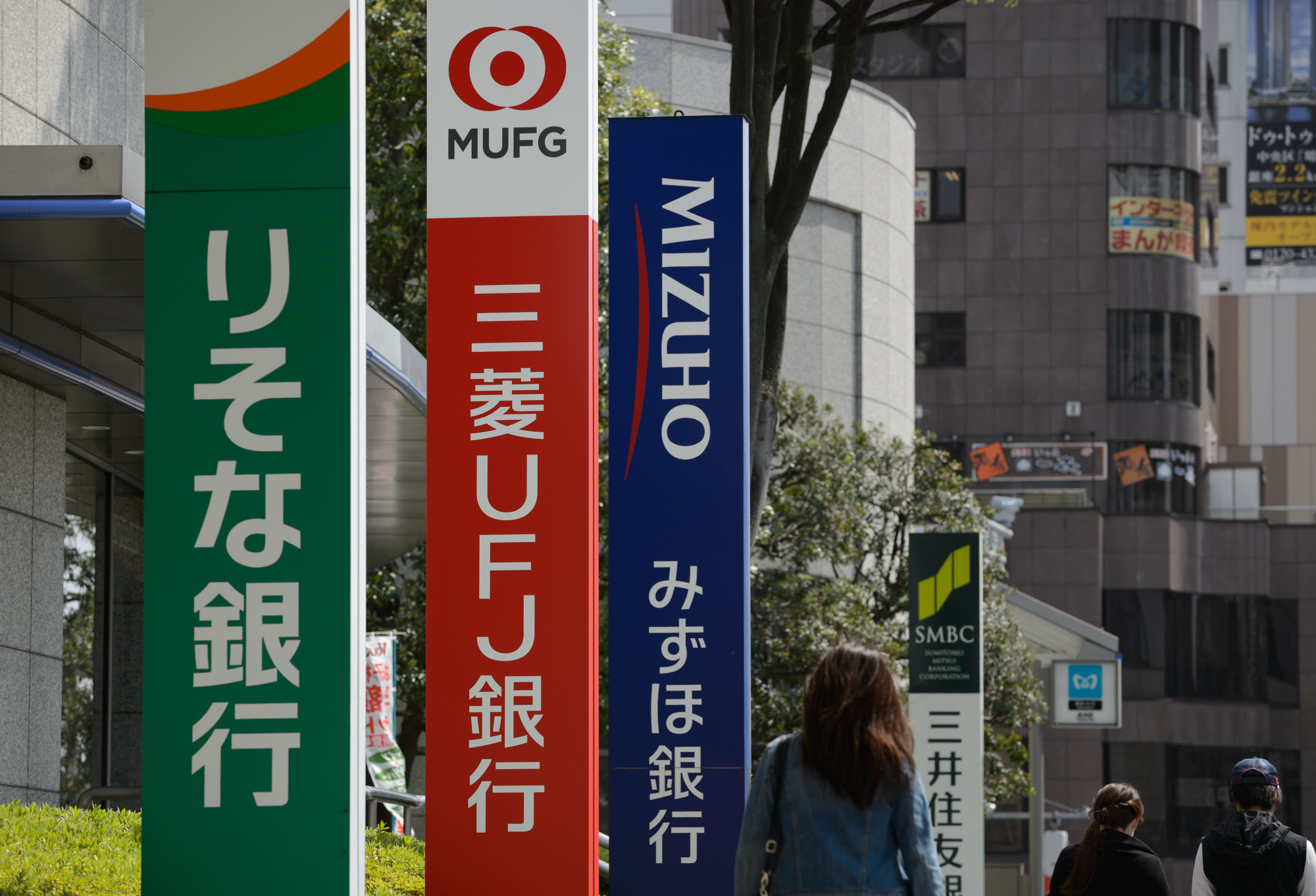
		<description><![CDATA[Husbands and wives can have access to their spouses&#039; accounts (you can have a &quot;cash card&quot; made in your own name that allows you to take money out of your spouse&#039;s account), and there have been programs in the past, like UFJ&#039;s &quot;one wallet&quot; account, that made such transactions easier. However, as far as we know there is no such thing as a joint account in Japan, meaning a savings account with two names on it. The Civil Code does not allow for joint property, so such an account would have to work through some sort of loophole to be possible. A lot of mixed couples set up joint accounts with foreign banks, but it seems they would have to set it up overseas, not in Japan.

Are you sure your accounts had two names on them and were with Japanese banks? If so, we&#039;d be very interested in knowing more since a lot of Japanese couples would very much like to have joint accounts. It&#039;s a common query at marriage and financial websites, especially from wives who are very afraid that if their husbands die suddenly the husbands&#039; money would be lost to them. ]]></description>
		<content:encoded><![CDATA[<p>Husbands and wives can have access to their spouses&#8217; accounts (you can have a &#8220;cash card&#8221; made in your own name that allows you to take money out of your spouse&#8217;s account), and there have been programs in the past, like UFJ&#8217;s &#8220;one wallet&#8221; account, that made such transactions easier. However, as far as we know there is no such thing as a joint account in Japan, meaning a savings account with two names on it. The Civil Code does not allow for joint property, so such an account would have to work through some sort of loophole to be possible. A lot of mixed couples set up joint accounts with foreign banks, but it seems they would have to set it up overseas, not in Japan.</p>
<p>Are you sure your accounts had two names on them and were with Japanese banks? If so, we&#8217;d be very interested in knowing more since a lot of Japanese couples would very much like to have joint accounts. It&#8217;s a common query at marriage and financial websites, especially from wives who are very afraid that if their husbands die suddenly the husbands&#8217; money would be lost to them. </p>
]]></content:encoded>
	</item>
	<item>
		<title>By: Jeffrey</title>
		<link>http://blog.japantimes.co.jp/yen-for-living/okozukai-vs-hesokuri-an-alternate-view-of-home-economics/comment-page-1/#comment-52741</link>
		<dc:creator>Jeffrey</dc:creator>
		<pubDate>Wed, 06 Jul 2011 18:26:31 +0000</pubDate>
		<guid isPermaLink="false">http://blog.japantimes.co.jp/yen-for-living/?p=2601#comment-52741</guid>
		<description><![CDATA[&quot;As mentioned above, the Civil Code forbids joint bank accounts, . . .&quot;

Is this a new law?  My wife and I had/have a joint bank account(s) in Japan.  Is there an exception for &quot;mixed marriages&quot;?]]></description>
		<content:encoded><![CDATA[<p>&#8220;As mentioned above, the Civil Code forbids joint bank accounts, . . .&#8221;</p>
<p>Is this a new law?  My wife and I had/have a joint bank account(s) in Japan.  Is there an exception for &#8220;mixed marriages&#8221;?</p>
]]></content:encoded>
	</item>
</channel>
</rss>