
Archive for the ‘Travel & Transportation’ Category

Disasters kill appetite for travel during Japan’s high season

Saturday, April 23rd, 2011

Peak season slump: Nikko JR Station in the spring

To no one’s surprise, consumer confidence dropped during the month of March, according to the Cabinet Office , by 2.3 percentage points, the steepest month-on-month decline since April 2004. The office surveyed 4,704 households throughout Japan after the earthquake of March 11 to gauge consumption sentiments and found negatives across the board, meaning not much desire to spend money. In particular, only 30.3 percent of the respondents said they were planning to travel for pleasure between April and June, usually a peak tourist season in Japan. The portion was 3.3 points lower than it was last year, another record drop.

Golden Week falls in this period, but it’s also the time when students go on school trips. Normally, junior high schools and high schools in Western Japan and Hokkaido visit the Tokyo Metropolitan area, but one major travel agent interviewed by the internet news service J-Cast said that 80 percent of the schools planning excursions to Tokyo have either cancelled their trips “or indicated they may cancel” them. One junior high school in the Kansai area told J-Cast that it had changed its trip from Tokyo to Kyushu because “public transportation in Tokyo is still a problem and radiation in Shinjuku remains above safe levels.”

According to the Osaka Board of Education, 20 percent of its 130 junior high schools had planned to go to Tokyo and all “are thinking of going somewhere else.” An Okinawan travel agency said that 50 Kansai schools comprising some 5,000 students had changed their travel plans from Tokyo to Okinawa in the past several weeks.

Continue reading about the Golden Week travel slump →

Disaster area quickly becomes huge automobile market

Friday, April 8th, 2011

One of the most indelible images people will take away from all those horrifying videos of the tsunami of March 11 is automobiles being swept up by the dozens and carried away. What’s important to remember about the Tohoku region, especially the coastal part, is that cars are an indispensable component of everyday life there. In Tohoku, there is one car for every two humans. Because much of the area is cut off from the rest of Honshu by mountains, there aren’t that many train lines. In fact, many of the people who died were in their cars at the time, trying to escape inland after the tsunami alert was broadcast. There are many stories of people driving to the homes of elderly relatives to pick them up and then getting caught in the wall of water.

In Miyagi Prefecture alone, according to a report on TBS, 146,000 vehicles were destroyed. The central government has pledged to do the cleaning up, but cars pose a special problem. Much of the debris is beyond being recognizable, but cars, even ones that no longer function, tend to be intact and thus are considered private property by local governments. They cannot simply be carted away as garbage. The process so far has been for tow trucks to bring the damaged vehicles to large lots where the owners can claim them and then sign a release allowing them to be scrapped.

However, in many cases the owners don’t even know where their cars are, so it is taking a long time to process all the junked cars being brought to the lots. For instance, hundreds of cars were parked at Sendai Airport when the tsunami struck, and afterward their owners came to look for them but couldn’t find them. Local governments have to somehow inform those people where the collected automobiles are being kept, and it’s time-consuming. But that’s not the end of the process. As one mechanic told TBS, before the car is scrapped and placed in a compactor, all the mud has to be removed from the interior. (Removing the gasoline isn’t a problem since it seems that in almost all cases thieves had already siphoned off the fuel when the tow trucks showed up.) Before scrapping, the engines are removed and can sometimes be recycled, but not in this case. Sea water effectively destroys automobile engines.

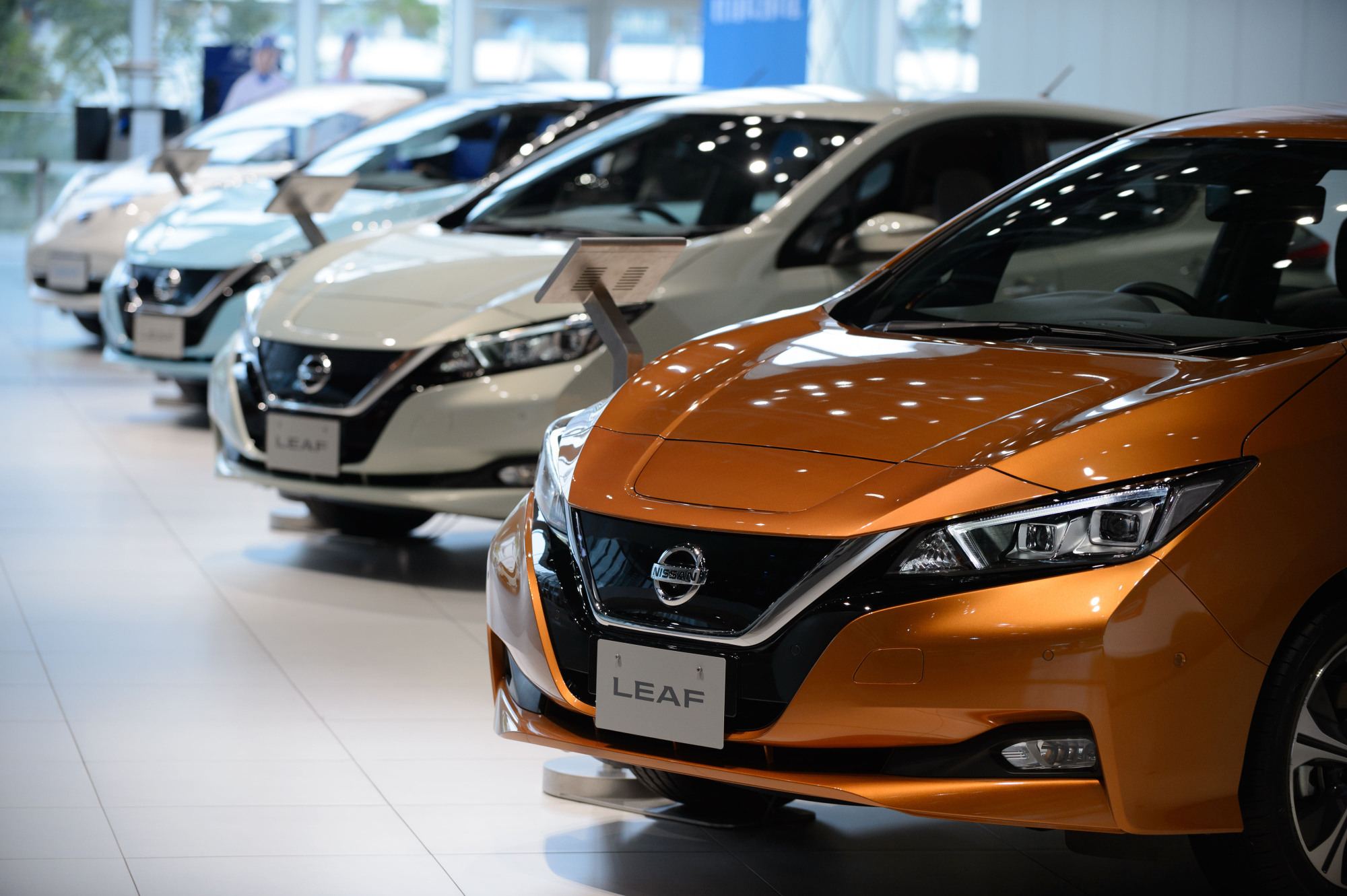
If anyone benefits from this aspect of the tragedy it is, of course, automakers. Since the eco point system ended last year, manufacturers have been looking for a means to boost sales, and now they have an instant customer base of hundreds of thousands of potential buyers. The central government is going to help with a bill that will provide certain tax exemptions for victims of the earthquake/tsunami. Any victim who purchases a car, either used or new, will not have to pay the automobile purchase tax; nor will they have to pay the regular car tax based on weight, which is due when you register the car and every time you bring it in for mandatory inspections. Already, there is a paucity of available vehicles for sale in the Tohoku region, a situation exacerbated by production fall-offs nationwide due to a shortage of parts that are made in the Tohoku region. However, today Toyota announced that it would resume car production on April 18. There’s no time to lose.

Small businesses ask for restraint with the self-restraint

Saturday, April 2nd, 2011

Normally this time of year people are in a party mood, what with the cherry trees blooming, temperatures rising and students on spring break. That mood has been effectively dampened by the enormous suffering up north, but recreation in general is being discouraged by several related factors, such as the call for energy conservation and reduced public transportation. Small businesses, especially restaurants, bars and events promoters, are being hit the hardest, even if their enterprises were not affected directly by the earthquake.

Sign in Ueno Park says that the cherry blossom festival is "canceled," asks for "self-restraint."

They certainly don’t appreciate the well-meaning but short-sighted official requests for jishuku, or self-restraint. Making such a request sounds paradoxical: Can self-restraint be compelled from above? At a press conference on April 1, Renho, the Democratic Party of Japan lawmaker who was put in charge of energy conservation, blasted Tokyo governor Shintaro Ishihara for a remark he made implying that it’s unseemly for people to want to “drink and chat” at a time like this. Renho said that Ishihara shouldn’t use his political platform to “restrain people’s freedoms and social activities,” which have negative economic consequences.

According to the Fuji TV morning show, “Toku Da Ne,” as of April 1, 1,320 concerts and other events featuring foreign performers had been canceled due to fears of radiation from the damaged Fukushima power plant. In fact, one events company has already gone out of business as a result, and that company is headquartered in Fukuoka.

Those cancellations can’t be helped. What’s more problematic is that many Japanese are being made to feel guilty about going out and spending money. Fuji TV cited a survey of 301 small businesses in Tokyo. Eighty percent said that their business has fallen off sharply since March 11. So one French restaurant decided to buck the whole jishuku movement and started advertising a 30 percent discount on all meals for the time being. They’ve been packed ever since.

Continue reading about self-restraint →

Driving is believing: Don’t trust manufacturers’ mileage claims

Thursday, February 10th, 2011

Though revenues were initially spurred by the government’s eco point system, hybrid cars are definitely the way to go for carmakers right now. Last month, sales of Honda’s Fit hybrid outpaced those for Toyota’s Prius hybrid, which had been Japan’s best-selling car since March 2009. Though consumers seem to be getting on the environmental bandwagon, the real appeal of hybrids is economical: They use less gasoline. Or, at least, that’s what we’ve been led to believe.

Tell the truth: Prius at Tokyo dealership

Actually, it’s difficult to know what to believe, according to the mobile telephone site E-Nenpi. Nenpi is the Japanese word for gasoline mileage, and people who subscribe to the site have helped the company that runs it, Iidosha, compile mileage statistics for almost every Japanese car model. Iidosha is of the opinion that the mileage figures supplied by car manufacturers in their brochures are unreliable, since they are based on tests that have no relation to real driving conditions. The Ministry of Land, Infrastructure, Transport and Tourism has apparently picked up on this skepticism and recently announced it would demand “improved” reporting on mileage testing.

Presently, the standard testing method in Japan is the “10.15 mode,” which utilizes a fixed roller in a government-run facility. Automobiles “drive” on the roller at different speeds and an average mileage figure is calculated from the results. Starting in April, however, the standard testing method will become the “JC08 mode,” which reproduces actual road driving conditions more closely. This method, however, has already been used by most automakers for several years and is usually listed in current brochures alongside the 10.15 mode figure, thus causing unnecessary confusion.

E-Nenpi doesn’t trust either test. The site asks its 500,000 subscribers throughout Japan to do their own mileage calculations based on gasoline bought and kilometers driven. Apparently, about 100,000 subscribers participate through cell phone uploads, and while there are no officials on hand to verify the results of each contributor, 100,000 is a pretty decent sampling and certainly more credible than any figures you’d get from the 10.15 mode tests. According to Toyota, the Prius gets 35.5 km per liter for the 10.15 mode test and 30.4 km per liter for the JC08 mode test. However, E-Nenpi comes up with 19.3 km per liter. That’s 45 percent less than the official 10.15 mode findings, and, apparently, that’s one of the better results. E-nenpi finds even greater discrepancies in the findings for other Japanese models.

Continue reading about mileage tests →

Hilton Hotels bag white elephant, turn it around

Tuesday, January 25th, 2011

Getting consumers to part with disposable income has become a national mission, and one success story in this regard is the increasing popularity of higaeri, or one-day excursions where travelers go someplace, enjoy that place, and return home without staying the night. Morning news and information programs are filled with suggestions for higaeri, and one of the most talked about destinations is the Hilton Odawara Resort and Spa, located on the Izu Peninsula in Shizuoka Prefecture. Until Feb. 28, the Hilton is offering a special higaeri deal on weekdays. For ¥4,000, a person can partake of the resort’s lavish all-you-can-eat lunch buffet and use all of their spa facilities, which includes onsen (hot spring), sauna, Jacuzzi, an Olympic pool and more. Normally, the buffet itself is ¥3,850 and access to the spa facilities is as much as ¥3,000 for the day. In addition there’s free shuttle-bus service to the hotel from the JR Odawara or Nebukawa stations on the Tokaido line, about an hour from Tokyo Station.

Rooms with a view

A lot of resort hotels have higaeri deals, but what makes the Odawara one appealing is the Hilton name. In fact, it appears that many young women are taking advantage of the deal simply because they think it’s the only chance they’ll ever get to patronize a Hilton Hotel; and that, of course, prompts another question: What is Hilton, one of the grandest luxury hotel brands in the world, doing with a hot spring resort in the mountains of Shizuoka?

Hilton, in fact, doesn’t own the resort. It’s owned by Odawara city, which purchased the property from the Koyo Noryoku Kaihatsu Kiko (Employment and Human Resources Development Organization), one of those national bureaucratic organs whose main purpose is to justify its own existence. Nominally, the EHDO is charged with managing the funds collected through the workman’s compensation insurance program. In the not-so-distant past these funds were used to construct concert halls (Nakano Sun Plaza is one of the more famous EHDO projects) and other white elephants, the vast majority of which never made money. In fact, almost all of them lost money, a lot of money, including the elaborate hot spring resort they built in Odawara.

Continue reading about semi-public resorts →

New rain-check refunds gamble on the weather

Thursday, December 30th, 2010

Have you ever planned a weekend away from it all only to end up stuck the whole time in your hotel room because it was raining outside? Obviously, no one can stop mother nature from doing what she pleases, but one travel service has come up with an option that may take the anxiety out of such unforeseen situations. A company called Best Reserve recently started a “weather insurance plan” (otenki hokentsuki plan). Customers who book rooms at the 1,500 hotels, inns and resorts that participate in the plan will have their entire room charges refunded if it rains.

Pennies from heaven: Best Reserve's weather insurance plan

If it sounds too good to be true, that’s because it is. The conditions are fairly simple and straightforward, but also rather strict. The “premium” for the plan is 5 percent of the room charge per day, and both the charge and the premium must be paid at least eight days prior to the date of arrival at the accommodation by means of credit card through Best Reserve’s internet reservation system. Also, Best Reserve makes the judgment on what constitutes a rainout. In order for the room charge to be refunded (the 5 percent premium, it should be noted, is non-refundable, rain or no rain) it has to rain for ten hours during the day that is covered by the insurance; specifically, five consecutive hours from 1 to 6 p.m. on the day of arrival, and five consecutive hours from 8 a.m. to 1 p.m. the following day. In order to confirm the rain, they use data supplied by the National Meteorological Agency’s particular AMeDAS rainfall measurement device nearest to the hotel or resort where the patron is spending the night. AMeDAS must show at least 0.5 mm per hour in the vicinity of the hotel during the ten hours that qualify for a refund. And guests don’t have to do anything like file a claim. Best Reserve automatically makes the judgment and if it discovers that the stay qualifies as a washout, the company sends an email to the customer asking for the bank account where the refund should be sent. However, the bank handling fee is subtracted from the amount refunded.

The weather insurance plan applies to all precipitation, including snow, but, obviously, if the participating accommodation is a ski resort or a hotel in an area where snow is the norm in the wintertime, the plan doesn’t apply. Nevertheless, Best Reserve is seriously thinking of offering the insurance for such accommodations on a seasonal basis, between, say, April and September.

It’s conceivable that you could have people making reservations and then gambling that the weather is bad, just so they can get a free night’s accommodation; especially businessmen, who usually don’t care if rain or snow or frogs fall from the sky during their overnight trips. It will also be interesting to see if more people take out insurance in places that customarily have more rainfall. For the record, the Japan Sea coast is the rainiest place in the country. The top three prefectures in terms of days of precipitation are, in order, Toyama, Akita and Ichikawa.

Tourist spots averse to foreign exchange

Thursday, November 25th, 2010

Sign at Hakone souvenir shop

Discouraging words: Sign at Hakone souvenir shop

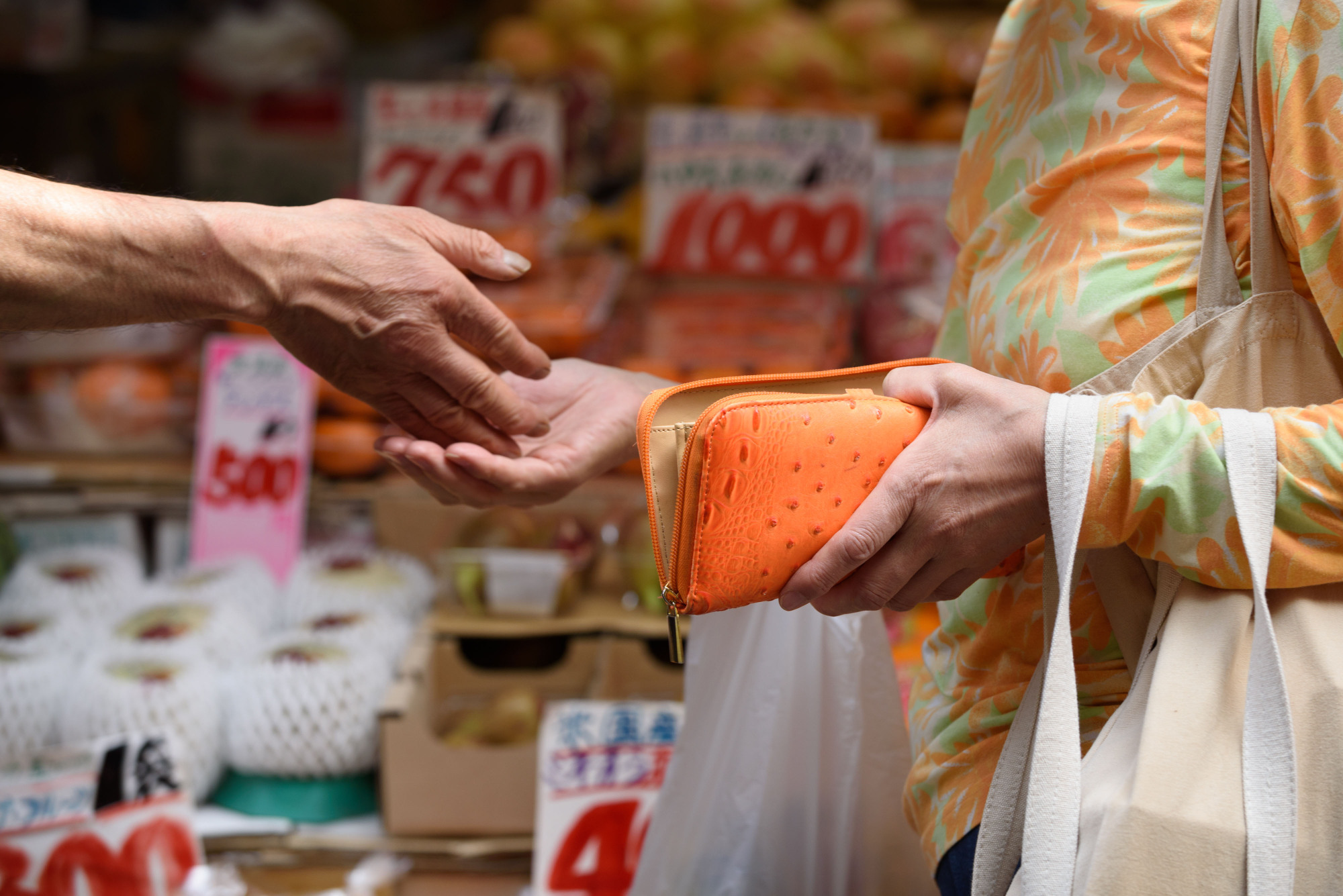
A friend in the tourist industry recently brought a group of middle aged and elderly Americans to Hakone National Park in Shizuoka Prefecture and the area around Mount Fuji. In Hakone, one of Japan’s most famous sightseeing spots, the Americans were discouraged from buying souvenirs when they got off the sightseeing boat at Lake Ashi because the large store at the dock does not take credit cards. This is not unusual for merchants outside of the major cities in Japan, but Hakone supposedly is enthusiastic about attracting foreign tourism. In fact, the policy seems downright stupid since the one souvenir shop in Hakone that does take credit cards is always packed.

My friend said that he always has the same problem in Hakone. Most of the restaurants there don’t take credit cards either. In addition, there are no foreign exchange services in Hakone except at some large hotels, which only guests can use. And the hotel in Fuji City where the American group stayed because it has a good view of Mount Fuji also does not exchange money. In fact, when our friend asked the front desk where people could exchange money in Fuji City the employee said he didn’t know.

We called the Hakone tourist association directly and asked about foreign exchange. The person who answered had to inquire of someone else and then told us that “some banks” in Hakone offer foreign exchange services but he didn’t know which ones. Also, banks in the area close at 3 p.m. on weekdays and are not open at all on weekends. We know that ATMs in post offices and 7-11 convenience stores will dispense yen for most foreign credit cards, but that means foreign tourists have to know this beforehand and then locate those businesses.

The truth is, Japan has never been very accommodating to tourists when it comes to foreign exchange, despite occasional campaigns like “Yokoso Japan” to boost foreign tourism. Of course, most tourists prefer to use credit cards these days, and you can use them easily enough in large Japanese cities, but once you leave metropolitan areas it gets a bit dodgy. Stand-alone foreign exchange services (ryogaejo) can be found at international airports and places like Tokyo Disneyland, but elsewhere they’re usually integrated into banks, which often make the exchange process a chore, requiring the copying of passports and other time-consuming procedures.

Let’s face it. Most Japanese businesses don’t trust anything but yen, in cash.

RSS

Recent posts

Our Users Say

  • Jodi: Thank you for this article. I am recently back in Japan and was surprised how often I needed to re-charge my...
  • Jiro: Not my party, your party!
  • RJ: JR sagi-style profit…“place on the system more of a burden” LOL
  • Colin Doyle: Why is JR too proud or too obtuse to ask the other train companies how they were able to integrate their...
  • Simon: I had a similar experience when I caved in to societal and peer pressure ;-) and got an iPhone 4S last year....