


Archive for the ‘Travel & Transportation’ Category

Experience counts for something in JR embezzling incident

Tuesday, April 3rd, 2012

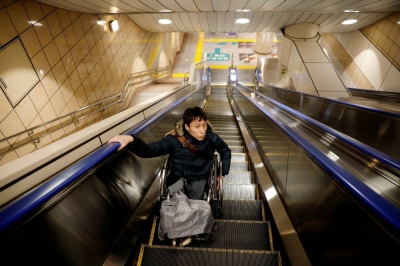
JR ticket office

On March 16, JR West pressed charges against a 50-year-old employee who allegedly embezzled ¥86 million. The unnamed worker, who was hired by the railway company in 1980, when it was still part of Japan National Railways (JNR), worked in the ticket office of Akashi Station on the JR Sanyo Line. He has been accused of printing out fake teiki (commuter passes) for which he gave out equally fake refunds that ended up in his pocket. All in all, he carried out this fraud 659 times and supposedly spent the money on gambling and other “entertainment” activities. But what’s more interesting is that he didn’t do it alone. He apparently enlisted the assistance of seven other staff members who confessed that they felt pressured into going along with the scheme because of the accused’s seniority.

The suspect first started the racket when he was working at Asagiri Station on the same line. He would issue fake passes and then dispense refunds for the passes after the imaginary customers who purchased them reported they were defective. Since these passes are issued by vending machines, the salesperson keeps the supposedly defective pass and refunds the money, which the customer uses to buy a new one. Under such circumstances the salesperson has to write a report for the refund and then later someone has to verify the refund report with the returned pass, but somehow the employee figured out that no one ever actually did this. In fact, he probably could have continued the scam indefinitely if another employee in JR Nishi Nihon who worked on the Takarazuka Line hadn’t been caught doing the same thing, thus causing management to look a little closer at records to see if it wasn’t more widespread. Apparently it was. Even before they caught the Akashi embezzler, investigators discovered an employee at Osaka Station who had pilfered ¥32 million.

But none of the other embezzlers used underlings to help them bring in more cash. A JR executive told reporters that the seven accomplices were contract workers in their 20s, meaning their employment was not guaranteed. When questioned about why they agreed to participate in the scam, they said the accused, who was their supervisor, made it impossible to refuse. They knew it was wrong, but believed that if they didn’t obey his orders they’d lose their jobs. After five years they are given the opportunity to become regular employees, but if they don’t they aren’t rehired, since contract workers are limited to four rehirings. One of the seven stopped working for JR before the incident came to light.

After JNR went private in 1987 and the company was split into several regional railways, many older workers were laid off. Some sued and are still fighting to get their jobs back, but in any case JR West didn’t hire many new graduates in the subsequent decade, which means there is a wide age gap in the company’s ranks. At Akashi Station, for instance, eight of the 41 employees are in their late 40s and 50s, while the rest are in their 20s. Most of these younger employees are contract workers who have to renew their employment every year. The hourly wage is about ¥1,000 (following a three-month probation period during which they earn ¥890 an hour). JR didn’t reveal what the accused employee’s salary was, but according to Nenshu Lab, a wage research group, the average salary for a full-time JR West employee, regular or not, is ¥6.73 million. In 2005, however, the average salary was ¥7.24 million, which would seem to indicate that more contract workers have been hired as older workers retire.

Auto thefts in Japan record first rise in a decade

Friday, March 23rd, 2012

Sitting pretty: Hiace with steering wheel lock

In 2011, 24,928 cars were stolen in Japan, an increase of 1,153 vehicles compared to 2010. This was the first time the number of thefts had gone up since 2001 when 63,275 cars were stolen. Obviously, things have gotten a lot better since then, owing mainly to the standardization of electronic ignition systems, which make it more difficult for thieves to start a car and drive it away.

The General Insurance Association of Japan reports that the model stolen the most — based on statistics from November — is Toyota’s large van, Hiace, which isn’t to say it was the model most targeted by thieves. Hiace does not have electronic ignition as a standard feature, thus making it relatively easier to hot wire. Its popularity among regular ignition cars, though, is well-known by insurers, who say that Hiaces have three things going for them in terms of resellability: They are very durable, they are easy to find parts for, and they are very popular overseas. They’re the Kalashnikovs of the automotive world.

The GIA doesn’t reveal how much its members shelled out in claims for stolen cars. Collision insurance for one’s own car is optional in Japan, and the customer can decide the level of coverage. The same is true of optional auto theft insurance. Since mandatory liability insurance runs car owners around ¥50,000 a year regardless of how old the car is, many people just don’t buy optional auto insurance.

Continue reading about auto theft in Japan →

Electric cars aren’t just for driving any more

Tuesday, March 13th, 2012

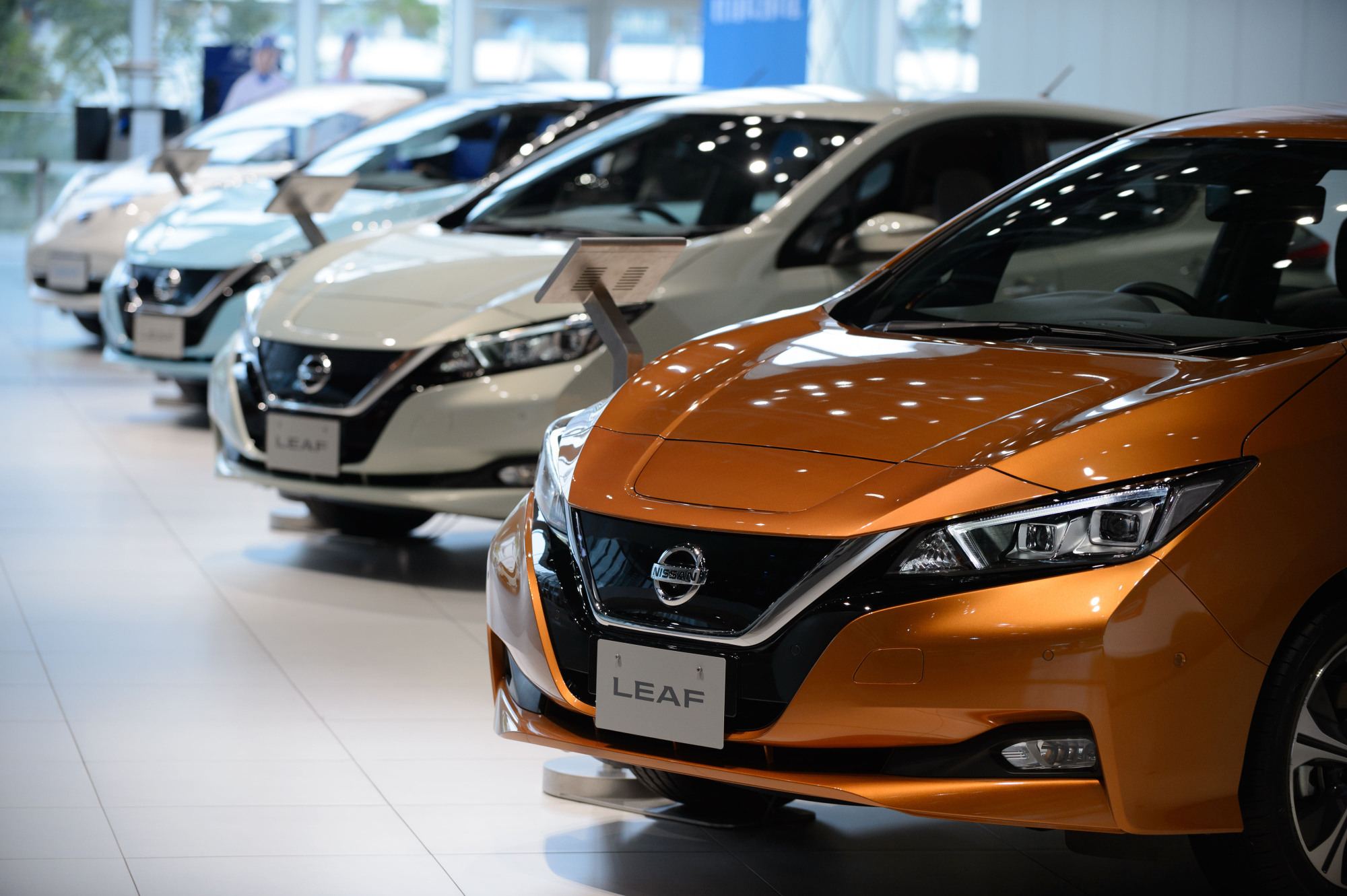
Nissan charged up about giving back to the community.

Late last month, Nissan announced that starting in April its new electric car, the Leaf, would be used as an emergency power supply for a new office-condominium high-rise in Shinjuku managed by Sumitomo Real Estate. In the event of a disaster that resulted in a power failure, Leaf cars could be connected to the building’s electrical system through outlets specially installed for recharging electric vehicles and then the cars’ stored power could be used to supply electricity to the building for up to 42 hours for emergency services such as recharging cell phones and illumination. As a side note, the building also has a special hall that can be converted into a shelter for people in Tokyo who cannot return home during a disaster.

Though this is just a corollary benefit of the Leaf, Nissan’s announcement stresses the idea that electric vehicles could offer a wider range of purposes than just mobility. A number of new housing communities that are being developed with “smart grid” technologies have homes with EV charging stations. As with the Sumitomo building, these stations not only provide electricity for charging the battery of an EV, they also accept electricity from an EV that can be used in the home.

Such news is being stressed as more carmakers enter the EV field. Mercedes Benz Japan said it will start selling its own electric car, Smart, as early as August due to consumer demand. It will be the first foreign EV sold in Japan. At the moment the price hasn’t been determined, but an executive with the company has said it will be competitive with domestic EVs. The Leaf’s sticker price is about ¥4 million, but with the restart of the government’s eco car subsidy, a consumer could take it home for about ¥3 million. The Mitsubishi EV, the MiEV, is even cheaper. After subtracting the subsidy it would cost a little less than ¥2 million.

In related news, Panasonic has said it will start selling a rechargeable storage battery system (chikuden) for the home starting next week. The battery specifically takes advantage of home solar systems, and is mainly being promoted as a stopgap measure for power outages. The problem with solar systems is that they only work when the sun is shining and without a storage device any excess power goes to waste if it isn’t fed back into the grid. This battery can store solar power for the night, for a rainy day, or for blackouts. The battery is a lithium ion type, measuring 45 cm by 15.6 cm by 60 cm. Its capacity is 4.65kW per hour. When fully charged it can supply a house of average size with normal power for two days. The main drawback is the cost, which is ¥2,110,500. It’s cheaper to buy a MiEV.

Can financial incentives put a brake on senior driving?

Tuesday, January 24th, 2012

Two weeks ago a lawyer in Chiba was cited for leaving the scene of an accident. He had hit a pedestrian with his car but later told police he didn’t notice anything odd at the time the accident occurred. The police believe him because he’s 81. The victim was also “over 60.” This may be a pattern we have to get used to. According to the transport ministry, more than 6,000 traffic accidents a year involve a driver confusing the brake for the accelerator. Though the ministry doesn’t break this particular statistic down into age groups, it does report that in 2010 there were 0.5 traffic accidents per 10,000 drivers between the ages of 25 and 54, and 3.3 accidents per 10,000 drivers over the age of 75. In the same year 106,000 of the 724,000 traffic accidents were caused by drivers over 65, while 50.4 percent of the people who died in traffic accidents were over 65, both new records.

Caution, geezer on board: ochiba (fallen leaf) car decal identifying elderly driver, now replaced with a more ambiguous design

Consequently, a number of local governments have been trying to convince elderly residents to surrender their drivers licenses, and have turned to financial incentives to do so. Ichihara city in Chiba Prefecture will launch a program in February wherein “old people” (no actual age is designated) who voluntarily give up their licenses will receive in return an identification card that allows them a 10 percent discount with 17 taxi companies operating in the city. Normally, municipalities offer discounts for bus rides, which may not sound like much of a trade-in considering that, traditionally, many local governments actually subsidized public transportation for elderly riders, in many cases giving then free passes. That time-honored practice started disappearing as the percentage of elderly, especially in rural areas, steeply increased over the past two decades. Local governments just couldn’t afford to pay for all those fares.

But driving could become even more dangerous as the baby boom generation enters its twilight years. Among previous generations, the driving population was mostly limited to men, but among boomers there are just as many women behind the wheel, which means there will soon be a sudden steep increase in the number of elderly drivers. In addition, insurance companies want to increase premiums for older drivers. Many of these people consider their drivers licenses more than a necessity, so local police departments issue unten keireki shomeisho, or “certificates of driving history,” a form of ID that looks just like a drivers license but isn’t. The psychological effectiveness is questionable, but in any case it is this card that can be used for discounts when using taxis or public transportation. To make the card more attractive, local merchants in Shizuoka Prefecture have agreed to offer discounts to anyone who produces one (rather than a bona fide drivers license). Last year in Kagawa Prefecture, 976 people gave up their licenses, a threefold increase over the previous year owning to a new discount service provided by the local taxi union and a special low-priced IC bus card especially for older patrons.

A university professor who specializes in “traffic sociology” told Nishi Nihon Shimbun that local government’s face a very real problem of guaranteeing old people mobility in the future. If public transportation isn’t available and affordable, then the elderly are going to drive as long as they possibly can, a possibility some carmakers are trying to take advantage of. It’s basically up to friends and relatives, and not just the local authorities, to convince them to give it up “without hurting their pride.” Economic incentives may be a good way to convince them, but first bus and train lines have to be substantialized and taxi service increased.

Foreign carmakers don’t need a strong yen (but they’re happy to have it)

Tuesday, January 10th, 2012

Make mine Porsche

The European debt crisis has pushed the value of the yen up in relation to the euro in ways that are making a lot of Japanese exporters anxious. As one industrialist told NHK the other night, it isn’t the same as the yen’s rise against the dollar, a development they can counteract at least partially by increasing production in the U.S. There’s relatively little Japanese production capacity in Europe.

Tokyo Shimbun wonders why the drop in the euro hasn’t helped Japanese buyers of European cars. While some other European products have dropped in price over the last year due to the exchange rate, cars have stayed the same. The given reason is that manufacturers decide on prices only once a year, so short-term currency rate fluctuations aren’t necessarily reflected on sticker prices. However, another reason came from an anonymous industry insider who told the newspaper that makers of European automobiles “have a responsibility to maintain brand value” to customers who pay more under the assumption that when they trade in the car down the line they’ll get more money for it. Given that trade-in values of automobiles in Japan are quite low to begin with, this explanation sounds only half right.

To put things into perspective, the value of the euro against the yen has decreased 40 percent since 2007, when it was more than ¥160. During the 2011 calendar year it lost ¥8, which means a windfall of ¥370,000 to makers for a car priced at ¥5 million. And despite the ongoing recession, the number of imports sold in November was 30 percent higher than the number sold in November 2010. According to analysts interviewed by Tokyo Shimbun, Japanese car buyers preferred European cars for their “energy saving qualities and performance.” Certain models, in fact, are so popular they’re on back order. Consequently, there is absolutely no incentive to reduce prices, and Japanese customers don’t really expect it the way they expect Japanese makers to lower prices in order to be competitive.

The fact is, the high yen gets a lot of press in Japan because Japanese manufacturers count so much on overseas sales. Market share in the U.S. and other regions is extremely important. In contrast, the Japan market is a relatively small one for European carmakers. And since many of them have over the past decade bypassed local importers and set up their own dealerships, they can more or less do what they want, and that includes ignoring the social pressure of reflecting the high yen in their prices.

Yet another reason for good sales is the March disaster, which disrupted supply chains for Japanese cars. Foreign car supply was unaffected, resulting in a 7 percent increase in sales (95,452 total sold) for the first half of 2011 alone. BMW, which now sells the Mini, enjoyed an 8.7 percent increase. Interestingly enough, out of all the exporters Volkswagen sold the most and yet saw a decrease of 3.2 percent over the previous year.

Auto-correct: Police getting more serious with parking scofflaws

Friday, December 23rd, 2011

‘Tis the season to try to become better for a new year. Often it starts with little things, like squaring debts. The police in Miyagi Prefecture, however, are taking no chances. They’ve just announced a new strategy to force car owners with outstanding parking tickets to pay up: Cars that have been impounded as “abandoned” will be auctioned off on Yahoo.

Don't even think about it

As in most countries where automobiles are widely used, Japan struggles with the problem of where to put them when they aren’t in motion. In fact, given its perennial space difficulties, it’s probably more of a problem in Japan, which explains why parking violations are, administratively at least, on a par with moving violations. If you’re caught illegally parking it goes down on your driving record, which is not generally the case in most other developed countries. That said, people with parking tickets seem just as likely to blow them off because the police don’t always have the time or resources to pursue scofflaws.

Fines for illegal parking are ¥15,000 or ¥12,000 for a regular passenger car, depending on the place and how long the vehicle stays there. It’s more for large vans and trucks (¥21,000 and ¥15,000) and less for motorcycles (¥9,000 and ¥7,000), though not as much as it is for “stopping” in traffic. If the car is towed, the violator also has to pay for the towing fee (about ¥14,000 in Tokyo) and storage costs (whatever the garage or lot happens to charge). However, according to an article in the Tokyo Shimbun, often when people show up to claim their vehicle, the operators will release it to the person even if he or she doesn’t have the cash to pay. They simply send the person a bill, which few, it seems, end up paying.

Miyagi Prefecture has more than 2,200 cases of unpaid parking fines comprising more than ¥30 million, which isn’t a lot in the scheme of things but apparently many police departments at the local level rely on fines to subsidize certain police functions, especially with regards to traffic safety. All traffic fines nationwide are collected by the Bank of Japan, and twice a year these funds are divided up according to population and number of traffic accidents and sent back to the prefectural police departments.

Continue reading about auctioning impounded cars →

You can’t get there from here: Railway tries to bust “orikaeshi” riders

Sunday, December 18th, 2011

Two years ago, this blog talked about the Hokuso Line, which has been called the most expensive train in Japan. It runs between Keisei Takasago Station in eastern Tokyo and Inba Nihon Idai Station in northern Chiba Prefecture. Since that article was posted the Sky Access Limited Express opened between Keisei Ueno Station and Narita Airport. In Chiba this train, like the Narita Skyliner, runs on the Hokuso tracks. Consequently, a lot of commuters living in eastern Chiba who use the Hokuso Line to get to work in Tokyo were happy, since the Access adds an extra express train, making it faster to get to their jobs.

Unhappy returns: Hokuso Line poster saying you need an extra ticket if you double back

In October, the Chiba New Town Railway, which operates the Hokuso Line, started a crackdown campaign against patrons who do what is called orikaeshi josha (“doubling back”). When we first saw the posters for the crackdown campaign in Inzai Makinohara Station, we misunderstood the reason for orikaeshi. Because Inzai Makinohara is not an Access stop, we assumed passengers returning home from Tokyo would take the express to Inba Nihon Idai Station, which is one station further than Makinohara, and then transfer to a local train going in the opposite direction. However, when we checked train schedules it didn’t make any sense. Most times of the day the local train going west from Inba Nihon Idai leaves one minute before any Access train going east arrives there; which means anyone doing orikaeshi would have to wait at least ten minutes for the next local going west.

What we learned is that people don’t do orikaeshi at Inzai Makinohara when they return home, but rather when they leave for work in the morning. To catch the Access, which cuts up to 20 minutes from their commute, passengers can transfer at the next station going west, Chiba New Town Chuo, but by that time all the seats have probably been filled by people who got on at the previous Access station, Inba Nihon Idai. So by “doubling back” to Inba Nihon Idai from Inzai Makinohara they can get a seat on the express.

However, passengers are supposed to pay to do that, and many don’t. Considering that the fare between Inzai and Inba — one station — is ¥290, the operators of the Hokuso Line obviously believe they’re losing a lot of money. Even for commuters with monthly passes, the difference is more than ¥2,000, which explains the crackdown.

Continue reading about orikaeshi josha →

RSS

Recent posts

Our Users Say

  • Colin Doyle: Why is JR too proud or too obtuse to ask the other train companies how they were able to integrate their...
  • Simon: I had a similar experience when I caved in to societal and peer pressure ;-) and got an iPhone 4S last year....
  • goyaty: E-Mobileは、酷いサービスとサポート する。そのため、私も契約を更新しな でWiMAXに移った。WiMAXは、1年...
  • pat: Great article! There must be a way to make the bills easier to understand, and there must be a reason why this...
  • Paul: Epic.
Japan Times RSS Feed

RECENT JAPAN TIMES HEADLINES

  • No items