

Archive for the ‘Taxes & Welfare’ Category

Diaper manufacturers get them coming and going

Tuesday, May 8th, 2012

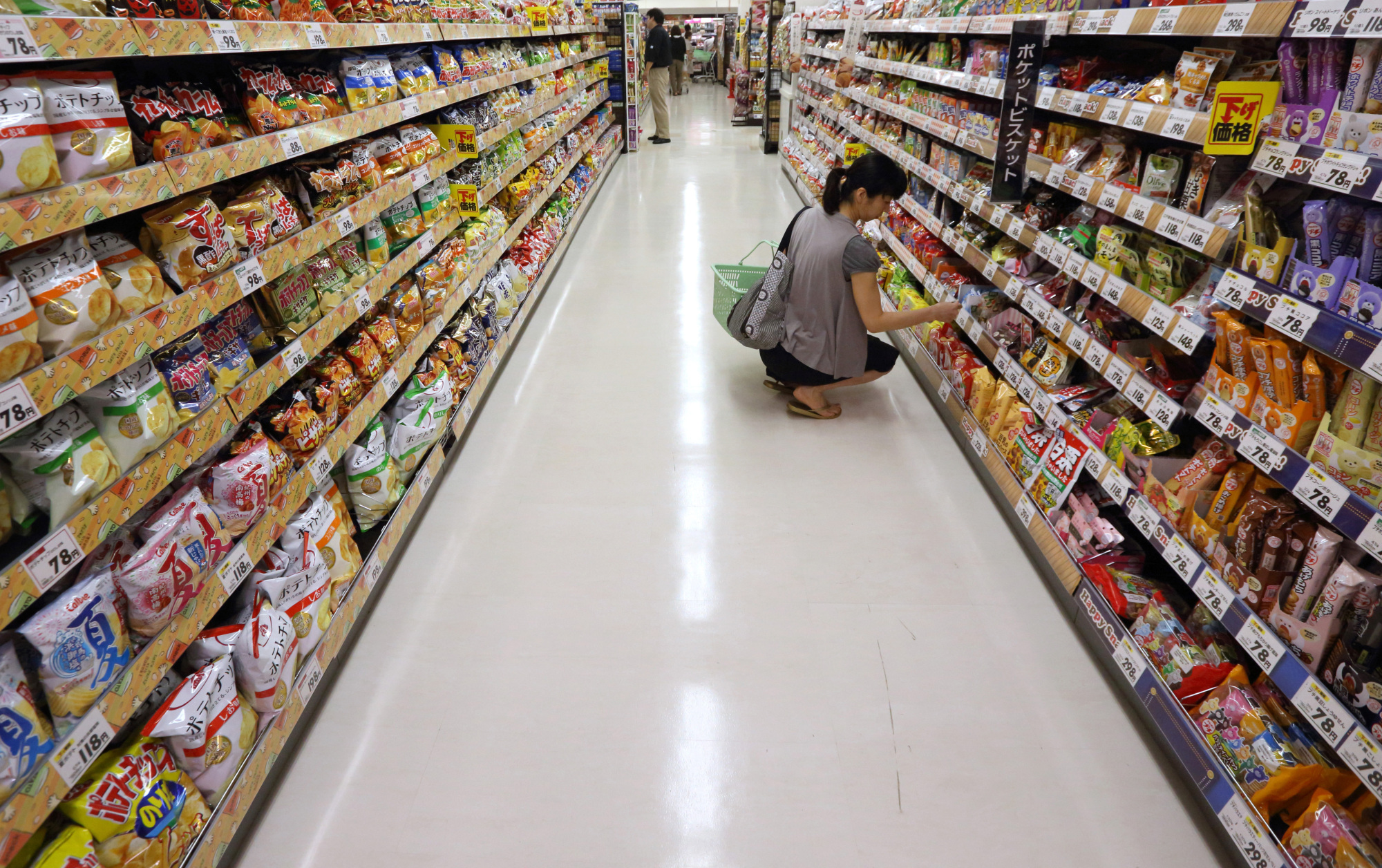
Checking out the merchandise

Ever since Japan emerged as a manufacturing giant it has concentrated a great deal of sales efforts on exports, but in the past decade or so, as the country’s population has begun to contract, foreign markets have become even more important to sustain corporate growth. And nowhere is this dynamic felt more acutely than in the disposable diaper business. Japanese are having fewer babies. In 2011 the domestic market for disposable baby diapers was about ¥140 billion, but according to one major manufacturer, Unicharm, that market is shrinking at a rate of about 2 percent a year. However, in many other Asian countries,  population is increasing along with average living standards.

Whether it foresaw these changes or not, Unicharm entered the foreign market early and started selling diapers in Taiwan in 1984. It now has a presence in 80 countries and territories, in the form of factories or sales channels. This summer the company plans to open a plant in Egypt, its first on the African continent. Unicharm’s strategy is to adjust quality and price for specific local markets. For instance, it offers three price grades of diapers in Thailand and Malaysia, each price targeted at a specific income group; while in Indonesia it sells diapers individually rather than in packs since that is the way most retail sales work in the country.

Japanese disposable diapers are generally considered to be of high quality, and many manufacturers, such as Kao, which makes Merries, the best-selling diaper in Japan, simply target parents in foreign countries who can afford to pay a little more for diapers. Merries is quite popular among middle class parents in China, where they are 20 to 30 percent more expensive than “regular” disposable diapers. Meanwhile, Daio Paper, which is also considered high quality and sells 40 percent of its disposable diapers outside of Japan, seems to be particularly popular among the well-to-do in Shanghai.

But the real news in the diaper business is at the other demographic end. In 2011, for the first time, sales of adult diapers in Japan exceeded sales of baby diapers. According to Yano Research, sales of adult diapers in 2011 increased by more than 100 percent from 2010, with revenues topping ¥160 billion. Unicharm alone recorded sales of ¥60 billion. Growth in the adult diaper market is propelled by more than just the aging of the population. Purchases of adult diapers can be subsidized in part by the Long-term Nursing Care Insurance system (kaigo hoken), and while babies usually need diapers for three years, four at most, older people could conceivably need to use them longer. And as advertising becomes more widespread the hazukashii (embarrassment) factor will continue to abate.

Ruling party ends up back where it started with assistance for families

Friday, April 27th, 2012

We’re almost a month into the new fiscal year so it’s high time to review any changes in the cost of living for the average person in Japan. Not counting consumer spending, for the most part the change is negligible. Premiums for national health insurance have gone up for those who belong to the kyokai kenpo system, meaning mainly employees of small and medium-sized companies, from 9.5 percent to 10 percent of salary amount, which works out, on average, to an extra ¥780 a month. The long-term nursing care insurance payments (kaigo hokenryo) for persons aged 40 to 64, whether employed or not, have increased from ¥4,516 to ¥4,697 a month. Reflecting deflationary trends, payouts of basic pension have been reduced by 0.3 percent, but premiums have gone down from ¥15,020 a month to ¥14,980. Unemployment insurance has also been cut from 1.2 percent to 1 percent of salary amount. Utilities are going up. Electric bills will increase from ¥17 to ¥42 a month for an average family, and gas bills will increase from ¥8 to ¥11 a month.

Surprise! Local tax bill for Arakawa Ward, Tokyo, first quarter fiscal 2011

These changes won’t have a major effect on the average household. But one change that may is the shift in tax rules related to the child allowance (jido teate), which was one of the central proposals of the Democratic Party of Japan’s manifesto when it became the ruling party. The DPJ won on the assumption it would pay out ¥26,000 a month per child. By the time the opposition parties got through tearing the proposal apart, the amount had been cut in half, but that payout only lasted a year.

Starting in April, the allowance, which used to be called kodomo teate — the change to jido was supposedly implemented to placate the Komeito Party, who originally came up with the idea years ago under that name — will pay ¥15,000 a month for a child under 3 years old; ¥10,000 a month for the first two children in a family from the age of 3 until they graduate from elementary school; ¥15,000 a month for each child after the second one in the same age group; and ¥10,000 a month for each child in junior high school.

However, in order to get the opposition to accept even this reduced child allowance system, the DPJ had to abolish the dependent child tax deduction starting with tax returns for fiscal 2011, which were just filed this spring. In effect, it means that parents can no longer claim children up to high school, meaning less than 16 years of age, for a tax deduction since they are eligible for the child allowance. High school age children are not eligible for the child allowance so they can still be used as a tax deduction, but the amount of the deduction has been reduced from ¥630,000 to ¥380,000, because the government has now made high school free for everyone, including students who attend private institutions.

Where this change will be felt most immediately is on the local tax (juminzei) bills everyone receives in June. Local tax is calculated based on the national tax returns filed by the middle of March, so because these dependent child deductions no longer apply, individual households’ taxable incomes will increase, meaning the households will see an attendant increase in their local tax bills. Of course, it also means higher taxes on the national level, too, but since these changes weren’t implemented until last fall and salaried workers’ taxes are calculated by the bookkeeping departments of the companies/organizations they work for, they probably didn’t notice the slight monthly increase in their pay statements. They will certainly notice it on the local tax bills, since it shows the amount for the entire year. (It also affects the premiums paid for national health insurance since premiums are based on the previous year’s taxable income.)

So what does this mean in yen terms for the average family? According to the Ministry of Health, Labor and Welfare, taking into consideration both the child allowance payments and the boost in tax liabilities caused by the loss of the child deduction, an average family consisting of one breadwinner earning ¥3 million a year, one full-time homemaker and one child will end up with ¥667 more per month than they had before the DPJ came to power. The same family making ¥5 million a year will end up with ¥375 less per month. If income is between ¥8 and ¥10 million, the average loss is ¥4,083, and if it’s over ¥15 million it’s an average deficit of ¥8,200 a month. To put it another way, according to Sankei Shimbun, the average family making more than ¥4.88 million a year will, on balance, pay more than they did before the DPJ was elected. It’s as good an illustration as any of where politics gets you.

Government shows awareness of something called ‘child support’

Friday, April 20th, 2012

Divorce in Japan can be ridiculously easy. If the two parties are in agreement about breaking up, all they have to do is go down to their local government office, fill out a rikon todoke (divorce notification) and give it to the Man. No fuss, no muss, no grounds. In fact, both parties don’t even have to be present, as long as their seals are affixed to the document. About 90 percent of all divorces are carried out in this “mutual consent” (kyogi-teki) way.

Page 2 of divorce notification with "minor child" box in lower right corner

Starting this spring, however, the notification form has a new box in the lower, right-hand corner. The box concerns “minor offspring.” If the couple has a child under the age of 20, they are required to check this box, though if they don’t nothing will happen. The divorce will still go through. According to a recent article in the Tokyo Shimbun, when someone goes into his or her city hall and asks for the divorce notification form, the clerk is supposed to explain the purpose of this new box and encourage the person to check the appropriate statements if he or she has children, but in principle such disclosure is voluntary.

The purpose of the new box is to promote greater awareness of children’s position in a divorce with regard to visitation and child support. The Ministry of Health, Labor and Welfare has said that children’s welfare should be prioritized by parents who are divorcing, and the box is a nudge to get them to at least think about visitation and child support before they finalize their divorce.

As it stands, both concepts are still very weak in Japan. In a 2006 survey conducted by the ministry, only 34 percent of single parents who went through mutually agreed upon divorces (meaning no lawyers, mediation or courts) said they had made verbal agreements with their ex-spouses to the effect that the latter would pay something in the way of child support. However, in reality, less than 19 percent actually paid, and 60 percent of all divorced custodial parents have never received any assistance from their ex-partners at all.

In the United States it’s the opposite: 60 percent of custodial parents receive child support from the non-custodial parent. In 2005, the average amount of this support was $6,200 a year, regardless of how many children are being supported. In Japan, the average child support payment among non-custodial parents who actually do pay is ¥42,000 a month, which works out to be about the same. According to research carried out by the Japan Institute for Labor Policy and Training, in the U.S. when custodial parents don’t demand child support it’s usually because they don’t need it; while in Japan a custodial parent usually doesn’t demand it because she doesn’t think her ex-partner can pay. In such situations, they don’t even think about alimony.

Continue reading about child support in Japan →

Consumption tax increase: Fairness is in the eye of the beholder

Monday, April 9th, 2012

The Japan Communist Party opposes the proposed consumption tax increase

Ever since Yoshihiko Noda became prime minister last summer he has been staking his political career on approval for an increase of the consumption tax as a means of bringing the national debt under control. In the process he needs to convince everyone that it is the fairest tax there is. His one-note tone of self-sacrifice is starting to make people wonder, though. Last year a majority of citizens said they’d go along with a tax increase, but lately that number has dropped significantly. On April 2, the Mainichi Shimbun published the results of a phone survey that found 60 percent of respondents opposed any increase, a 2 percentage point increase from a month earlier.

So is it fair? The research institute of Daiichi Life Insurance studied the matter and found that a household of four (married couple, two children) with an income of between ¥4 million and ¥5 million would pay out ¥60,000 more a year in consumption tax if the rate went up to 8 percent, which, according to Noda’s current proposal, would happen in 2014. Then, when a second boost pushes the rate to 10 percent in 2015, this household will pay out ¥100,000 more than it does now.

In principle, the more money you make, the more you consume and thus the more you pay. And this is true to a certain extent. Daiichi Research found that a family of four making ¥8 million a year will pay out about ¥90,000 more per year when the tax goes up to 8 percent, and ¥150,000 more when it increases to 10 percent. So the gap between the lower and higher income groups at 8 percent is ¥30,000 and the gap at 10 percent is ¥50,000.

However, where the change will really be felt is in terms of disposable income, since starting in 2013 income taxes will also increase in order to pay for reconstruction of the disaster-hit Tohoku region. Though there will be deductions and exclusions that can make each taxpayer’s situation different, Daiichi found that, compared to 2011, taking all these new taxes into consideration the household that makes less than ¥5 million a year will have ¥310,000 less disposable income a year when the 10 percent consumption tax kicks in in 2015. The ¥8 million household will have ¥410,000 less in disposable income. Though the richer household makes twice as much money, it loses only 5 percent in terms of disposable income with the increase, while the poorer household loses almost 8 percent in terms of disposable income.

The consumption tax covers everything consumed, including food and other necessities. Consequently, the burden weighs more heavily on lower income households than it does on richer ones, since basic essentials are assumed to be about the same for everyone regardless of income. That means there is less money to spend on non-essential items and, presumably, lower income households won’t. Retailers and other commercial enterprises will have to compete more aggressively for upper income customers because those at the other end of the spectrum won’t be making as many purchases in order to make ends meet.

Civil servants are different, especially when it comes to social security

Friday, March 2nd, 2012

A major feature of the Democratic Party of Japan’s manifesto that helped make it the ruling party was its proposed overhaul of the social security system. One feature of the plan was to combine two types of pensions. Regular full-time employees usually pay into the kosei nenkin system if they work for a private company, or into the kyosai nenkin system if they work for a public entity. This latter group includes civil servants, whether they work for the central government or a local one, and school teachers, including instructors at private schools.

You're the only one who cares about your pension

However, there is a real difference in terms of both premiums and benefits between the two systems. Though in both cases, the employee splits his contributions with his employer, the rate is less for kyosai nenkin members than it is for kosei nenkin members. Even more significant, kyosai nenkin members after retirement receive ¥20,000-a-month more in benefits than do kosei nenkin members. And that’s not all. While the widows of both kosei nenkin and kyosai nenkin members can receive a special pension when they survive those members, under certain conditions other surviving family members of deceased kyosai nenkin members can also receive benefits. That does not apply to kosei nenkin members and their families.

The problem with the proposal to combine these two systems is that public servants will lose these special privileges. The kyosai nenkin system will adhere to the regulations associated with the kosei nenkin system, which is is why it hasn’t been discussed much during the current Diet session. The bureaucracy, needless to say, isn’t very fond of the proposal and is fighting it.

Another social security proposal from the manifesto that seems to have died on the vine is bringing more non-regular employees into the kosei nenkin system. At present, anyone who joins has to work at least 30 hours a week. Otherwise they have to pay into the kokumin nenkin, or regular pension, system. Forces in the DPJ were supposed to submit a bill during this session that would change the rules for kosei nenkin members to allow anyone who works more than 20 hours a week and has been in his or her position for at least six months to join. In this new system, a 45-year-old woman who makes ¥100,000 a month must pay a set premium of ¥15,000 a month into the basic pension system, but if she meets the conditions of the new system, she would join the kosei nenkin system and split the premium with her employer, which means she’d pay only ¥8,000 a month. At retirement, that amount would give her ¥500 a month more in benefits than the basic pension benefit for each year of payment. So if she paid into the system for 20 years, she’d get ¥10,000 more a month.

The main difference would be for “type 3″ members, meaning wives of kosei nenkin members. At present, type 3 members don’t have to pay anything, but under this proposed revision the housewife would have to pay ¥8,000 a month, just as the employed woman would; that is, if she decided to join.

It goes without saying that the main obstacle to implementing this plan is employers, who don’t want the extra burden of having to pay their part of kosei nenkin premiums. In any case, the government’s idea of a totally integrated social security overhaul that would result in a guaranteed minimum pension has been roundly criticized, so it seems even less likely that these two proposals, which wouldn’t really cost anything, have much of a chance. At present, the only thing the administration cares about is pushing an increase of the consumption tax.

Beware of bureaucrats bearing student loans

Monday, February 20th, 2012

If you go to the University of Tokyo, you not only are more likely to receive an interest-free loan, but you'll probably get a job that will allow you to pay back the loan more readily.

As we explained in an earlier post, university-level scholarships, meaning grants, are pretty hard to come by in Japan. Though the term shogakukin is usually translated as “scholarship,” it’s really a student loan, administered by the publicly funded Nihon Gakusei Shien Kiko, or Japan Student Services Association (JASSO). We’ve already talked about how JASSO has increasingly cracked down on graduates who are slow in paying back these loans. According to the Asahi Shimbun, the number of lawsuits the association has brought against debtors increased ninefold over the past five years, owing mainly to the fact that graduates have not been able to find gainful employment.

The newspaper illustrates the problem with the story of a young man in Kitakyushu who last summer was instructed by JASSO to pay the entire remaining balance of his ¥2.2 million student loan. After graduating from a private university in 2006, he found a job selling kimono and started paying back the loan at a rate of ¥13,000 a month. Five months after starting the job the company went out of business. He took a job in a restaurant, but it only paid ¥140,000 a month and he was unable to keep up payments. He asked for and was granted an extension. In 2007 he got married and started making the payments again, but after a year and the arrival of a baby the burden became too much, so he asked for another extension. He quit the restaurant in June 2010 and supported his family with temporary jobs. He started making payments again but last spring JASSO asked him to settle the loan and pay back the entire balance, which amounted to ¥1.9 million. When he didn’t respond, JASSO threatened him with a lawsuit. Eventually, he refinanced the loan, which now included a penalty, agreeing to pay ¥15,000 a month until 2023.

JASSO offers two types of student loans. The first type (dai-isshu), which carries no interest, is approved for students whose grade-point average in high school is at least 3.5 (out of a possible 5.0) and whose household income is less than ¥10 million a year. The second type (dai-nishu) carries an interest rate of up to 3 percent and, according to the Wikipedia entry on shogakukin, is given to anyone who applies for it and, presumably, doesn’t qualify for the first type. A lawyer interviewed by the Asahi points out that the majority of people threatened with lawsuits by JASSO are type-two loan recipients, who typically go to non-elite schools and have trouble finding steady employment after they graduate. The gap between their expectations of what a university degree will provide and the reality of the job market can be inferred by the statistics. In 2006, JASSO sued 547 former students. Last year they sued 4,832.

Continue reading about student loans →

So how much do politicians’ secretaries make?

Friday, February 17th, 2012

How many well paid secretaries does it take to keep the Japanese government running smoothly?

Further on in our discussion about how much taxpayer money goes toward salaries for public servants, elected and otherwise, one of the reasons given by Diet lawmakers for opposing a cut in their own salaries is that they are limited in terms of publicly funded staff. The government pays for up to three secretaries. A politician has to cover the salaries of any staff above that number.

Lawmakers have a variety of reasons for why they might need more than three secretaries. Often the head secretary is in charge of policy, which is why the government will compensate the politician by as much as ¥13 million a year for the secretary’s services, especially if the politician isn’t thoroughly versed in particular areas of policy. Some policy secretaries are professionals in this regard, jumping from one lawmaker to another — usually within the same party — depending on the extent of the lawmaker’s knowledge and experience. After that, secretaries mostly perform office work and deal directly with constituents. But according to an article in the online magazine Post Seven, many also act as valets and bagmen, and some are apprentice politicians. Democratic Party of Japan kingpin Ichiro Ozawa has a dozen or so secretaries, several of whom have gotten into trouble for accepting illegal contributions, and at least one who has become a Diet member in his own right.

Secretary salaries start at ¥6.5 million a year and increase depending on experience and other factors. They receive a ¥30,000 commuting allowance and a ¥27,000 housing allowance per month. The money goes directly into the politician’s operating account, which means the politician pays his secretaries both their salaries and expenses. That’s why the system is easy to abuse. Some years ago family members were banned from taking secretary positions because most tend to be staff in name only. The money paid for their services just went directly into the lawmaker’s pocket, but it was difficult to prove so they just make it illegal to hire relatives. However, it’s easy to do the same sort of thing with a secretary who isn’t a relative. The lawmaker has to request the payments, after which the secretary may have to take some sort of qualifying exam, though Post Seven says there are lots of loopholes. Some politicians don’t take money from the government for staff because they don’t want to be suspected of abusing the system. The situation is made even cloudier by the fact that neither house of the Diet reveals publicly how much they spend on lawmakers’ staff.

RSS

Recent posts

Our Users Say

  • Jiro: Not my party, your party!
  • RJ: JR sagi-style profit…“place on the system more of a burden” LOL
  • Colin Doyle: Why is JR too proud or too obtuse to ask the other train companies how they were able to integrate their...
  • Simon: I had a similar experience when I caved in to societal and peer pressure ;-) and got an iPhone 4S last year....
  • goyaty: E-Mobileは、酷いサービスとサポート する。そのため、私も契約を更新しな でWiMAXに移った。WiMAXは、1年...