


Archive for the ‘Taxes & Welfare’ Category

Working the system: Beware of doctors with private rooms

Friday, December 14th, 2012

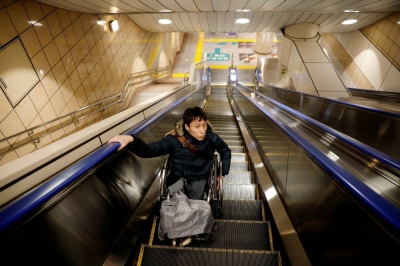
Sleeping alone in a place like this could cost you.

Japan’s national health insurance system isn’t perfect, but it’s fairly airtight. Unless you have a condition that might benefit from some sort of experimental treatment which has yet to be approved by the government, everything is covered, meaning you won’t pay more than 30 percent of the cost of that treatment. And if the amount you do pay exceeds a certain amount, the government will pay for most of that as well, so there is very little danger of, say, a patient having to mortgage his house to pay for care, even for a so-called catastrophic illness, which is something that occasionally happens in the United States.

But that doesn’t mean there aren’t medical situations where people end up paying a lot of money; it’s just that they probably don’t have to. This is why we’ve always been mystified by the supplemental health insurance business in Japan. Why buy extra insurance when the national system takes care of everything? One of the main reasons is private rooms, which the government doesn’t pay for. National insurance covers overnight stays, but only for non-private rooms, and only a very limited amount. If a patient wants a private or semi-private room, or even a special type of bed in a non-private room, he or she has to pay for it out of pocket.

Some doctors use this exception to make money. An acquaintance of ours, whom we’ll call A-san, recently told us a story about a visit she made to a private gynecology/obstetrics clinic in Saitama Prefecture. A-san was worried about her 77-year-old mother, who lives separately from her and has been suffering from a gynecological disorder for almost a year. Though she had been to her local hospital, the doctor there said he could not treat the condition properly, and while it wasn’t life threatening, it made everyday life difficult. A-san’s mother is on a fixed income and not tech-savvy, so A-san Googled the name of her condition and the first clinic that came up in the search said it had experience treating elderly women for that particular condition and happened to be not far from her mother’s home. She made an appointment.

The clinic’s owner and only doctor was quite chatty, and, after examining her mother, he told A-san that she needed an operation, and that because she had special insurance for elderly people she would only pay 10 percent of the surgery cost. In addition, since the surgery was expensive, she could apply for the kogaku iryo (high cost medicine) system, which would refund most of the 10 percent she would normally have ended up paying. In the end, she would only have to pay ¥44,400 for the actual operation.

But there was a catch. The clinic, which mostly catered to expecting mothers, only offered private rooms for ¥16,900 a night. The doctor said that following the operation, A-san’s mother would need to remain in the clinic for 10 nights, so altogether the operation would cost more than ¥200,000, not counting transportation to and from the hospital and whatever medication she would have to take. An interesting justification for extra charges...

You can’t take it with you: Horse gambler’s system stymied by tax law

Wednesday, December 5th, 2012

People in Japan who win prizes through the lottery (takarakuji) do not have to pay taxes on their gains, even if they win hundreds of millions of yen. However, people who win money betting on horses or other racing sports are required to report those earnings on their income tax returns. Why the distinction? Is it a difference in approach? Though both are forms of gambling, which is strictly circumscribed, lotteries are purely matters of chance, while betting on the ponies can involve calculation and experience. Only the tiniest fraction of the population could make a “living” from the former, by essentially winning a jackpot once, while there is a small but dogged subculture whose members at least like to think they can profit continually at the track.

Poster commemorating Japan Racing Association’s 150th anniversary

One person recently found out just how limited such a livelihood can be. A 39-year-old salaryman, whom the media hasn’t named, was recently indicted in Osaka for tax evasion. The man’s lawyer has told the press that he makes ¥8 million a year at an unspecified job. He is married and has one child with another on the way.

In 2006 he started spending enormous amounts of money on horse racing based on the belief that he could make a profit over time. Using software that “predicts winners,” he would analyze the statistics for individual horses and then bet on multiple contestants in individual races through the internet. He would not bet on races with horses making their debut since there wasn’t enough data available, but almost anything else was acceptable.

The point was to bet as much as possible on as many “favorable” horses as he could, including combination tickets. He lost most races, but he made enough on winning bets to pool that money and then use it for the next series of races. This sort of continuous overkill methodology meant that in the long run his winnings grew exponentially. During the three-year period from 2007 to 2009, he bought ¥2.87 billion worth of tickets and received winnings of ¥3 billion, thus making a net profit of ¥140 million.

However, he didn’t report these earnings on his tax return and eventually was audited by the Osaka branch of the National Tax Bureau. The amount they cited him for was not the ¥140 million he netted, but rather ¥2.9 billion — the ¥3 billion he grossed minus an expenditure of ¥100 million. Thus his tax bill for the three years is a whopping ¥570 million, and with the added penalty it comes to a total of ¥690 million.

Continue reading about tax on revenue from gambling →

Ishihara’s resignation doesn’t come cheap

Thursday, November 22nd, 2012

Naoki Inose, shoo-in for governor

On Nov. 21 Naoki Inose, the vice governor of Tokyo Prefecture under Shintaro Ishihara, who decided to cut his tenure short and make a run for national office, finally announced his candidacy for the governor’s seat. That contest will be decided in a special election set for Dec. 16, the same date on which the nation will vote for a new Lower House.

Inose, a writer by trade who belongs to no party, is virtually assured of winning because he has not only been endorsed by Ishihara himself, but also by the Liberal Democratic Party, the Komeito, Your Party and, naturally, Nihon Reformation Party, which just absorbed Ishihara’s fledgling Sunrise Party. There will be at least four other candidates running for Tokyo governor, but media say they have almost no chance.

Because Inose is considered a shoo-in, some people are wondering: Why bother with an election? According to the law, if the governor resigns or dies or otherwise leaves office before his or her term is up, an election has to be held to choose a new governor. The vice governor only takes over until an election is held. What bothers some residents of Tokyo is that it costs about ¥5 billion in taxpayer money to hold an election for Tokyo governor, which gives those residents one more reason to resent Ishihara’s capriciousness. He was only 19 months into his fourth term when he quit.

However, it should be noted that the new governor will be elected to a full four-year term, which means the next election will be in December 2016, not April 2015, which is when it would have taken place had Ishihara remained in office. Since vice governors — and there are four — are appointed by the governor after he assumes office, they are not chosen by the people, so rather than let a vice governor take over the remaining time it is considered democratically proper to simply hold a new election when a governor leaves prematurely, which has only happened once before in Tokyo. The problem is that the Tokyo prefectural assembly elections have always been held at the same time as the governor’s poll, but a representative of the Tokyo election authority told us the next assembly elections will take place as previously scheduled, in April 2015, which means the prefecture will now have to pay for two elections rather than one.

The capital’s is by far the most expensive governor’s race in the country, the closest being Osaka’s, which costs about half as much to carry out. Most prefectures spend about ¥1 billion. Much of the money is used for publicity. Since Japan has a resident registration system, citizens do not have to register to vote the way they do in the U.S., but that also means the local government has to send a notification to every eligible voter. A lot of money is also needed to make and erect thousands of signboards for the election and hiring staff to work at polling places. Tokyo has about 10 million eligible voters and the prefecture gets a fair return on its considerable investment. In the last two governor’s elections, the turnout was over 50 percent, which many not sound like much but is pretty good by recent standards. In 2011, only 25 percent of Saitama’s eligible voters turned out to elect that prefecture’s governor. Also, because the election for the Lower House is occurring on the same day, Tokyo may save a bit of money in terms of personnel costs.

Want more daycare? Pay workers more

Friday, November 2nd, 2012

Let’s nurture: Daycare center in northern Chiba Prefecture

The Health, Labor and Welfare Ministry just released the results of a survey on quitting. Among the various categories of employment studied, education proved to be the field with the highest percentage of turnover: 48.8 percent of first-time teachers quit their jobs within three years of being hired. Though the study didn’t give reasons for the high turnover rate it isn’t difficult to figure out: Teaching children is a high-stress occupation with little monetary reward.

The same goes for a subset of education, daycare, which continues to pose a very real problem. The lack of daycare facilities for children not old enough to attend school is one of the main reasons young couples are not having more children. According to a recent feature in Tokyo Shimbun, the main reason there are not more daycare centers is that, while demand is increasing as more women remain in the workforce after giving birth, there aren’t enough hoikushi (nursery school teachers). And the reason there aren’t enough hoikushi is that wages are bad and getting worse.

The average monthly pay for a hoikushi, regardless of age or experience, is about ¥200,000, which is almost 40 percent lower than the average monthly pay across the board. But hoikushi tend to work longer hours than the average worker, especially since the Child Welfare Law was revised in 2001, thus allowing more private companies to set up for-profit daycare centers. Average pay for daycare workers dropped after 2001, and private centers tend to hire staff on a non-regular basis, meaning no benefits. According to HLW Ministry statistics, there were 1.12 million licensed daycare workers in Japan in April 2012. However, Tokyo Shimbun reports that few of these people actually work in daycare.

Continue reading about nursery school teachers →

Candidate deposit requirement guarantees same faces on the ballot

Friday, October 26th, 2012

Ever wonder why so many Japanese politicians are old and that the only new faces tend to be their progeny? There are a number of cultural explanations for this phenomenon, but there’s also a financial one. It’s called the kyotakukin, or deposit, system.

The candidacy … paid in full (or How much is that politician in the window)

To run for any office in Japan, whether national or local, a person must deposit a certain amount of cash with the relevant election authorities. If the person wins, the deposit will be returned, but if the candidate loses and in the process fails to garner a certain percentage of the votes cast, he or she forfeits the money. The amounts required are high, and for national office almost prohibitively so. Candidates for prefectural and municipal office need to pay deposits of between ¥300,000 and ¥600,000, depending on the size of the constituency. However, candidates for the Lower House of the Diet have to deposit ¥3 million for a constituency seat and ¥6 million for a proportional seat. Constituency seats are decided for an electoral district simply by the number of votes cast in the district. Proportional seats are decided by the portion of votes a particular party receives on the proportional part of the ballot.

Many candidates, in order to guarantee success, run in both contests, because while they may lose in the constituency race, their party may gain a large enough portion of votes to allow them to be swept into office on the proportional ticket. In that case they have to pay deposits for both seats, meaning ¥9 million. If a constituency candidate doesn’t garner at least 10 percent of the total votes, he or she has to forfeit the deposit.

A few other countries have candidate deposit systems, but Japan’s is the most expensive by far. According to a recent article in the Tokyo Shimbun, the United Kingdom only requires the equivalent of ¥62,000 to run for national office, Canada ¥80,000, and Korea about ¥1 million, the highest after Japan. Most democracies either never had the system or have done away with it. Historically, its purpose was always obvious: to limit the number of candidates and make sure that those with financial power also held political power.

Continue reading about election campaign deposits →

Tax auditors running out of cheaters, ponder purpose in life

Friday, October 12th, 2012

Pandora’s box

You know that the recession is getting serious when even the National Tax Agency is reduced to twiddling its thumbs. The amount of unclaimed income that tax investigators discovered last year was ¥19.2 billion, comprising a measly 189 cases, the lowest since 1978. Moreover, of all the cases they investigated, only 61.9 percent were prosecuted, the lowest rate since 1973.

It should be noted that these numbers actually apply to tax returns or lack of reporting that occurred in 2008, since it takes about three years for the agency to complete an investigation before deciding on whether to pursue prosecution. So these numbers could simply be a temporary dip owing to the fact that 2008 was the year of the Lehman Brothers failure that jump started the whole economic crisis. However, there are other factors at play.

A tax agency official recently told Tokyo Shimbun that “prosecutors’ attitudes” changed after several recent scandals in which the legality of their methods were questioned, in particular that case in Osaka where a prosecutor cooked up evidence to nail a health ministry bureaucrat. Consequently, prosecutors are a bit gunshy about borderline cases that they would have pursued more aggressively in the past. In addition, over the years tax evaders have become more skillful at hiding income thanks to advances in information technology and the globalization of finances.

But a former tax official told Tokyo Shimbun that he thinks the quality of the auditing has also gone down. When he was an investigator, new recruits were trained under the strictest, most punishing circumstances. Veteran auditors put the screws to their underlings to make sure they were tough and relentless in getting as much evidence against tax scofflaws as they could.

Continue reading about a change in tax audits →

Money for education ends up in the toilet

Thursday, October 4th, 2012

Every elementary school student’s dream

Last month the Organization for Economic Cooperation and Development released statistics from 2009 related to the cost of education in 31 developed countries. For the third year in a row, Japan was the lowest in terms of portion of GDP spent on education and schools: 3.6 percent, which, while being 0.3 percentage points higher than in 2008, is still much less than the average, 5.4 percent. (Denmark, for the record, spends the most: 7.5 percent.) Not surprisingly, Japanese families spend more for college than anyone else in the world, and in terms of how much of the money spent on education was from private individuals, Japan ranked third at 31.9 percent (after Chile and South Korea). The world average is 16 percent.

In addition, the Ministry of Internal Affairs reports that in 2010, the year the ruling Democratic Party of Japan did away with tuition for public high schools, the average family with a full-time salaried head of household still spent 5.7 percent more for education than it did the year before. In the same class of households that had high school or college students, the increase was 9 percent.

On average, a household spent ¥1.91 million a year on education, down ¥700,000 from the previous year probably owing to the tuition break. That’s about 37.7 percent of the average family’s yearly income, and the poorer the family, the greater the burden: for families that earn ¥2 to ¥4 million a year, the portion spent on school is 57.5 percent. And if you wonder where all this money goes, don’t blame teachers, whose average salary over the past ten years has decreased by 9 percent.

It also doesn’t seem to be going to school infrastructure. The education ministry says that 60 percent of all public elementary and junior high schools in Japan are at least 30 years old and have never been renovated. In major cities such as Tokyo and Osaka, the portion is 70 percent. The part of the physical plant that tends to show its age the most are the restrooms. In fact, Japanese public school lavatories are infamous, as evidenced by all the J-horror movies that take place in them. Invariably they are described with “the 3 Ks” — kusai (smelly), kitanai (dirty), kurai (dark).

Continue reading about public school lavatories →

RSS

Recent posts

Our Users Say

  • Jodi: Thank you for this article. I am recently back in Japan and was surprised how often I needed to re-charge my...
  • Jiro: Not my party, your party!
  • RJ: JR sagi-style profit…“place on the system more of a burden” LOL
  • Colin Doyle: Why is JR too proud or too obtuse to ask the other train companies how they were able to integrate their...
  • Simon: I had a similar experience when I caved in to societal and peer pressure ;-) and got an iPhone 4S last year....