
Archive for the ‘Products’ Category

Are consumers being short-changed by the yen’s appreciation?

Thursday, October 20th, 2011

"Endaka" sale: Limited time only?

An ongoing matter of concern in the Japanese financial pages is the continued appreciation of the yen against almost every other currency. According to the overriding narrative attendant to this concern, Japanese exporters “enjoyed” a lower yen (en-yasu) until the middle of 2007, meaning that because the yen was valued low in relation to the currencies in the countries where these companies’ goods were sold, they made more money. That changed, and especially after the financial crisis of 2008, the yen shot up and continued to rise over the next three years, even after Japan’s economy was pummeled by the earthquake and tsunami last March. The yen is now up about 25 percent over what it was four years ago.

This is generally considered a bad thing since Japan’s economy depends on exports, but a lot of economists are saying the situation isn’t as dire as the media has portrayed it. Major exporters like Toyota and Sony have the ear of the mass media, so their troubles tend to represent all of Japanese industry in the financial press, but exports account for less than 20 percent of Japan’s economy. These companies threaten to move operations overseas if the yen isn’t brought down, but they’ve already moved a huge portion of their manufacturing overseas. In addition, they buy parts and materials from countries where their yen goes much further.

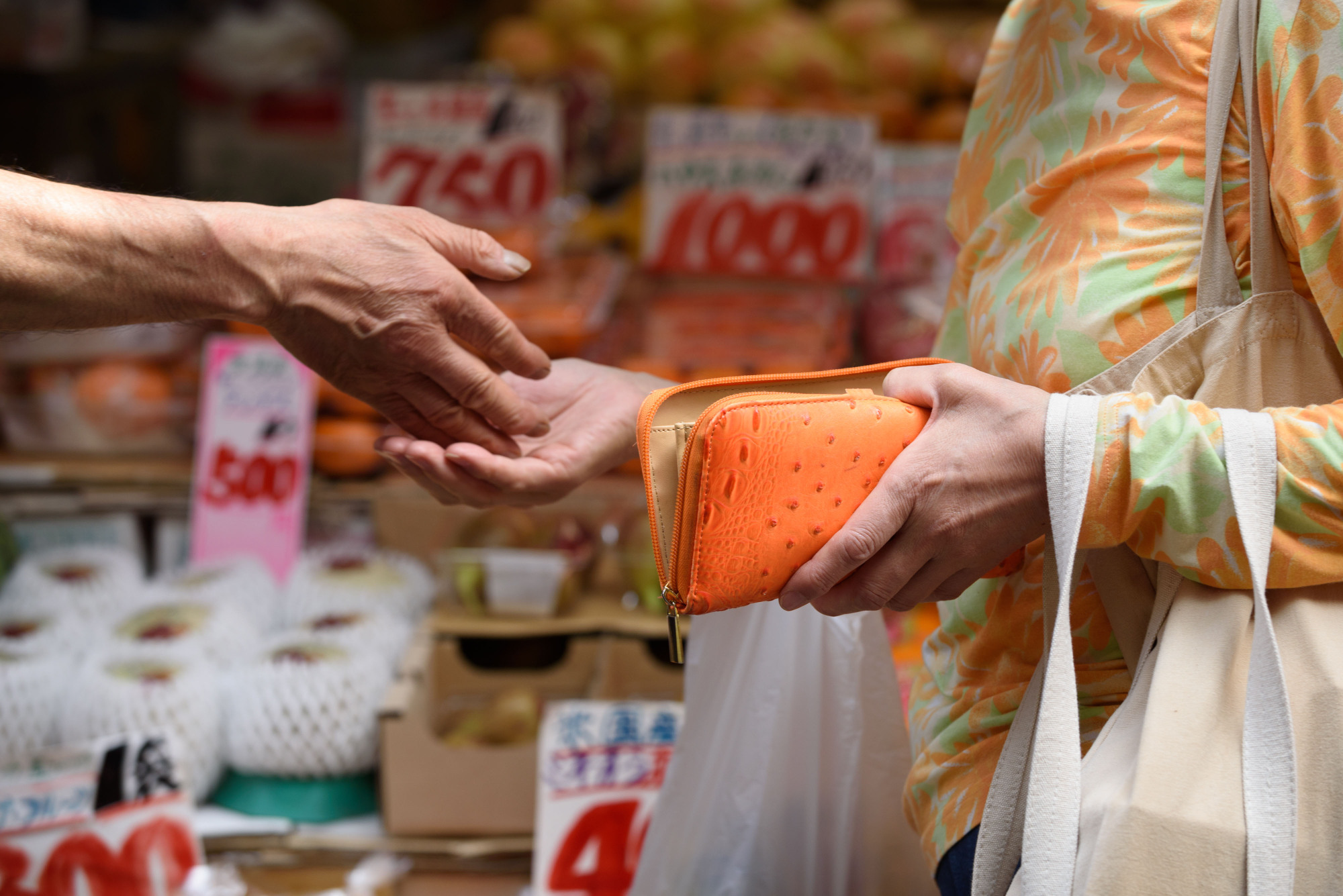
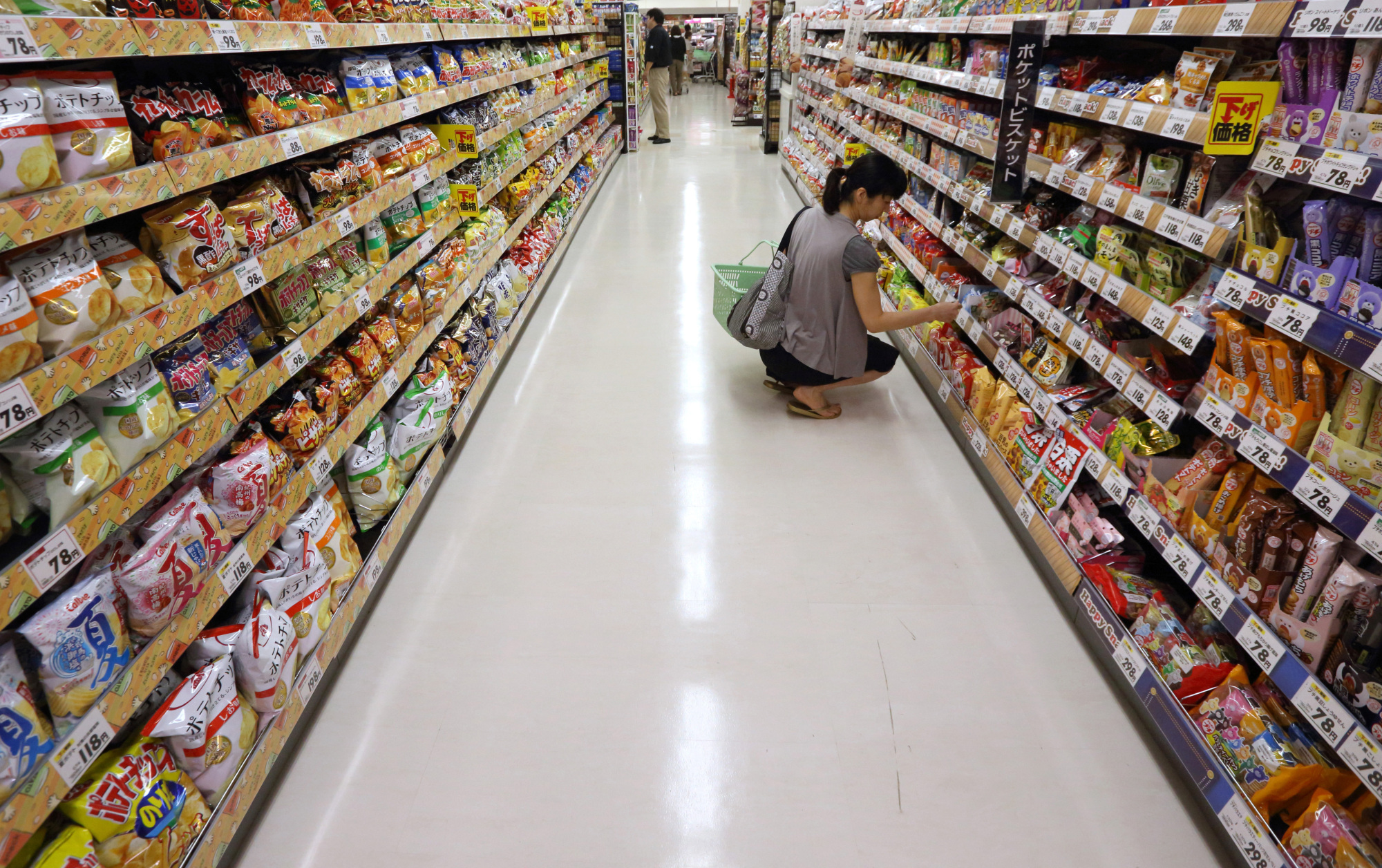
The economists who point this out also explain that the high yen can be considered a good thing for consumers, who should expect to “enjoy” substantially lower prices for imported products and Japanese products that use foreign ingredients. That should go without saying, and we’ve been waiting to see these savings at our local retailers. We’re still waiting. When we ask why the high yen isn’t reflected in prices we get answers like this: Though the yen is appreciating, commodity prices are increasing; many countries are experiencing inflation; since all imports have to be shipped, prices depend on the price of oil. In the end, these answers sound like excuses, because except for some isolated retail areas (Amazon; one particular brand of imported camembert, pictured), almost nothing sold in Japan from overseas has become noticeably cheaper in the last three years.

Continue reading about the high yen not translating to savings →

Will K-cars save the domestic automotive industry?

Monday, September 26th, 2011

Mira, Mira in the lot...

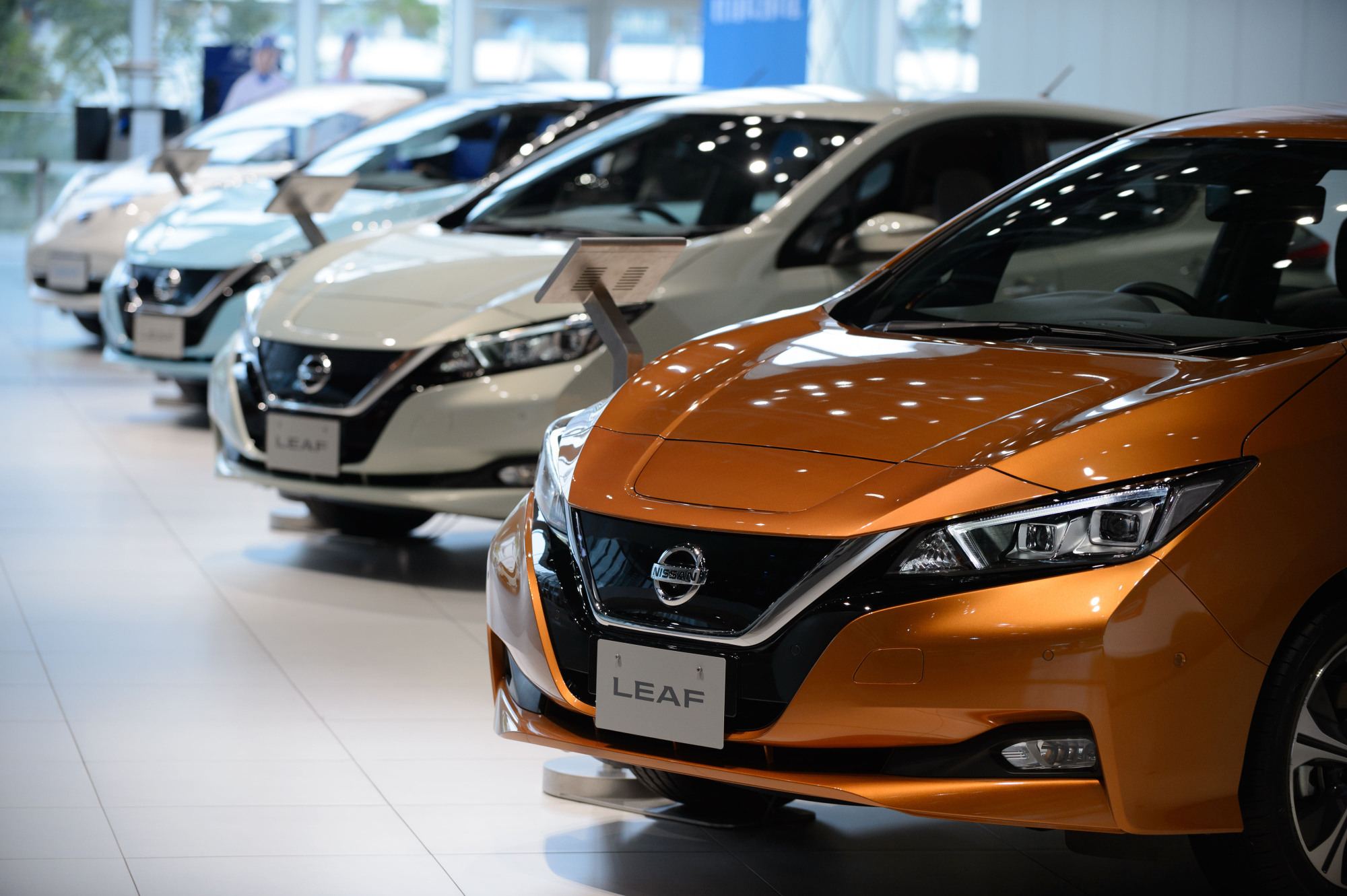
Two weeks ago, on the same day that it didn’t cover the huge anti-nuclear power demonstration in Tokyo, NHK’s 7 o’clock news bulletin had a feature about Daihatsu’s new small car, the Mira e:s (pronounced “ease”). Initially, we saw the report as further proof of the public broadcaster’s retreat from its traditional aversion to anything smacking of commercial promotion; but in the days since then we’ve come to realize that the announcement was newsworthy as more than just a financial story.

The e:s is the latest model in the Mira K-car series. K-car, as in kei (light), are automobiles made specifically for the Japanese market. The name refers to the engine displacement, which is only 660 cubic centimeters. Consequently, the weight and size are smaller than standard automobiles, which is why many people believe them to be unsafe. Because K-cars are very small and have to be lightweight, they tend to crumple easily in accidents. But they are also low-priced and get high gasoline mileage. What makes the e:s noteworthy is its even lower price–¥795,000–and even higher gas mileage–30 kilometers per liter based on JCO8 mode testing methodology. That’s almost a 40 percent improvement in mileage over previous Mira models owing to e:s’s lighter body structure and smoother transmission function. As a result, Daihatsu is marketing it as the “third eco car” after the all-electric vehicle and the hybrid. For comparison, Toyota’s best-selling Prius hybrid gets 32. 6 km/l and Honda’s Fit hybrid 26km/l.

Daihatsu hopes to sell 10,000 e:s per month, which seems quite feasible since Daihatsu is already the number one maker of K-cars in Japan (but not K-trucks). The company unloaded 341,000 during the first eight months of the year, though one of the main reasons for the robust sales was the March 11 disaster. K-cars are particularly popular in rural areas, where automobiles are a necessity and many families own more than two. Because people use them every day and for every sort of task, economy is the main consideration. Not only do they use less fuel, but the excise/weight taxes and insurance are much cheaper (though they are subject to a special Light Motor Vehicle Tax), maintenance costs are lower and owners in rural areas usually aren’t required to offer proof of a parking space for K-cars at the time of registration. According to the Japan Mini Vehicles Association, 43 percent of the automobiles registered in the Tohoku region before the March 11 disaster were K-cars. In the prefectures that align along the Japan Sea, the portion of K-cars often tops 50 percent, and in Okinawa it’s 53 percent. Many automobiles were destroyed in the earthquake and tsunami, and the demand for used cars, used K-cars in particular, soared as a result. A friend of ours who lives in Osaka just sold her 10-year-old K-car to a broker for ¥50,000. Usually with a car that old the owner has to pay the broker to haul it away.

In fact, K-cars have kept Japan’s domestic automotive industry stable in the past year. After the end of the government’s eco point system, sales of regular cars dropped, but K-car sales have been steady all along. And since they use less parts they were less adversely affected by the supply shortage caused by the March 11 disaster. Even Toyota is coming out with a K-car. Japan’s number one automaker never entered the field mainly because it has a 51 percent controlling interest in Daihatsu. But the market is too good to pass up right now, and the future holds at least some promise. Women are more likely to buy K-cars, and unlike the current demographic of over-70 women, who don’t drive at all, boomer women all drive and will likely continue to do so well into old age. The sunnier outlook for Daihatsu is exemplified by the company’s ad campaign for e:s, which features Bruce Willis making fun of himself as a celebrity shill. Only a company with supreme confidence would dare draw attention to how they draw attention.

LEDs make it cheaper to blind family and friends

Tuesday, May 31st, 2011

Freedom of choice: Lots of LEDs at Yamada Denki

The government wants you to save energy this summer because of the mess they’ve made up in Fukushima. The request is for you to reduce your consumption of electricity by 15 percent. Just in time for this setsuden (electricity reduction) season, the price of LED lamps is coming down. When LEDs first appeared on the market in 2009 the average price of a bulb was ¥3,827, according to the Light Bulb Manufacturers Association. The average price as of March was ¥2,274. Moreover, discount stores like Aeon and Don Quijote sell the 60-watt types for about ¥1,650.

Of course, when you say “60-watt type” you have to qualify the designation, since a 60-watt type LED does not, in fact, use 60 watts. Neither does a fluorescent bulb with that designation, which is still used because consumers are conditioned to think of a bulb’s brightness in terms of wattage, since that’s how you measured relative brightness with incandescent bulbs: the more power, the brighter the illumination. The same goes for fluorescents and LEDs but the proportions are much different, making comparisons almost pointless. For instance, a 60-watt type LED uses about one-eighth the power that a 60-watt incandescent bulb uses, but the brightness in terms of lumens is about half. The light bulb industry would prefer that you choose a bulb based on lumens, since the “XX-watt-type” designation is basically meaningless in the LED age.

Continue reading about LED light bulbs →

More reasons to spend money on chocolate, as well as reasons not to

Monday, February 14th, 2011

It may be a bit late, but for the record 20 percent of all chocolate sales in Japan are connected to Valentine’s Day. Everyone who’s lived in Japan for any length of time knows the ritual: On Valentine’s Day, women give gifts of chocolate to the men in their lives, whether they love them or not, and then on March 14 — White Day, as it’s been dubbed — men are supposed to reciprocate. The custom of giri-choco, or chocolate that’s given to men as a kind of “obligation” (i.e., work superiors and colleagues) didn’t develop until the early ’90s. In fact, giving chocolate to one’s lover wasn’t widespread here until the ’70s. Though Valentine’s Day sort of took off after the war, there were no hard and fast rules. You just gave sweets to your boy/girlfriend or spouse, and not necessarily chocolate.

Will you be my...hey! Come back!

This year, chocolate makers have been especially hopeful about sales for two reasons. This is the first Valentine’s Day in three years that falls on a weekday, and manufacturers think women will be buying more giri-choco for their male co-workers, even though figures show that custom seems to be fading overall. In fact, most confectioners are predicting double-digit increases over last year’s sales. The second bright spot is that women seem to have expanded their circle of chocolate recipients. Now there’s something called tomo-choco, meaning chocolate that is given to friends, specifically other women. This development seems to be in response to the general feeling that men who receive giri-choco don’t necessarily want to receive it, so women basically exchange chocolate with other women. Taking this idea to its solipsistic end, there’s even something called gohobi-choco, which is chocolate, usually expensive chocolate, that you give to yourself. (Gohobi in this case means to “reward” yourself).

In any event, one chocolate maker, Glico, says that according to its research, the average young woman who gives chocolate on Valentine’s Day gives it to more than 10 persons. Another confectioner, Lotte, found in a survey of females ranging from junior high school students to 40-somethings that the average woman will spend ¥3,266 on chocolate during this Valentine’s Day season, which is a 16 percent increase over last year’s actual average sales.

There are reasons not to give chocolate, as well, the main one being that the prime ingredient, cocoa, is a notoriously exploitative crop. About 70 percent of the world’s cocoa comes from four African countries: Ivory Coast, Ghana, Nigeria and Cameroon. The bulk of this crop is cultivated and harvested with child labor, much of it unpaid. Japan imports more than 55,000 tons of cocoa a year, 69 percent of which is from Ghana, so there’s a good chance that if you buy chocolate made by the usual domestic companies it’s going to be the product of slave labor. Fair Trade labels aren’t always a guarantee in this situation since a lot of plantations in Africa that use slave labor have in the past managed to still get covered by fair trade agreements, and according to Amnesty International, only 0.5 percent of the retail price of a chocolate product makes it back to the grower anyway. But most of the fair trade chocolate sold in Japan is from Bolivia, which seems to have better labor conditions than Africa does. Top Valu, a discount brand sold at Aeon, Saty and Jusco supermarkets, offers Fair Trade chocolate, so that’s an option for gift-givers with consciences and tight budgets.

Got your back: Randoseru makers enjoy a captive, if shrinking, clientele

Tuesday, January 11th, 2011

For the past several weeks some good Samaritans have been sending gifts to various child-welfare facilities throughout Japan. All of the senders identified themselves as “Naoto Date,” the name of the fictional character who was a professional wrestler called Tiger Mask in a popular animated series that aired between 1969 and 1971. Date also grew up in a child welfare facility, which for all intents and purposes is an orphanage; when he grew up and made money, he gave some of it to the facility that raised him.

Randoseru display at Nitori

In at least three of these charitable incidents, the anonymous donor deposited gift-wrapped randoseru at the entrances of the facilities. English-language news outlets translate this word as “school bags,” which doesn’t do justice to the thing it describes. Randoseru, a local rendering of the Dutch word ransel, is considered a uniquely Japanese accoutrement to the lives of young children. Randoseru are those boxy, hard leather backpacks that elementary children wear on their way to and from school and which are considered mandatory for no other reason than that everyone at that age wears them. Traditionally, they are expensive, which explains why the anonymous gift-giver chose that particular gift: orphanages, he figures, probably wouldn’t be able to afford them. He obviously thought he was giving those kids, who likely attend public schools alongside non-orphans, a measure of self-esteem.

Legend has it that the randoseru craze was sparked when the future Emperor Taisho was given a genuine Dutch backpack as a child, and while explanations for the subsequent popularity of such an accessory focus on practicality, a closer look at the phenomenon reveals it has more to do with marketing and status. Because a child will only use it from the first to the sixth year of elementary school (though many stop wearing theirs by the beginning of fifth year because randoseru look ridiculous on larger kids), he or she will most likely only possess one, and so the randoseru represents in commodity form a child’s formal entrance into the educational system. It is an emblem of a rite of passage. All children show up to class on the first day of first grade dressed in their school uniforms and sporting identical and — most important — brand new randoseru. God help the child who shows up with his older brother’s or sister’s hand-me-down bag or even a standard canvas backpack, no matter how new and fashionable. The kid would be teased mercilessly.

Continue reading about randoseru →

Japan’s toilet business flush with success

Friday, October 1st, 2010

Whoo!: Washlet with wall control

Whoo!: Washlet with wall control

The flush toilet is one of those Western imports that Japanese industry has adapted to its own special needs and then improved. Though you’ll still find a lot of traditional Japanese toilets at older public facilities and in the countryside, the Washlet toilet, with that surprising little spray nozzle, has become so ubiquitous as to be a standard fixture in Japanese life.

Washlet is a registered brand name for Toto, which dominates the toilet bowl business in Japan, and though most histories of the Washlet start in the 1980s, spray function toilets (onsui senjo benza) have been around in one form or another since the 1960s, and number 2 Inax’s Shower Toilet seems to be actually older than the Washlet. With traditional Japanese toilets there is no contact between the person and the porcelain, and when Western toilet bowls first made their appearance here, Japanese were perplexed by the seat for various reasons. Some were concerned about hygiene, while others simply found them too cold. The first improvement the Japanese made was to heat the seat.

Continue reading about Washlets in Asia →

Tap water gains for economic not environmental reasons

Monday, June 14th, 2010

Despite a worldwide environmental movement to wean people off of bottled water, which depletes natural water reserves that localities depend on and requires unneeded amounts of energy to package and distribute, Japanese consumer preference for “mineral water” in PET bottle continues unabated, according the web version of the Nihon Keizai Shimbun. Surveys indicate that the majority of people think that bottled water is “safer and healthier” than tap water, despite the fact that local utilities have vastly improved their filtering technologies. Several years ago, in fact, Tokyo’s own waterworks started bottling tap water and selling it at train kiosks and convenient stores under the name Tokyo Sui (Tokyo Water) to promote the idea that the city’s tap water is not only perfectly safe to drink, but good-tasting as well.

For here or to go?

For here or to go?

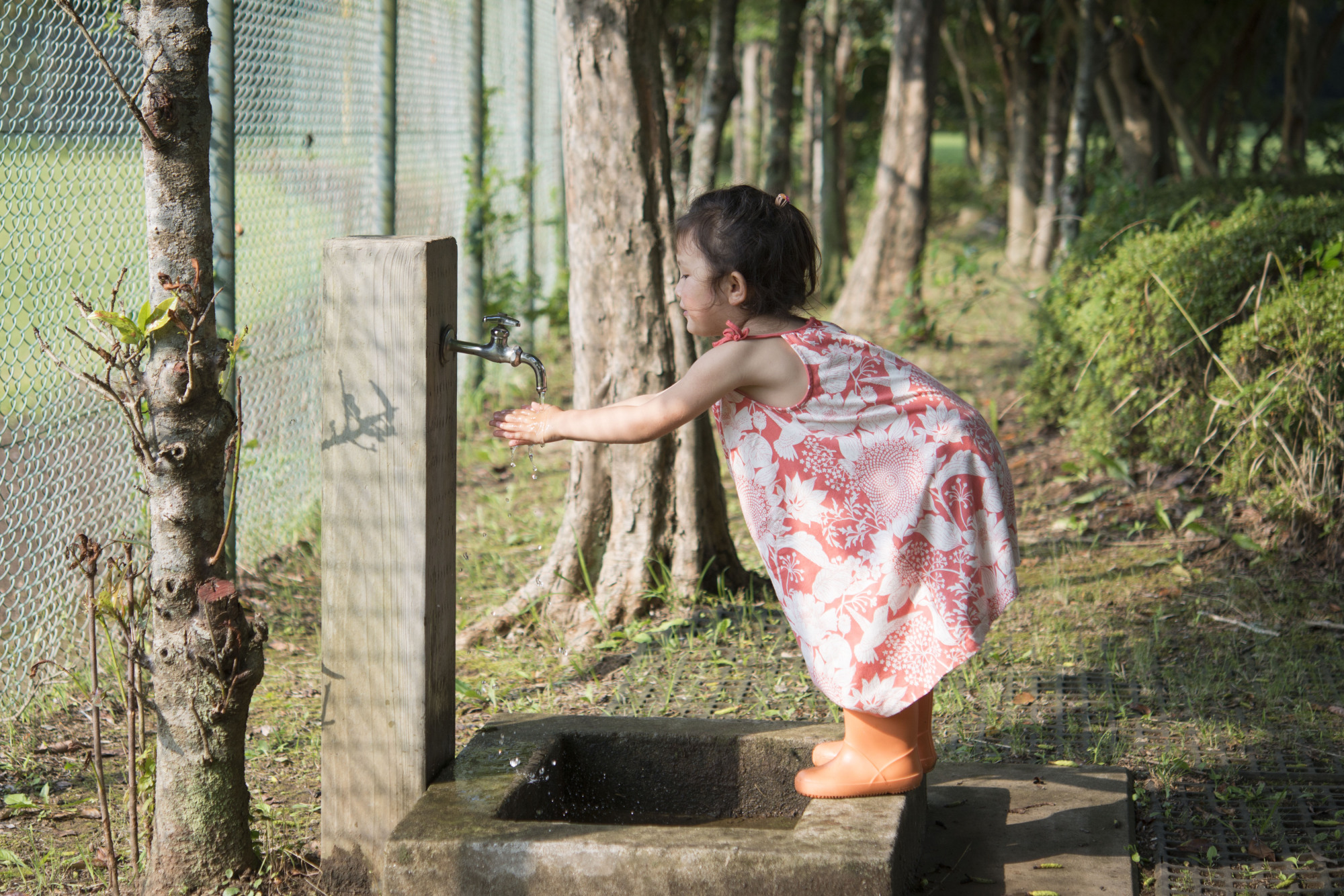
The whole issue of “oishii mizu” (delicious water) is one that Westerners may find difficult to understand. Most people disliked pre-filtration tap water because it had a taste, usually due to chemicals introduced to kill dangerous bacteria when the water is transported long distances. That’s why the tap water in Los Angeles, which was built on a desert, traditionally tasted awful and the water in San Franciso, which comes from nearby mountains, had no taste.

Over the past two decades Tokyo has gone to great lengths to improve its water supply by cleaning up reservoirs and watersheds, devising new filtering methods, replacing pipes and reducing the use of chlorine and other disinfectants. The more difficult problem is getting people to change their outlook, which is why the city bottled its own water and sold it. Apparently, it didn’t work as well as hoped. In the Nikkei survey, more than half of the respondents, who ranged in age from 20 to 69, said they drink bottled water “often” or “sometimes.” Among the most common reasons for drinking bottled water was that it either “tastes better” or is “healthier.” Among those who said they “don’t like tap water,” the highest percentage were people in their 20s, about 57 percent.

However, the statistics become more interesting when money is involved. Sixty percent of the respondents say they spend “less than ¥500 a week” on bottled water, while 26 percent say they spend “between ¥500 and ¥1,000.” The most popular brands, in order, were Suntory Tennensui, Asahi’s Rokko no Oishii Mizu and Coca Cola’s I Lohas, which topped the list of people under 50 when asked which brand they intended to drink more of. The term “lohas” has become associated with environmentally friendly products, thus indicating that many people who drink bottled water are conscious of conservation issues.

Such people, of course, should be the natural market for tap water, but apparently they still have their prejudices. In fact, consumption of tap water seems to be increasing, though it’s difficult to measure such things. The Japan Purifier Association, which represents companies that manufacture home water filtering devices, said that sales of “container-type” purifiers more than doubled between 2007 and 2008 and has continued to rise.

The most popular brand is Brita, a pitcher with a filter inside that you just fill with tap water. A recent article in the Asahi Shimbun included comments from Brita users who say they bought the device because they were spending too much money on bottled water. The retail cost of the pitcher starts at about ¥3,500, and one filter cartridge, which starts at about ¥900, lasts two months.

If they want to save money they don’t need to buy something to make their tap water potable, because it’s already potable. In the same Asahi article a representative of the Japan Waterworks Association said that for most regions in Japan home or portable purifiers are redundant, because the water is already about as pure as can be. He wants his own association to carry out more effective public relations to make people aware of this fact, but it’s difficult to compete with large beverage companies who have convinced the public that bottled water is automatically superior. (Suntory is currently running a TV commercial in which a housewife advocates using bottled water to make “more delicious rice”)

Of course, all it should take to convince someone to switch to tap water is a simple taste test, but prejudices can be powerful things. People don’t always believe what’s right there in front of their eyes, or on their tongues.

RSS

Recent posts

Our Users Say

  • Jodi: Thank you for this article. I am recently back in Japan and was surprised how often I needed to re-charge my...
  • Jiro: Not my party, your party!
  • RJ: JR sagi-style profit…“place on the system more of a burden” LOL
  • Colin Doyle: Why is JR too proud or too obtuse to ask the other train companies how they were able to integrate their...
  • Simon: I had a similar experience when I caved in to societal and peer pressure ;-) and got an iPhone 4S last year....