
Archive for the ‘Family matters’ Category

In Japan, you get the education you (the consumer) pay for

Thursday, September 22nd, 2011

All in the family: National cram school Kawai Juku joins forces with local cram school Tokyo Shingaku Seminar for some educational synergy

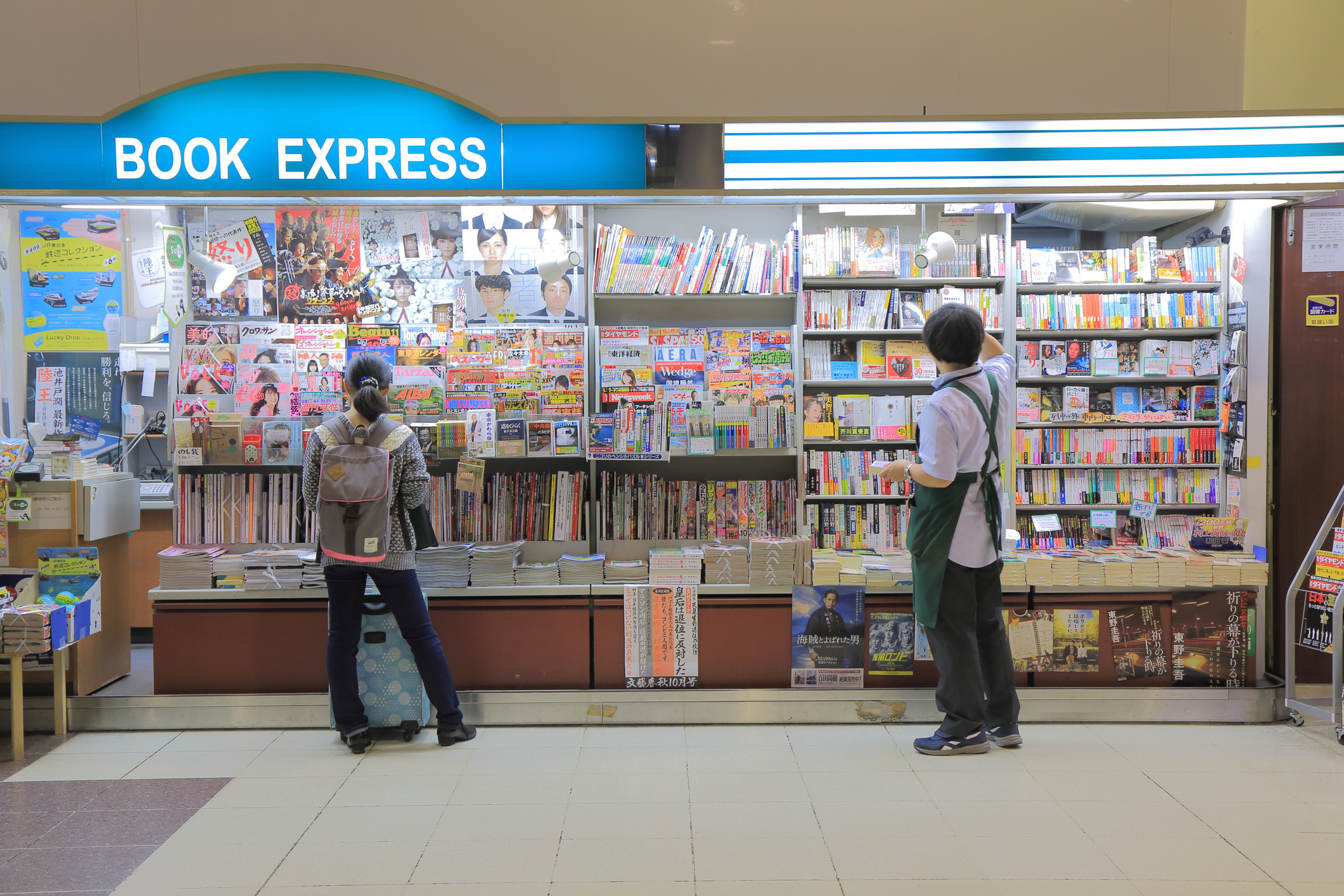
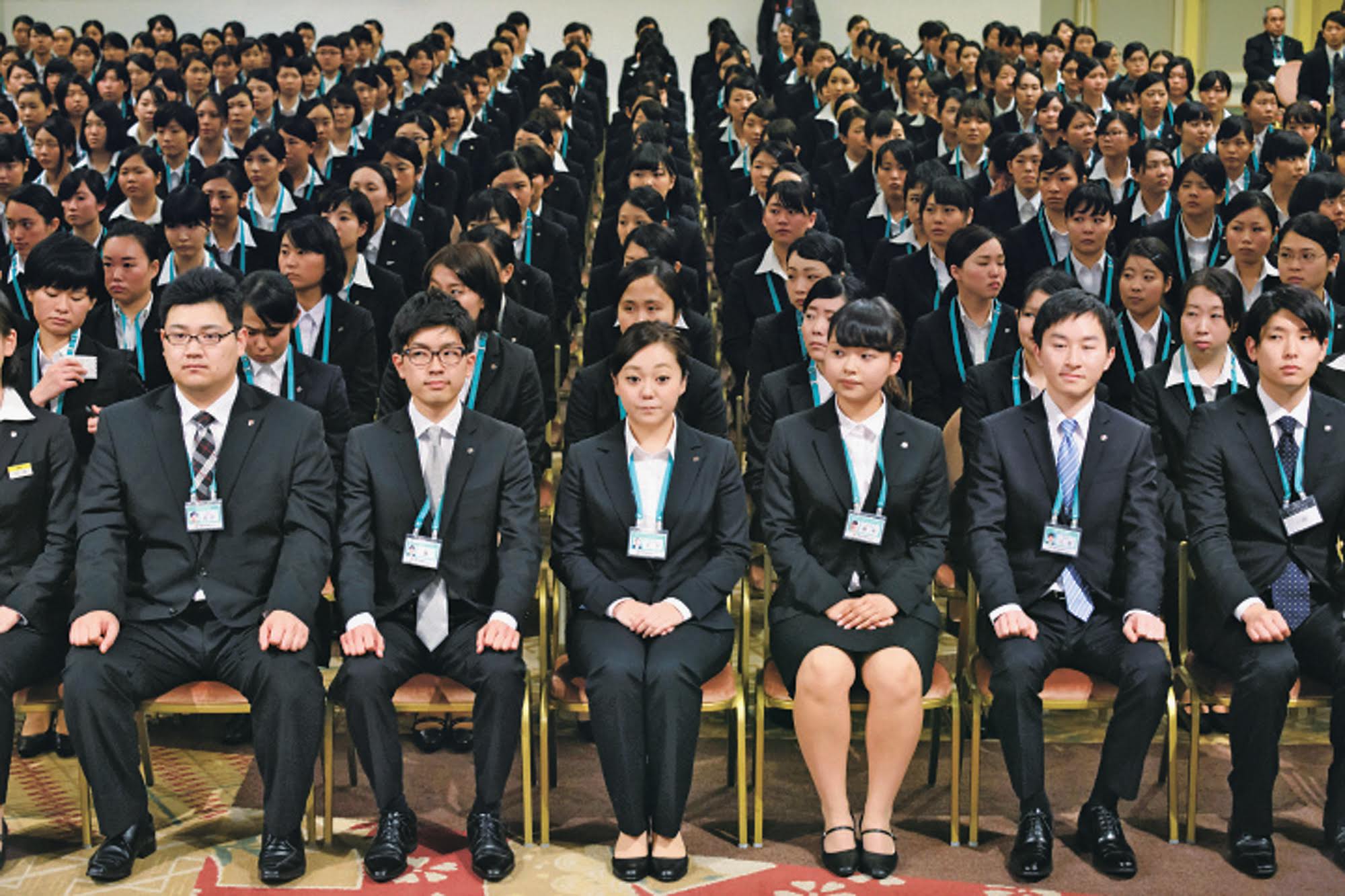
Last week, the Organization for Economic Cooperation released a list that ranked the 31 member countries with “comparable data” in terms of public spending on education as a percentage of gross domestic product. Japan came in last at 3.3 percent. The average percentage was 5.0, with Norway at number one with 7.3 percent. However, in terms of private spending as a proportion of all expenditures on education, Japan came in third out of 28 OECD member countries with comparable data, at 33.6 percent. Only South Korea and Chile were higher.

These findings were based on data from 2008, which means they don’t take into consideration recent changes implemented by the Democratic Party of Japan. The most relevant change in this regard is the government’s decision to waive tuition for high school students by paying subsidies to local governments. High school is not mandatory in Japan, and even public high schools require fees of some sort. These subsidies will probably change the OECD’s rankings when it compiles a list for public spending in 2011, but it may not have any effect on the list for private spending. One of the reasons the DPJ pushed the tuition-free policy is because the party recognizes that in the current job climate even entry-level, minimum-wage service employment requires a high school diploma. The days when junior high school graduates were solicited for factory jobs and other blue collar work is long gone. But compared to many of the other costs that parents pay to have their children educated, public high school tuition is almost like a drop in the bucket. According to education ministry figures for 2006, the average public high school student paid ¥112,000 a year in tuition, which is certainly high for lower income families; but at the same time, the average public high school student also paid ¥176,000 a year for outside cram schools, or juku. Altogether, parents paid on average ¥520,000 a year in education costs for a child if he or she went to public high school, which is about half the cost for private high school students, who paid on average ¥1,045,000 a year (including ¥785,000 tuition and ¥260,00 for juku). Continue reading about spending of private education →

All in the family: Keeping inheritances is a tricky business

Tuesday, August 23rd, 2011

A recent story reported by all the major media highlights a peculiar aspect of current household economics in Japan. In March, a home in Fukuoka City was broken into and ¥160 million in cash was stolen. One of the people who lived there, a 26-year-old woman, reported the robbery to the police, who have yet to catch the thief.

Wills are almost unheard of in Japan, which may be the problem

During their investigation the police wondered why the woman had such a huge amount of cash in her home. The usual reason is that there is almost no place to park that money these days. With bank interest rates remaining at zero indefinitely, more and more families just sock their money away in the mattress (or, in the Japanese idiom, the wardrobe). Mutual funds and other investment opportunities are available in Japan, but the average Japanese person tends to be averse to anything with risk attached.

In the case of the burgled party, the reasons were a little different. Investigators eventually learned that the ¥160 million was part of a ¥1.45 billion inheritance that the woman and her two older siblings received from their mother, who died in 2008 at the age of 64. The inheritance was made up of both cash and assets, including real estate, and had they properly reported it the three would have been liable for ¥544 million in inheritance taxes. As it stands now they will have to pay more, what with fines and penalties added on. In their case it’s even worse since they may be paying tax on ¥160 million they no longer have.

Continue reading about wills in Japan →

Which appliance is the energy hog? It’s not your air conditioner

Tuesday, August 16th, 2011

See that red button on the right...

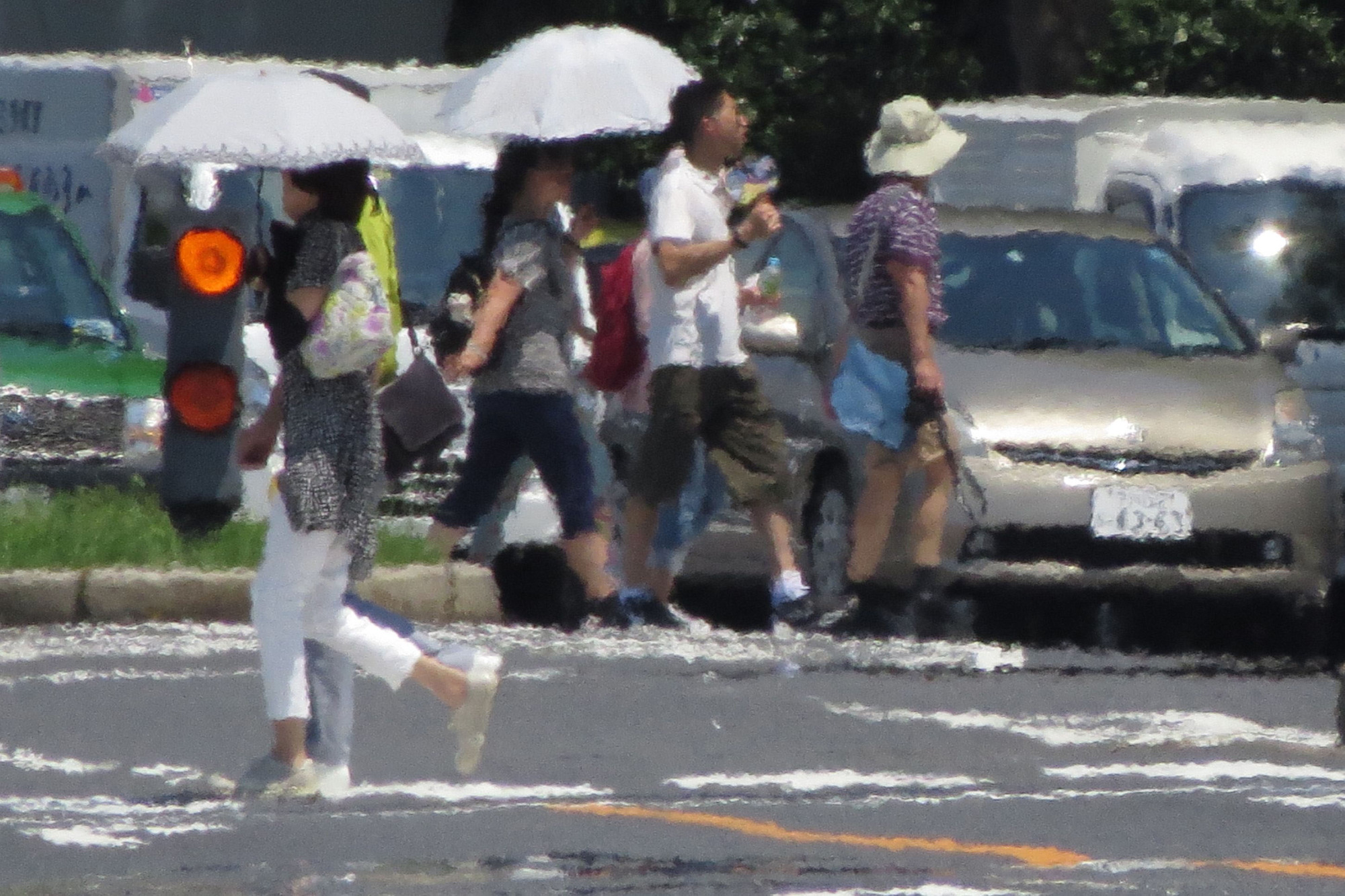
Actually, in terms of overall electricity usage in households, air conditioners use the most on a continual basis, followed by refrigerators. But on a unit per hour basis, air conditioners are not that bad, even though they’ve been made the villain by the media. Broadcasters, in particular, are offering tips to households on how to cut down on energy consumption and the main suggestion is to set your air conditioner at 28 degrees centigrade. Because so many people, in particular the elderly, have fallen victim to heat stroke, no one is saying to turn off the air conditioner any more, but the general consensus is that the average air conditioner in the average home uses about 130 watts of energy and, overall, accounts for a bit less than a fourth of the summer electricity bill, which gives you some idea of the savings potential.

What the media doesn’t say, according to an article in the most recent issue of Shukan Post, is that there is another appliance in your house that actually uses more electricity. A typical large screen (over 37 inches) LCD television set uses on average 220 watts, or 70 percent more energy than the air conditioner if both are being used continuously, but, of course, media companies aren’t going to suggest you turn off the TV because that would hurt their business.

Continue reading about the most power-hungry appliance →

The imperfect science of delineating poverty

Wednesday, July 20th, 2011

If you live here, it's got to mean something

You’re as poor as you feel, but economists demand a criterion that’s more exact. One way is the “relative poverty” index, which the Organisation for Economic Cooperation and Development (OECD) uses. The poverty line is set at about one-half a country’s median individual income. If your income falls below that line, you are considered poor.

The Ministry of Health Labor and Welfare recently released the relative poverty statistics for Japan as of last year, and found that 16 percent of Japan’s population falls below the poverty line, which is calculated as being about ¥1.12 million in annual income for one person. This is 0.3 percentage points higher than it was the last time the survey was taken, in 2007, and 4 percentage points higher than the figure found during the first survey in 1985. On the other hand, the average population portion living below the poverty line for all 30 countries in the OECD is 10.6 percent, which is 0.4 percentage points lower than three years ago. (The only other OECD country with a higher poverty rate than Japan’s is the U.S., at 17.1 percent.) For reference, the average household income in Japan is ¥5.49 million.

Continue reading about the "relative poverty" index →

Okozukai vs. hesokuri: An alternate view of home economics

Tuesday, July 5th, 2011

Imitation of wife: Some homemakers keep a lid on it

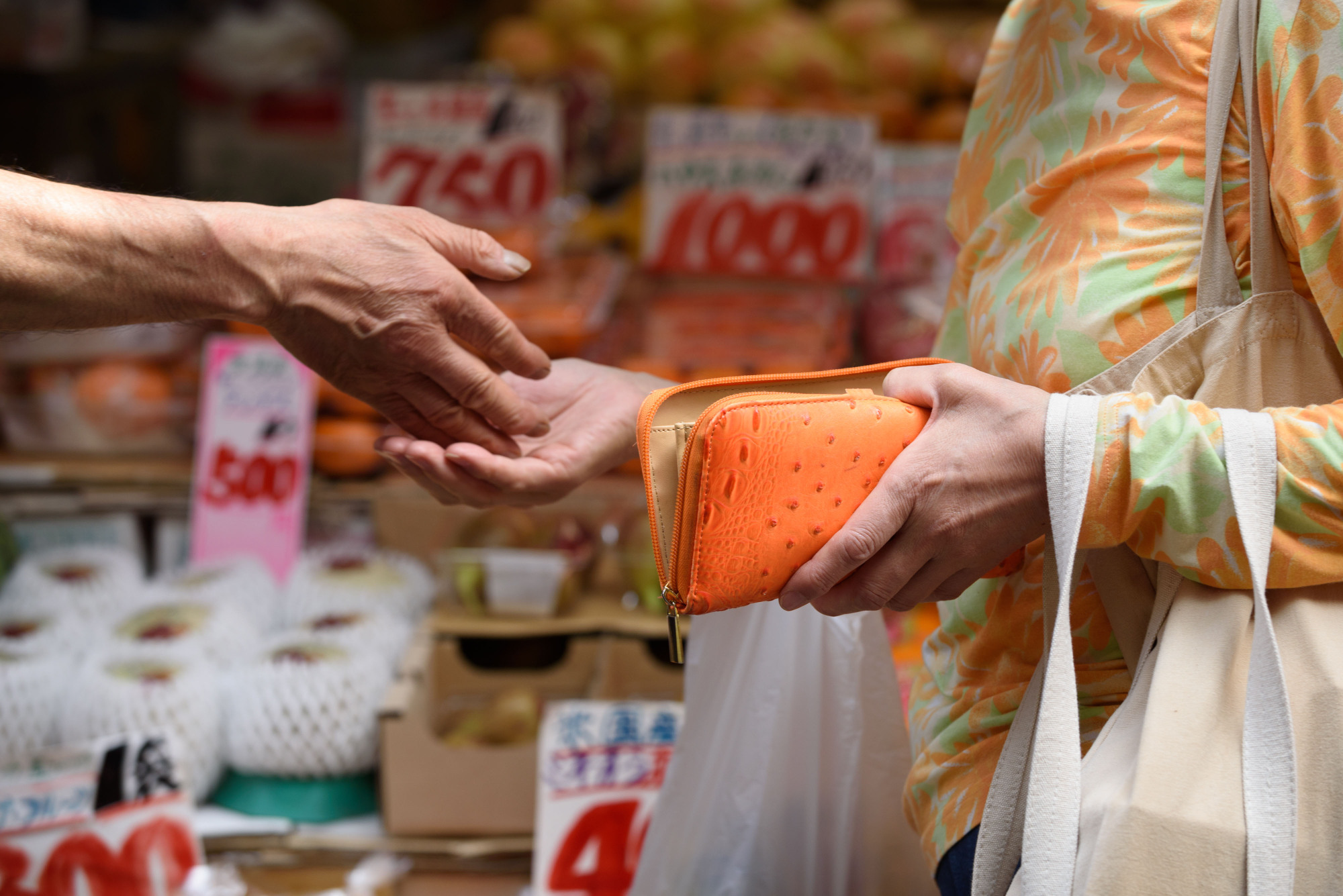
Late last month the media covered the results of an annual survey carried out by Shinsei Financial Co. that attempts to get a handle on the state of family finances. According to the one thousand respondents, the average amount of okozukai that wives give their salaryman husbands has declined for the fourth year in a row to ¥36,500 a month. It’s also the first time in seven years the monthly allowance dropped below ¥40,000. It’s now the lowest it’s been since 1982. For comparison’s sake, the highest amount recorded by the survey was ¥76,000 in 1990, just before the so-called bubble burst.

Okozukai is usually translated as “pocket money” or “allowance,” but the main point is that it is money “given” to someone by another person who, implicitly, controls it. In Japan, traditionally, the wife handles the finances even if the husband is the sole breadwinner. Consequently, it’s a fairly easy statistic to track and does a good job of illuminating the financial situation of the middle class. The husband spends his okozukai on himself, often on after-hours drinking with colleagues, and according to various analyses of the survey it seems that families are saving money by having the husbands spend less on lunch and said drinking. This trend explains the explosion of low-priced izakaya (drinking establishment) chains in recent years.

The survey also indicates that the custom of wife-controlled finances is changing in accordance with demographic shifts. Now, only about half of all Japanese household finances are controlled by the wife alone. In about 30 percent of the households, the finances are shared by a couple since both work full-time. This means that each spouse has his/her own bank account and, in most cases, they divide certain expenses between them, with one handling the house payments, the other the utilities, etc. And in the remaining 20 percent of homes the finances are controlled by the male householder, which tends to be the dominant situation in the West. However, there’s one important difference that the media never mentions with regard to household finances probably because it never occurs to Japanese reporters. In the West, regardless of who nominally controls the pocketbook, property is often held jointly by a married couple, meaning that bank accounts and property titles have two names. In Japan there is no such thing as a joint account.

Continue reading about household finances in Japan →

Joyful Honda and the rise of the car-centric ‘home center’

Friday, June 24th, 2011

What a gas: Joyful Honda in Inzai

People living in Tokyo, especially those who don’t own cars, can often be oblivious to the priorities of people living outside of Tokyo. So-called home centers have become a central facet of suburban people’s lives, and while you can find a few within the borders of the capital, the metro ones are by necessity much smaller. The whole point of a home center, which contains jumbo-sized retail sections dedicated to everything necessary for everyday living, from food to furniture to tools, is that you drive your car to it. A huge parking lot is part of the bargain, literally and figuratively.

One of the most successful home centers is Joyful Honda, which has no relation to Honda Motors, though it is conspicuously friendly to car culture. The company operates 15 outlets, the biggest of which is located in Hitachi, Ibaraki Prefecture, which is also the corporate headquarters. The Joyful Honda retail property in Hitachi covers, in the prosaic parlance of Japanese developers, the equivalent of 4.8 Tokyo Domes. Most of this real estate is taken up by parking lots, which can hold up to 6,800 vehicles. In land-scarce Japan, this is a huge investment and points to a sea change in the Japanese retail mindset. Traditionally, retail centers were built around train stations, even in suburban and rural areas. However, outside of large urban centers, retail complexes have become isolated, self-contained, destinations for motorists. Shoppers have to have parking; more importantly, free parking. At Joyful Honda, you don’t even have to have your parking validated the way you would at a store in Tokyo. The prices rival those you will find at the cheapest discount retailers, which means the cost of the parking fields they control (Inzai, Chiba Prefecture: 5,000 cars; Ota, Gunma Prefecture: 5,700 cars; Mizuo-cho, Tama: 3,200 cars) are somehow absorbed.

Continue reading about suburban home centers →

LEDs make it cheaper to blind family and friends

Tuesday, May 31st, 2011

Freedom of choice: Lots of LEDs at Yamada Denki

The government wants you to save energy this summer because of the mess they’ve made up in Fukushima. The request is for you to reduce your consumption of electricity by 15 percent. Just in time for this setsuden (electricity reduction) season, the price of LED lamps is coming down. When LEDs first appeared on the market in 2009 the average price of a bulb was ¥3,827, according to the Light Bulb Manufacturers Association. The average price as of March was ¥2,274. Moreover, discount stores like Aeon and Don Quijote sell the 60-watt types for about ¥1,650.

Of course, when you say “60-watt type” you have to qualify the designation, since a 60-watt type LED does not, in fact, use 60 watts. Neither does a fluorescent bulb with that designation, which is still used because consumers are conditioned to think of a bulb’s brightness in terms of wattage, since that’s how you measured relative brightness with incandescent bulbs: the more power, the brighter the illumination. The same goes for fluorescents and LEDs but the proportions are much different, making comparisons almost pointless. For instance, a 60-watt type LED uses about one-eighth the power that a 60-watt incandescent bulb uses, but the brightness in terms of lumens is about half. The light bulb industry would prefer that you choose a bulb based on lumens, since the “XX-watt-type” designation is basically meaningless in the LED age.

Continue reading about LED light bulbs →

RSS

Recent posts

Our Users Say

  • Colin Doyle: Why is JR too proud or too obtuse to ask the other train companies how they were able to integrate their...
  • Simon: I had a similar experience when I caved in to societal and peer pressure ;-) and got an iPhone 4S last year....
  • goyaty: E-Mobileは、酷いサービスとサポート する。そのため、私も契約を更新しな でWiMAXに移った。WiMAXは、1年...
  • pat: Great article! There must be a way to make the bills easier to understand, and there must be a reason why this...
  • Paul: Epic.