
Archive for the ‘Economy’ Category

Japan Post would prefer to let sleeping dogs, and accounts, lie

Friday, May 18th, 2012

Sleep tight: Japan Post data center in Chiba

Since last year, the government has talked about tapping so-called kyumin koza to help fund reconstruction in the areas hit by the March 11 disaster. Kyumin koza are “sleeping bank accounts,” meaning savings in financial institutions that have gone untouched for long periods of time. The government says it needs at least ¥50 billion for reconstruction, and every year banks “uncover” about ¥80 billion in unclaimed accounts, 90 percent of which contain less than ¥10,000 each. For banking purposes the definition of a kyumin koza is an account from which no transactions have been carried out for ten years and whose holder the bank has not been able to contact.

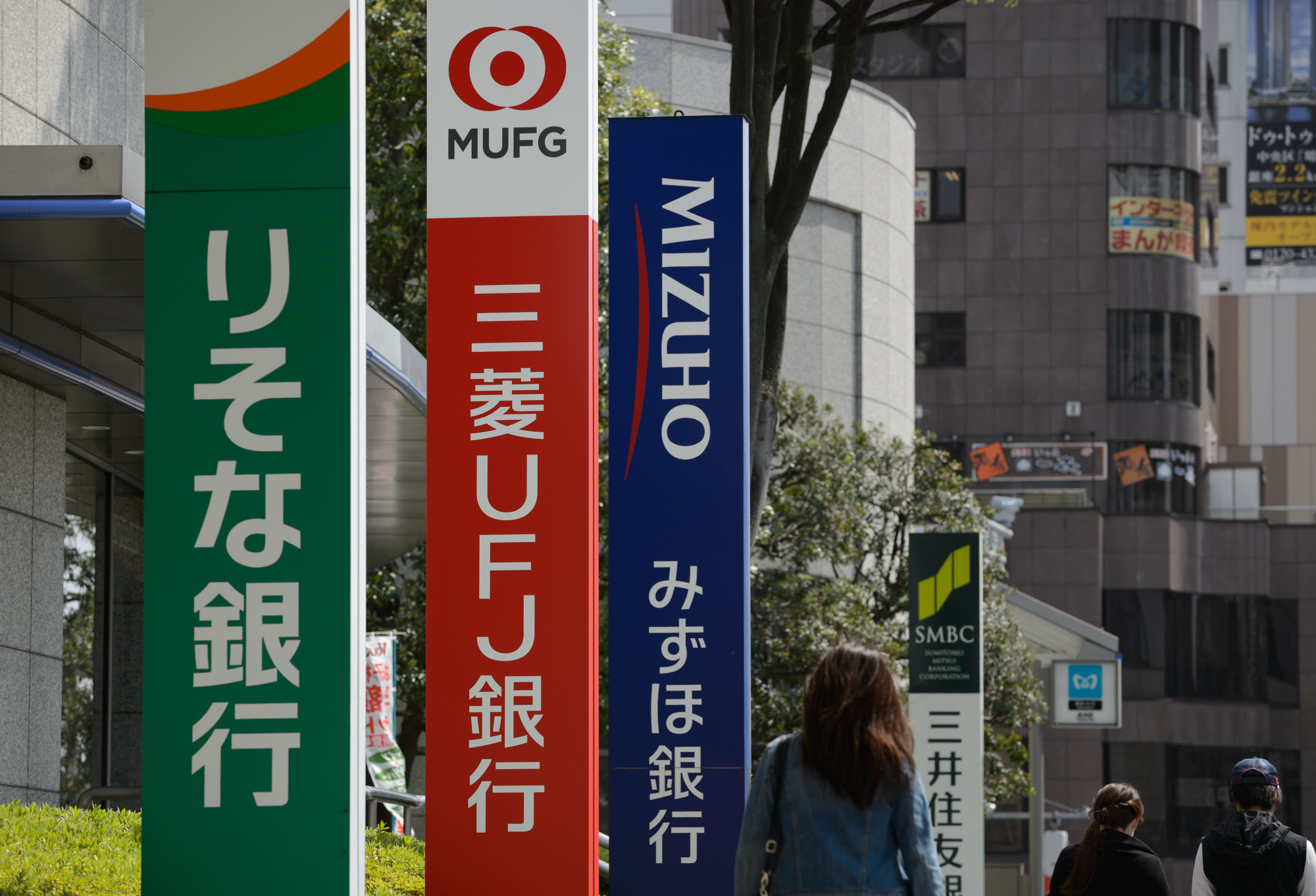
Under such circumstances, banks typically move this money into the plus column on their books, which is why the financial industry isn’t too crazy about the government’s plan to commandeer the comatose cash. The banks’ argument is that even though they have taken over this money, if the account holder does show up with proper identification and other pertinent documentation they will happily return it; but they couldn’t do that if the government has taken it first.

It’s a credible argument, though Japanese weekly magazine Gendai points out that ever since the end of the bubble era in the early 1990s, banks have become very strict about closing bank accounts, meaning that someone who had not touched their money for more than 10 years would probably require a lot of paperwork to prove the account was his. It would thus be very difficult for individuals to access accounts of family members who have died, since those individuals would have to produce death certificates, proof of relationship and other documents. Moreover, an account can only be closed at the branch where it was opened. It’s assumed that a large number of sleeping accounts have gone untouched because the account holder died without informing his or her family of its existence.

Why the sudden jump in "sleeping account" proceeds? →

Ruling party ends up back where it started with assistance for families

Friday, April 27th, 2012

We’re almost a month into the new fiscal year so it’s high time to review any changes in the cost of living for the average person in Japan. Not counting consumer spending, for the most part the change is negligible. Premiums for national health insurance have gone up for those who belong to the kyokai kenpo system, meaning mainly employees of small and medium-sized companies, from 9.5 percent to 10 percent of salary amount, which works out, on average, to an extra ¥780 a month. The long-term nursing care insurance payments (kaigo hokenryo) for persons aged 40 to 64, whether employed or not, have increased from ¥4,516 to ¥4,697 a month. Reflecting deflationary trends, payouts of basic pension have been reduced by 0.3 percent, but premiums have gone down from ¥15,020 a month to ¥14,980. Unemployment insurance has also been cut from 1.2 percent to 1 percent of salary amount. Utilities are going up. Electric bills will increase from ¥17 to ¥42 a month for an average family, and gas bills will increase from ¥8 to ¥11 a month.

Surprise! Local tax bill for Arakawa Ward, Tokyo, first quarter fiscal 2011

These changes won’t have a major effect on the average household. But one change that may is the shift in tax rules related to the child allowance (jido teate), which was one of the central proposals of the Democratic Party of Japan’s manifesto when it became the ruling party. The DPJ won on the assumption it would pay out ¥26,000 a month per child. By the time the opposition parties got through tearing the proposal apart, the amount had been cut in half, but that payout only lasted a year.

Starting in April, the allowance, which used to be called kodomo teate — the change to jido was supposedly implemented to placate the Komeito Party, who originally came up with the idea years ago under that name — will pay ¥15,000 a month for a child under 3 years old; ¥10,000 a month for the first two children in a family from the age of 3 until they graduate from elementary school; ¥15,000 a month for each child after the second one in the same age group; and ¥10,000 a month for each child in junior high school.

However, in order to get the opposition to accept even this reduced child allowance system, the DPJ had to abolish the dependent child tax deduction starting with tax returns for fiscal 2011, which were just filed this spring. In effect, it means that parents can no longer claim children up to high school, meaning less than 16 years of age, for a tax deduction since they are eligible for the child allowance. High school age children are not eligible for the child allowance so they can still be used as a tax deduction, but the amount of the deduction has been reduced from ¥630,000 to ¥380,000, because the government has now made high school free for everyone, including students who attend private institutions.

Where this change will be felt most immediately is on the local tax (juminzei) bills everyone receives in June. Local tax is calculated based on the national tax returns filed by the middle of March, so because these dependent child deductions no longer apply, individual households’ taxable incomes will increase, meaning the households will see an attendant increase in their local tax bills. Of course, it also means higher taxes on the national level, too, but since these changes weren’t implemented until last fall and salaried workers’ taxes are calculated by the bookkeeping departments of the companies/organizations they work for, they probably didn’t notice the slight monthly increase in their pay statements. They will certainly notice it on the local tax bills, since it shows the amount for the entire year. (It also affects the premiums paid for national health insurance since premiums are based on the previous year’s taxable income.)

So what does this mean in yen terms for the average family? According to the Ministry of Health, Labor and Welfare, taking into consideration both the child allowance payments and the boost in tax liabilities caused by the loss of the child deduction, an average family consisting of one breadwinner earning ¥3 million a year, one full-time homemaker and one child will end up with ¥667 more per month than they had before the DPJ came to power. The same family making ¥5 million a year will end up with ¥375 less per month. If income is between ¥8 and ¥10 million, the average loss is ¥4,083, and if it’s over ¥15 million it’s an average deficit of ¥8,200 a month. To put it another way, according to Sankei Shimbun, the average family making more than ¥4.88 million a year will, on balance, pay more than they did before the DPJ was elected. It’s as good an illustration as any of where politics gets you.

Outlet malls another American concept that may not work in Japan

Monday, April 16th, 2012

Can't get there from here: empty storefronts at Big Hop Garden Mall

This weekend marks the grand opening of Mitsui Outlet Park Kisarazu, a so-called outlet mall in the coastal city of Kisarazu in Chiba Prefecture. So far the mall has 171 stores, including 21 retailers that have never before participated in any Japanese outlet mall. Mitsui Fudosan, which developed and manages the facility, says it hopes to eventually have 250 stores in the mall. Its sales target for the first year is between ¥32 billion and ¥34 billion, which would make it the biggest money-maker of the 12 outlet malls the company operates.

Mitsui isn’t the only developer staking its future on the success of American-style suburban shopping complexes. In Japan there are now 39 outlet malls, which are characterized by stores that are directly owned and run by manufacturers. In principle, that means cutting out one or more middlemen and offering greater savings on name-brand goods. According to the most recent statistics we could find there are more than 1,600 “shopping malls” in Japan, though most of these are urban complexes that vary significantly in style and form from the classic American-style shopping mall.

Nevertheless, over the past decade or so, the number of shopping malls has increased in suburban areas as more traditional shopping arcades (shotengai) have declined in number or even vanished. The main features of these suburban shopping malls is one or two large “anchor” retailers, usually a department store and/or major supermarket chain, and, most significant for Japan, the fact that they aren’t located near train stations, where land is more expensive. That means they target motorists and feature the sort of enormous parking lots that are ubiquitous in the United States but which, until recently, were unheard of in Japan.

Outlet malls don’t always incorporate major department stores or supermarkets, but they do cater to people with cars. This aspect is particularly noteworthy in the case of the new mall in Kisarazu, which is the eastern terminus of the Aqua-Line bridge-and-tunnel route that connects Chiba’s Boso peninsula to Kanagawa Prefecture over Tokyo Bay. When this very expensive, 23-km highway was completed in 1997, one of its main purposes was to encourage visits to Kisarazu and the rest of Chiba by residents of Tokyo and Kanagawa, which includes the very large cities of Kawasaki and Yokohama.

That didn’t happen. Most of the traffic actually went the other way, if it went at all. When it opened, the toll was an intimidating ¥3,000 each way. As part of his election campaign platform, current governor Kensaku Morita promised to persuade the land ministry to reduce the toll, and now it’s only ¥800 one way (as a “test discount” that appears to be permanent), but still the tourists weren’t coming to Kisarazu. Instead, they went to the restaurant and retail complex built in the middle of the Aqua-Line. The Aqua-Line itself became the attraction, not the cities on either end of it.

Continue reading about shopping malls in Japan →

Consumption tax increase: Fairness is in the eye of the beholder

Monday, April 9th, 2012

The Japan Communist Party opposes the proposed consumption tax increase

Ever since Yoshihiko Noda became prime minister last summer he has been staking his political career on approval for an increase of the consumption tax as a means of bringing the national debt under control. In the process he needs to convince everyone that it is the fairest tax there is. His one-note tone of self-sacrifice is starting to make people wonder, though. Last year a majority of citizens said they’d go along with a tax increase, but lately that number has dropped significantly. On April 2, the Mainichi Shimbun published the results of a phone survey that found 60 percent of respondents opposed any increase, a 2 percentage point increase from a month earlier.

So is it fair? The research institute of Daiichi Life Insurance studied the matter and found that a household of four (married couple, two children) with an income of between ¥4 million and ¥5 million would pay out ¥60,000 more a year in consumption tax if the rate went up to 8 percent, which, according to Noda’s current proposal, would happen in 2014. Then, when a second boost pushes the rate to 10 percent in 2015, this household will pay out ¥100,000 more than it does now.

In principle, the more money you make, the more you consume and thus the more you pay. And this is true to a certain extent. Daiichi Research found that a family of four making ¥8 million a year will pay out about ¥90,000 more per year when the tax goes up to 8 percent, and ¥150,000 more when it increases to 10 percent. So the gap between the lower and higher income groups at 8 percent is ¥30,000 and the gap at 10 percent is ¥50,000.

However, where the change will really be felt is in terms of disposable income, since starting in 2013 income taxes will also increase in order to pay for reconstruction of the disaster-hit Tohoku region. Though there will be deductions and exclusions that can make each taxpayer’s situation different, Daiichi found that, compared to 2011, taking all these new taxes into consideration the household that makes less than ¥5 million a year will have ¥310,000 less disposable income a year when the 10 percent consumption tax kicks in in 2015. The ¥8 million household will have ¥410,000 less in disposable income. Though the richer household makes twice as much money, it loses only 5 percent in terms of disposable income with the increase, while the poorer household loses almost 8 percent in terms of disposable income.

The consumption tax covers everything consumed, including food and other necessities. Consequently, the burden weighs more heavily on lower income households than it does on richer ones, since basic essentials are assumed to be about the same for everyone regardless of income. That means there is less money to spend on non-essential items and, presumably, lower income households won’t. Retailers and other commercial enterprises will have to compete more aggressively for upper income customers because those at the other end of the spectrum won’t be making as many purchases in order to make ends meet.

How much money do rice farmers need to make from farming?

Friday, March 30th, 2012

Bags of rice for sale in a JA retail outlet

The Trans-Pacific Partnership trade agreement, which Japan endeavors to join, continues to be controversial, though most people in Japan only have knowledge about the broadest arguments. If Japan joins TPP, it’s the end of Japanese agriculture; if it doesn’t, Japan will not have access to one of the biggest markets in the world.

Several recent articles in the Asahi Shimbun at least give some idea of what rice farmers stand to lose or gain from the agreement. Two farmers are profiled, one in Fukui Prefecture, the other in Aomori prefecture. The Fukui farmer works a one-hectare paddy that he inherited from his father about 15 years ago. The paddy yields about 96 hyo (1 hyo = 60 kg) a year and ¥1.47 million in revenues, which breaks down to ¥1.1 in sales and the rest in government subsidies. When the Democratic Party of Japan became the ruling party, it threw out the old Liberal Democratic Party subsidy system, which basically discouraged farmers from growing rice. The DPJ subsidy, called kobetsu shotoku hosho (individual income compensation), pays them to grow by making up for any losses they might incur due to low market prices.

The Fukui farmer’s annual expenses for cultivating his paddy run to about ¥1.77 million, which includes ¥520,000 for outside labor. It’s implied that the paddy owner himself does very little actual farming. On his tax return he also lists in the loss column ¥600,000 in depreciation for his farm equipment. All in all, the farm in 2010 lost ¥300,000. However, he says it doesn’t really bother him. His main job is working for an electrical parts maker, which pays him a salary of ¥5.3 million. His wife also works, earning ¥2.8 million.

Continue reading about the cost of growing rice →

Civil servants are different, especially when it comes to social security

Friday, March 2nd, 2012

A major feature of the Democratic Party of Japan’s manifesto that helped make it the ruling party was its proposed overhaul of the social security system. One feature of the plan was to combine two types of pensions. Regular full-time employees usually pay into the kosei nenkin system if they work for a private company, or into the kyosai nenkin system if they work for a public entity. This latter group includes civil servants, whether they work for the central government or a local one, and school teachers, including instructors at private schools.

You're the only one who cares about your pension

However, there is a real difference in terms of both premiums and benefits between the two systems. Though in both cases, the employee splits his contributions with his employer, the rate is less for kyosai nenkin members than it is for kosei nenkin members. Even more significant, kyosai nenkin members after retirement receive ¥20,000-a-month more in benefits than do kosei nenkin members. And that’s not all. While the widows of both kosei nenkin and kyosai nenkin members can receive a special pension when they survive those members, under certain conditions other surviving family members of deceased kyosai nenkin members can also receive benefits. That does not apply to kosei nenkin members and their families.

The problem with the proposal to combine these two systems is that public servants will lose these special privileges. The kyosai nenkin system will adhere to the regulations associated with the kosei nenkin system, which is is why it hasn’t been discussed much during the current Diet session. The bureaucracy, needless to say, isn’t very fond of the proposal and is fighting it.

Another social security proposal from the manifesto that seems to have died on the vine is bringing more non-regular employees into the kosei nenkin system. At present, anyone who joins has to work at least 30 hours a week. Otherwise they have to pay into the kokumin nenkin, or regular pension, system. Forces in the DPJ were supposed to submit a bill during this session that would change the rules for kosei nenkin members to allow anyone who works more than 20 hours a week and has been in his or her position for at least six months to join. In this new system, a 45-year-old woman who makes ¥100,000 a month must pay a set premium of ¥15,000 a month into the basic pension system, but if she meets the conditions of the new system, she would join the kosei nenkin system and split the premium with her employer, which means she’d pay only ¥8,000 a month. At retirement, that amount would give her ¥500 a month more in benefits than the basic pension benefit for each year of payment. So if she paid into the system for 20 years, she’d get ¥10,000 more a month.

The main difference would be for “type 3″ members, meaning wives of kosei nenkin members. At present, type 3 members don’t have to pay anything, but under this proposed revision the housewife would have to pay ¥8,000 a month, just as the employed woman would; that is, if she decided to join.

It goes without saying that the main obstacle to implementing this plan is employers, who don’t want the extra burden of having to pay their part of kosei nenkin premiums. In any case, the government’s idea of a totally integrated social security overhaul that would result in a guaranteed minimum pension has been roundly criticized, so it seems even less likely that these two proposals, which wouldn’t really cost anything, have much of a chance. At present, the only thing the administration cares about is pushing an increase of the consumption tax.

Yearly statistics put recession into slightly better focus

Friday, February 24th, 2012

Here's your money: Bank of Japan

As the fiscal year draws to a close the relevant government ministries and agencies release their statistics for the previous calendar year. This week, the media mostly concentrated on a survey by the Bank of Japan that revealed a steep rise in the percentage of households (two or more people) with absolutely no financial assets, meaning no stocks, bonds, savings or annuities: 28.6 percent, 6.3 points higher than it was in 2010 and the highest it has ever been since 1963, when the BOJ started conducting this particular survey. Among the households that did have financial assets, the average amount per household was ¥11.5 million, or ¥190,000 less than in 2010. The reason cited by the BOJ is a loss of value in securities affected by market performance in response to the March 11 disaster and the European credit crisis. However, one aspect of the survey that tends to get overlooked in most news reports is that 8,000 questionnaires were sent out but only 47.5 percent were returned with responses, which means the number of households represented was less than 4,000.

For a bit more insight into the nation’s economic well-being, there’s the chingin kozo kihon tokei chosa, a survey conducted by the Health, Welfare and Labor Ministry to find out the situation with regards to salaries and wages. According to the results the average monthly pay of a full-time worker in Japan in 2011 was ¥296,800, which was 0.2 percent less than it was in 2010. Yearly salaries have been going down since 2008, when the average was ¥299,980. This amount includes basic wage plus any regular allowances but does not include overtime or bonuses. The ministry received responses from 45,818 firms, each of which has at least ten employees. Broken down a bit further, the average yearly pay for men was ¥328,300 (about the same as it was in 2010) and for women it was ¥231,900. That’s about 70 percent of men’s pay, but ten years ago women’s average pay was 60 percent of men’s.

Continue reading about yearly economic statistics →

RSS

Recent posts

Our Users Say

  • Jiro: Not my party, your party!
  • RJ: JR sagi-style profit…“place on the system more of a burden” LOL
  • Colin Doyle: Why is JR too proud or too obtuse to ask the other train companies how they were able to integrate their...
  • Simon: I had a similar experience when I caved in to societal and peer pressure ;-) and got an iPhone 4S last year....
  • goyaty: E-Mobileは、酷いサービスとサポート する。そのため、私も契約を更新しな でWiMAXに移った。WiMAXは、1年...