


Archive for the ‘Consumer tips’ Category

Driving is believing: Don’t trust manufacturers’ mileage claims

Thursday, February 10th, 2011

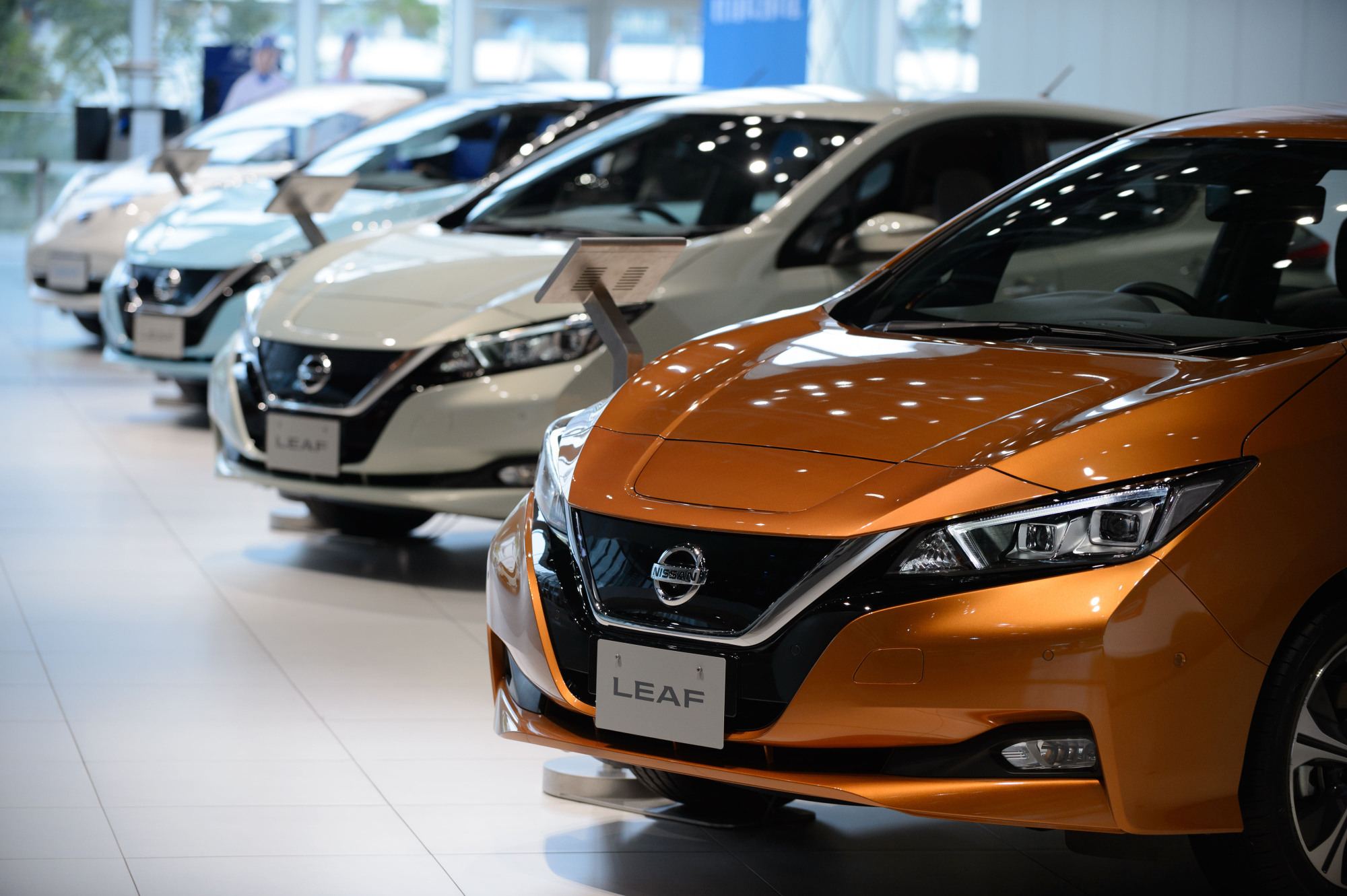
Though revenues were initially spurred by the government’s eco point system, hybrid cars are definitely the way to go for carmakers right now. Last month, sales of Honda’s Fit hybrid outpaced those for Toyota’s Prius hybrid, which had been Japan’s best-selling car since March 2009. Though consumers seem to be getting on the environmental bandwagon, the real appeal of hybrids is economical: They use less gasoline. Or, at least, that’s what we’ve been led to believe.

Tell the truth: Prius at Tokyo dealership

Actually, it’s difficult to know what to believe, according to the mobile telephone site E-Nenpi. Nenpi is the Japanese word for gasoline mileage, and people who subscribe to the site have helped the company that runs it, Iidosha, compile mileage statistics for almost every Japanese car model. Iidosha is of the opinion that the mileage figures supplied by car manufacturers in their brochures are unreliable, since they are based on tests that have no relation to real driving conditions. The Ministry of Land, Infrastructure, Transport and Tourism has apparently picked up on this skepticism and recently announced it would demand “improved” reporting on mileage testing.

Presently, the standard testing method in Japan is the “10.15 mode,” which utilizes a fixed roller in a government-run facility. Automobiles “drive” on the roller at different speeds and an average mileage figure is calculated from the results. Starting in April, however, the standard testing method will become the “JC08 mode,” which reproduces actual road driving conditions more closely. This method, however, has already been used by most automakers for several years and is usually listed in current brochures alongside the 10.15 mode figure, thus causing unnecessary confusion.

E-Nenpi doesn’t trust either test. The site asks its 500,000 subscribers throughout Japan to do their own mileage calculations based on gasoline bought and kilometers driven. Apparently, about 100,000 subscribers participate through cell phone uploads, and while there are no officials on hand to verify the results of each contributor, 100,000 is a pretty decent sampling and certainly more credible than any figures you’d get from the 10.15 mode tests. According to Toyota, the Prius gets 35.5 km per liter for the 10.15 mode test and 30.4 km per liter for the JC08 mode test. However, E-Nenpi comes up with 19.3 km per liter. That’s 45 percent less than the official 10.15 mode findings, and, apparently, that’s one of the better results. E-nenpi finds even greater discrepancies in the findings for other Japanese models.

Continue reading about mileage tests →

Recycling rackets poised to make a killing at New Year’s

Friday, December 24th, 2010

With the danshari fad peaking, the custom of New Years housecleaning (osoji) becomes more urgent, which could mean bigger piles of garbage at the curb and more calls to local government offices for “oversized refuse” (sodaigomi) pickups. It should also mean a higher than usual spike in business for independent haikibutsu shori (waste disposal) companies, and it seems the authorities are keeping an eye on the situation. According to the Mainichi Shimbun, over the past several months police in four prefectures have arrested representatives of 13 waste disposal companies for collecting refuse without the proper licenses.

Bring out your dead!

These companies are rackets. They slowly patrol residential areas in small pickup trucks equipped with loudspeaker systems, offering to cart away broken or unused household appliances. What often happens is that someone flags down the truck and says he has some things he wishes to dispose of. The driver picks up the items and places them in the back of the truck and then demands a fee that is much higher than the owner of the items expected; if, in fact, he expected to pay a fee at all. Sometimes, the recorded announcements vaguely imply that there is no charge, though they are careful not to actually use the word “muryo” (free). This practice is known as “sakizumi,” or “pre-loading,” meaning the removal fee is quoted after the item is put on the truck. According to police, the fee is sometimes as much as ¥30,000 or even ¥50,000 per item. Of course, the person could simply refuse to pay and remove the item from the back of the truck, but that might be very difficult if the item is a washing machine or some other heavy appliance. In any case, most of these victims are embarrassed and intimidated (the drivers are often described as being rough in appearance and manner) and just pay. The companies seem to purposely target older residents. (It should be pointed out that not all recycling companies that patrol neighborhoods in small trucks are rackets, but it should also be pointed out that few of them, despite what they say in their flyers, will take your stuff for free.)

Continue reading about recycling scams →

Starbucks caves in to refills, sort of

Saturday, December 4th, 2010

To some people, Starbucks represents all that’s evil about the global economy. The corporation is ruthless and the branches are interchangeable and ubiquitous. However, one can understand the enmity while still appreciating the product. The beverage they sell is still the equal if not superior to that of any other coffee vendor, and in Japan, at least, it’s the only coffee shop chain that guarantees a totally smoke-free environment.

Make that to go

Starbucks’ brand image is based on snobbery to a certain extent, which is quite an accomplishment given how their establishments are literally everywhere. Much of this exclusivity is based on the idea that each frappucino or latte or mocha is special and hand-made. That exclusivity, however, has now been undermined with Starbucks’ One More Coffee policy.

If you buy a Coffee of the Day, in any size, you can receive a refill, either hot or cold, of the same size for only ¥100. All you have to do is show the cashier your receipt for the first coffee. Though Starbucks has had a free refill policy in the U.S. for a while now, in Japan it has always been more limited. The One More Coffee deal was first offered from January to April on an experimental basis, and then last summer for a limited time, probably to counter the McDonald’s threat.

Now they seem to have brought it back for good, or at least that’s what a cashier in Otemachi told us. It’s good all day for the day you bought the first coffee, and, even better, it’s good at any Starbucks; meaning, you can buy a first coffee at one branch and then get a refill later in the day at another one. There appears to be no other restrictions so, in theory, you can even give your receipt to a colleague or friend and they can enjoy the refill. Will this lead to a black market in second-hand receipts?

Yes, that sounds pretty kechi (cheap), we know; but that’s the sort of thought that comes to mind when a company like Starbucks breaks its self-imposed mold and does something unexpected like this. Some will say the deal is less than meets the eye since it doesn’t apply to specialty drinks, only drip coffee, but, for us specialty coffees don’t cut it. If you like coffee, you drink coffee; and you drink it black.

Tourist spots averse to foreign exchange

Thursday, November 25th, 2010

Sign at Hakone souvenir shop

Discouraging words: Sign at Hakone souvenir shop

A friend in the tourist industry recently brought a group of middle aged and elderly Americans to Hakone National Park in Shizuoka Prefecture and the area around Mount Fuji. In Hakone, one of Japan’s most famous sightseeing spots, the Americans were discouraged from buying souvenirs when they got off the sightseeing boat at Lake Ashi because the large store at the dock does not take credit cards. This is not unusual for merchants outside of the major cities in Japan, but Hakone supposedly is enthusiastic about attracting foreign tourism. In fact, the policy seems downright stupid since the one souvenir shop in Hakone that does take credit cards is always packed.

My friend said that he always has the same problem in Hakone. Most of the restaurants there don’t take credit cards either. In addition, there are no foreign exchange services in Hakone except at some large hotels, which only guests can use. And the hotel in Fuji City where the American group stayed because it has a good view of Mount Fuji also does not exchange money. In fact, when our friend asked the front desk where people could exchange money in Fuji City the employee said he didn’t know.

We called the Hakone tourist association directly and asked about foreign exchange. The person who answered had to inquire of someone else and then told us that “some banks” in Hakone offer foreign exchange services but he didn’t know which ones. Also, banks in the area close at 3 p.m. on weekdays and are not open at all on weekends. We know that ATMs in post offices and 7-11 convenience stores will dispense yen for most foreign credit cards, but that means foreign tourists have to know this beforehand and then locate those businesses.

The truth is, Japan has never been very accommodating to tourists when it comes to foreign exchange, despite occasional campaigns like “Yokoso Japan” to boost foreign tourism. Of course, most tourists prefer to use credit cards these days, and you can use them easily enough in large Japanese cities, but once you leave metropolitan areas it gets a bit dodgy. Stand-alone foreign exchange services (ryogaejo) can be found at international airports and places like Tokyo Disneyland, but elsewhere they’re usually integrated into banks, which often make the exchange process a chore, requiring the copying of passports and other time-consuming procedures.

Let’s face it. Most Japanese businesses don’t trust anything but yen, in cash.

Electronics retailers likely to phase out point systems

Monday, November 15th, 2010

Yamada's Nabi store in Shibuya

Yamada's Labi store in Shibuya

Thanks to the eco-point campaign implemented by the government to spur consumption and encourage the use of “green” appliances, electronics retailers have enjoyed a banner year. Almost every one has seen record sales. The upstart Yamada leads the pack, with ¥1.14 trillion in revenues for the first half of the fiscal year (April-September), the first time any electronics retailer has broken the trillion-yen mark for a six-month period. That translates as ¥47 billion in business profits, an 87 percent increase over 2009, and ¥28 billion in net profits, a 72 percent increase over the same period last year.

The eco-point system, which rewards consumers who buy certain energy-saving goods with points that can be redeemed for other goods later on, is the reason for this windfall, but retailers are worried that sales will drop considerably after Dec. 1, when the number of points allowed per purchase will be cut in half. Retailers are making a big push before then, and competition is fierce. The real fear is not so much the loss of the eco-point incentive, which is scheduled to end altogether in March, but that the incentive itself has been so successful people won’t want or need to buy anything after it’s finished.

Continue reading about the phasing out of point systems →

Not easy being green: Eco-point system tests patience

Saturday, May 1st, 2010

This checklist could save your life

This checklist could save your life

By now a lot of people have taken advantage of the government’s Eco-point system, which proffers yen-value points when you purchase goods that have been deemed energy-saving in some shape or form. These points can be redeemed for putatively eco-friendly goods and services. We’ve already noted that the system seems to be designed to stimulate the economy rather than save the environment, but since the economy really does need stimulating I probably shouldn’t be complaining.

But others certainly are complaining, not so much because the Eco-point system is hypocritical about energy-saving (it is, but more on that later), but rather because it’s such a royal pain in the neck. The Web is full of detailed grousing about the paperwork necessary for redeeming one’s points. Some people have found it so complicated that they’ve actually given up — and these are Japanese. Since any explanations in English on how to redeem points are cursory at best (the bureaucracies in charge of the system don’t provide English instructions themselves), many non-Japanese are effectively shut out of the deal.

Several weeks ago we bought a new television at a discount store. The purchase earned us 12,000 Eco-points. When you buy an item that qualifies, the saleperson gives you a spiel about what to do. If consumers aren’t prepared for the spiel — and I doubt that many are — much of it will go over their heads. The salesman gives you several forms, including an application that he himself will partially fill out and a checklist that will help you go through the steps for filling out the application. He will tell you that you must fill out the warranty card that comes with your purchase. Most people never bother doing that until they have a problem with their purchase and need to get it fixed. But to redeem your Eco-points you have to fill in all the information on your warranty card, make a photocopy of it, and attach the photocopy to your application.

Continue reading about Eco-points in Japan →

Crash test dummies agree: Legacy is the one!

Thursday, April 29th, 2010

Can I take this baby out for a test crash?

Can I take this baby out for a test crash?

The National Agency for Automotive Safety and Victim’s Aid recently released the results of its 2009-2010 New Car Assessment Program, which is designed to test the safety of new automobiles in six different crash situations. The winner of the Grand Prix was Subaru’s Legacy touring wagon (list price ¥3.2 million), which, according to the results, was the only model out of the 17 tested this time that received high marks across the board, including the so-detailed-it’s-scary “pedestrian head protection performance test.”

Good news for Subaru, though when we visited a showroom the salesman said his dealership had yet to take PR advantage of the news. Considering the controversy over the recent Toyota recalls in the U.S., one might think any salesman would make a big deal out of such a positive safety assessment. After all, when Consumer Union in the U.S. releases test results for new cars in its Consumer Reports magazine, positive ratings can do wonders for a model’s sales.

But Consumer Reports tests everything, not just body integrity in a collision. The purpose of the NCAP is to promote safety-related research and development among auto makers, but all it really does is test these cars in crash situations. As it stands, all the cars seem to do quite well: The difference between the Legacy and the other cars tested is a matter of very small degree. In fact, NASVA was just investigated by the Government Revitalization Unit, which is trying to cut bureaucratic waste. Apparently, there are two government organizations testing cars in crashes, the NASVA and the National Traffic Safety and Environment Laboratory. The differences in the two bodies’ test methods appear to be very slight, so the investigating unit wanted to know why Japan needed two. Apparently, the “power of impacts” tested are different. In any case, NTSEL may receive less money in the next budget.

Of course, what would really help potential car buyers is data about individual models that have been involved in accidents in the past, but that information is closely guarded, even by the police , who never reveal makes and models of cars involved in accidents, though they surely have that information on record. The NCAP obviously has a function, but the very fact that they award a Grand Prix suggests they’re less interested in safety than in devising tests. After all, they have never reported a car as being not safe. So the Subaru salesman’s blasé attitude about the Legacy’s prize is understandable. For most consumers, a safety award from the government probably isn’t going to be as much of a factor in selecting a car as price, design and features are.

RSS

Recent posts

Our Users Say

  • Colin Doyle: Why is JR too proud or too obtuse to ask the other train companies how they were able to integrate their...
  • Simon: I had a similar experience when I caved in to societal and peer pressure ;-) and got an iPhone 4S last year....
  • goyaty: E-Mobileは、酷いサービスとサポート する。そのため、私も契約を更新しな でWiMAXに移った。WiMAXは、1年...
  • pat: Great article! There must be a way to make the bills easier to understand, and there must be a reason why this...
  • Paul: Epic.